Explaining Treatment Honestly
इलाज के बारे में ईमानदारी से बताना
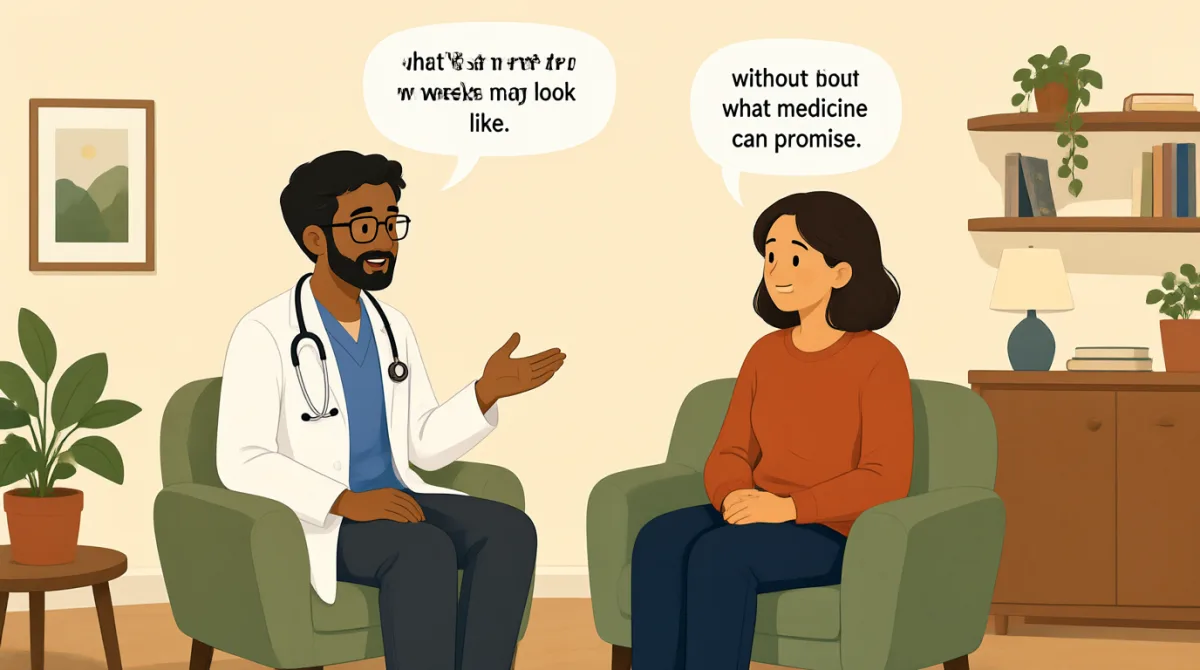
Dr. Patel explains the available treatment options, their likely benefits, and the uncertainties involved. Jack asks what the next few weeks may look like, and she answers without overstating what medicine can promise.
डॉ. पटेल उपलब्ध इलाज के विकल्पों, उनसे होने वाले संभावित फ़ायदों और उनसे जुड़ी अनिश्चितताओं के बारे में बताती हैं। जैक पूछता है कि आने वाले कुछ हफ़्ते कैसे बीत सकते हैं, और वह चिकित्सा से मिलने वाली उम्मीदों को बढ़ा-चढ़ाकर बताए बिना जवाब देती हैं।
संवाद11

Based on the scans and biopsy, the cancer has spread beyond the original site. I’m sorry; I know that’s a lot to hear. Would it help if I walked you through the options?
स्कैन और बायोप्सी के नतीजों के आधार पर, कैंसर अपनी मूल जगह से आगे फैल गया है। मुझे अफ़सोस है; मुझे पता है कि यह सुनना आपके लिए बहुत मुश्किल होगा। क्या मैं आपको इलाज के विकल्पों के बारे में विस्तार से बताऊँ?

Yes. I need to know what can actually be done, not just what sounds hopeful. And what are the chances treatment will work?
हाँ। मुझे जानना है कि असल में क्या किया जा सकता है, सिर्फ़ यह नहीं कि सुनने में क्या उम्मीद भरा लगता है। और इलाज के काम करने की कितनी संभावना है?
That’s a fair question. We can start systemic treatment to slow the cancer and, in some cases, shrink it. The evidence suggests it may help, but it can’t tell us exactly how you’ll respond.
यह बिल्कुल जायज़ सवाल है। हम कैंसर की रफ़्तार धीमी करने और कुछ मामलों में उसे सिकोड़ने के लिए पूरे शरीर पर असर करने वाला इलाज शुरू कर सकते हैं। उपलब्ध प्रमाण बताते हैं कि इससे मदद मिल सकती है, लेकिन उनसे यह ठीक-ठीक पता नहीं चलता कि आपके शरीर पर इसका क्या असर होगा।
When you say “slow it,” are we talking about buying a little time, or could I realistically get back to something like my normal life?
जब आप कहती हैं कि इसकी रफ़्तार धीमी होगी, तो क्या इसका मतलब है कि मुझे बस थोड़ा और समय मिलेगा, या सचमुच मैं अपनी सामान्य ज़िंदगी जैसी किसी हालत में लौट सकता हूँ?
It could be either, and it’s too early to predict which. Some people have a meaningful response and feel well for a time; others have limited benefit or difficult side effects. I don’t want to promise more than we know.
दोनों में से कुछ भी हो सकता है, और अभी यह अनुमान लगाना जल्दबाज़ी होगी कि आपके साथ क्या होगा। कुछ लोगों को इलाज से अच्छा-खासा फ़ायदा होता है और वे कुछ समय तक अच्छा महसूस करते हैं; दूसरों को बहुत कम फ़ायदा होता है या मुश्किल दुष्प्रभाव होते हैं। मैं जितना हमें पता है, उससे बढ़कर कोई वादा नहीं करना चाहती।
What would the treatment involve day to day? I’m trying to picture the next few weeks, and whether I’d be able to keep working.
रोज़मर्रा में इस इलाज में क्या-क्या करना होगा? मैं अगले कुछ हफ़्तों की कल्पना करने की कोशिश कर रहा हूँ, और यह भी कि क्या मैं काम जारी रख पाऊँगा।
We’d begin with a treatment-planning visit, then give medication in cycles, with blood tests and check-ins between them. The first few weeks are partly about seeing how your body tolerates it; we can adjust the plan if needed.
हम इलाज की योजना बनाने के लिए एक मुलाक़ात से शुरुआत करेंगे, फिर आपको दवा कई चक्रों में दी जाएगी। इनके बीच रक्त जाँच और आपकी हालत के बारे में पूछताछ होगी। शुरुआती कुछ हफ़्तों में हम यह भी देखेंगे कि आपका शरीर इलाज को कैसे सह पाता है; ज़रूरत पड़ी तो हम योजना में बदलाव कर सकते हैं।
So there isn’t a reliable way to know whether I’ll be too sick to work until we start? I need to make practical decisions, but I don’t want to overreact.
तो जब तक इलाज शुरू नहीं होता, यह भरोसे से नहीं कहा जा सकता कि मैं काम करने लायक रहूँगा या इतना बीमार हो जाऊँगा कि काम न कर सकूँ? मुझे व्यावहारिक फ़ैसले लेने हैं, लेकिन मैं बेवजह घबराना नहीं चाहता।
That’s right; people’s experiences vary. We can discuss flexible hours or time away from work, and I can provide documentation. Let’s also review which symptoms should prompt you to call us promptly.
जी, यह सही है; हर व्यक्ति का अनुभव अलग होता है। हम काम के लचीले समय या काम से कुछ समय की छुट्टी लेने के बारे में बात कर सकते हैं, और मैं इसके लिए ज़रूरी दस्तावेज़ दे सकती हूँ। आइए, उन लक्षणों पर भी बात करें जिनमें आपको हमें तुरंत फ़ोन करना चाहिए।
I’d like to understand the side effects and what happens if the first treatment doesn’t help. I don’t need every answer today, but I need to know there’s a plan.
मैं दुष्प्रभावों के बारे में और यह जानना चाहता हूँ कि अगर पहला इलाज मदद न करे तो क्या होगा। मुझे आज हर सवाल का जवाब नहीं चाहिए, लेकिन यह जानना ज़रूरी है कि आगे की कोई योजना है।
Absolutely. We’ll go through the common and serious side effects before you decide, and we’ll reassess after the first cycles. If it isn’t helping, we’ll talk through other approaches. You don’t have to make the decision this minute.
बिल्कुल। फ़ैसला लेने से पहले हम आम और गंभीर दुष्प्रभावों के बारे में बात करेंगे, और शुरुआती कुछ चक्रों के बाद फिर से देखेंगे कि इलाज कितना असर कर रहा है। अगर इससे मदद नहीं मिल रही होगी, तो हम दूसरे तरीकों पर विचार करेंगे। आपको इसी पल फ़ैसला लेने की ज़रूरत नहीं है।
शब्दावली8
- systemic treatmentपूरे शरीर पर असर करने वाला इलाज
Treatment that works throughout the body rather than only at one specific site. Here, it refers to medication intended to slow or shrink the cancer.
ऐसा इलाज जो सिर्फ़ शरीर के किसी एक ख़ास हिस्से पर नहीं, बल्कि पूरे शरीर में असर करता है। यहाँ इसका मतलब ऐसी दवा से है जिसका मक़सद कैंसर की रफ़्तार धीमी करना या उसे सिकोड़ना है।
- meaningful responseअच्छा-खासा असर
A noticeable and worthwhile improvement in how a disease responds to treatment. The phrase does not guarantee that the treatment will work for everyone.
इसका मतलब है कि इलाज के प्रति बीमारी की प्रतिक्रिया में साफ़ और महत्त्वपूर्ण सुधार हुआ है। इस वाक्यांश का यह मतलब नहीं कि इलाज हर किसी के लिए कारगर होगा।
- tolerates itसह पाता है
Is able to cope with a treatment and its effects. You can use “tolerate” to discuss how someone manages medication, a procedure, or another difficult experience.
किसी इलाज और उसके असर को झेल पाना। “tolerate” का इस्तेमाल यह बताने के लिए किया जा सकता है कि कोई व्यक्ति दवा, किसी प्रक्रिया या किसी और मुश्किल अनुभव को कैसे सह पाता है।
- cyclesचक्र
Repeated periods of treatment, often followed by time to recover or have check-ins. “Medication in cycles” describes a treatment schedule rather than taking medicine continuously.
इलाज के ऐसे दौर जो बार-बार दोहराए जाते हैं और जिनके बाद अक्सर शरीर को सँभलने का समय या जाँच के लिए मुलाक़ात होती है। “Medication in cycles” का मतलब है इलाज एक तय समय-सारणी के अनुसार दिया जाता है, न कि लगातार दवा ली जाती है।
- people’s experiences varyहर व्यक्ति का अनुभव अलग होता है
People may have different results or reactions in the same situation. This is a tactful way to explain why you cannot predict exactly what will happen to one person.
एक ही स्थिति में लोगों के नतीजे या प्रतिक्रियाएँ अलग-अलग हो सकती हैं। यह समझाने का संवेदनशील तरीका है कि आप किसी एक व्यक्ति के साथ ठीक-ठीक क्या होगा, इसका अनुमान क्यों नहीं लगा सकते।
- prompt you to call us promptlyआपको तुरंत फ़ोन करने की वजह बनें
Make you call without delay. “Prompt someone to” means to give them a reason to take a particular action.
आपको बिना देर किए फ़ोन करने के लिए प्रेरित करें। “prompt someone to” का मतलब है किसी को कोई ख़ास काम करने की वजह देना।
- reassessफिर से आकलन करना
Consider something again, often after gathering new information. Here, the doctor means they will review whether the treatment is helping after the first cycles.
नई जानकारी मिलने के बाद किसी बात पर दोबारा विचार करना। यहाँ डॉक्टर का मतलब है कि वे इलाज के शुरुआती चक्रों के बाद जाँचेंगी कि उससे मदद मिल रही है या नहीं।
- talk throughविस्तार से चर्चा करना
Discuss something carefully, often by considering the options one by one. It can be used when helping someone understand a decision or plan.
किसी बात पर ध्यान से चर्चा करना, अक्सर विकल्पों पर एक-एक करके विचार करते हुए। इसका इस्तेमाल तब किया जा सकता है जब आप किसी को फ़ैसला या योजना समझने में मदद कर रहे हों।
मुख्य वाक्य8
- 1
That’s a fair question.
यह बिल्कुल जायज़ सवाल है।
A concise way to acknowledge that someone’s concern is reasonable before answering. Use it in professional or personal conversations to show you are taking the question seriously.
किसी के सवाल का जवाब देने से पहले यह मानने का संक्षिप्त तरीका कि उसकी चिंता वाजिब है। पेशेवर या निजी बातचीत में इसका इस्तेमाल यह दिखाने के लिए करें कि आप सवाल को गंभीरता से ले रहे हैं।
- 2
The evidence suggests it may help, but it can’t tell us exactly how you’ll respond.
उपलब्ध प्रमाण बताते हैं कि इससे मदद मिल सकती है, लेकिन उनसे यह ठीक-ठीक पता नहीं चलता कि आपके शरीर पर इसका क्या असर होगा।
This sentence communicates what is known while clearly stating what remains uncertain. Use “the evidence suggests…” to express a cautious conclusion without presenting it as a guarantee.
यह वाक्य बताता है कि क्या जानकारी उपलब्ध है और साथ ही साफ़ करता है कि क्या अब भी अनिश्चित है। “the evidence suggests…” का इस्तेमाल सावधानी से कोई निष्कर्ष बताने के लिए करें, बिना उसे पक्की बात कहे।
- 3
I don’t want to promise more than we know.
मैं जितना हमें पता है, उससे बढ़कर कोई वादा नहीं करना चाहती।
A direct, compassionate way to avoid giving false reassurance. You can adapt the structure to other situations where you need to be honest about uncertainty.
झूठी तसल्ली देने से बचने का यह सीधा और संवेदनशील तरीका है। ऐसी दूसरी स्थितियों में भी इस वाक्य की बनावट अपना सकते हैं, जहाँ अनिश्चितता के बारे में ईमानदारी से बात करनी हो।
- 4
The first few weeks are partly about seeing how your body tolerates it; we can adjust the plan if needed.
शुरुआती कुछ हफ़्तों में हम यह भी देखेंगे कि आपका शरीर इलाज को कैसे सह पाता है; ज़रूरत पड़ी तो हम योजना में बदलाव कर सकते हैं।
This explains both what to expect and how the plan may change based on new information. Use “we can adjust the plan if needed” to offer reassurance without promising a particular outcome.
यह बताता है कि आगे क्या उम्मीद रखनी है और नई जानकारी मिलने पर योजना कैसे बदल सकती है। “we can adjust the plan if needed” का इस्तेमाल किसी ख़ास नतीजे का वादा किए बिना भरोसा दिलाने के लिए करें।
- 5
We can discuss flexible hours or time away from work, and I can provide documentation.
हम काम के लचीले समय या काम से कुछ समय की छुट्टी लेने के बारे में बात कर सकते हैं, और मैं इसके लिए ज़रूरी दस्तावेज़ दे सकती हूँ।
This offers practical support in a clear, specific way. The structure “We can discuss X, and I can provide Y” is useful when proposing options and assistance.
यह साफ़ और ठोस तरीके से व्यावहारिक मदद की पेशकश करता है। विकल्प और सहायता सुझाते समय “We can discuss X, and I can provide Y” की बनावट उपयोगी है।
- 6
I’d like to understand the side effects and what happens if the first treatment doesn’t help.
मैं दुष्प्रभावों के बारे में और यह जानना चाहता हूँ कि अगर पहला इलाज मदद न करे तो क्या होगा।
A useful way to ask about both risks and next steps before making a decision. You can adapt “I’d like to understand…” to raise concerns calmly and directly.
फ़ैसला लेने से पहले जोखिमों और अगले क़दमों, दोनों के बारे में पूछने का यह एक उपयोगी तरीका है। अपनी चिंताएँ शांति से और सीधे ढंग से बताने के लिए “I’d like to understand…” को अलग-अलग स्थितियों के अनुसार इस्तेमाल कर सकते हैं।
- 7
If it isn’t helping, we’ll talk through other approaches.
अगर इससे मदद नहीं मिल रही होगी, तो हम दूसरे तरीकों पर विचार करेंगे।
This describes a next step without claiming to know the outcome in advance. Use “If [condition], we’ll talk through…” to explain a plan that depends on how things develop.
यह पहले से नतीजे का दावा किए बिना अगले क़दम के बारे में बताता है। हालात के आगे बढ़ने के आधार पर योजना समझाने के लिए “If [condition], we’ll talk through…” का इस्तेमाल करें।
- 8
You don’t have to make the decision this minute.
आपको इसी पल फ़ैसला लेने की ज़रूरत नहीं है।
A reassuring way to give someone time to consider an important choice. “You don’t have to…” can gently remove pressure without taking away the person’s control.
किसी अहम फ़ैसले पर सोचने के लिए किसी को समय देने का यह एक भरोसा दिलाने वाला तरीका है। “You don’t have to…” का इस्तेमाल करके आप बिना उनका अधिकार छीने, उन पर से दबाव कम कर सकते हैं।