Agreeing on a Better Way Forward
Combinando uma maneira melhor de seguir em frente
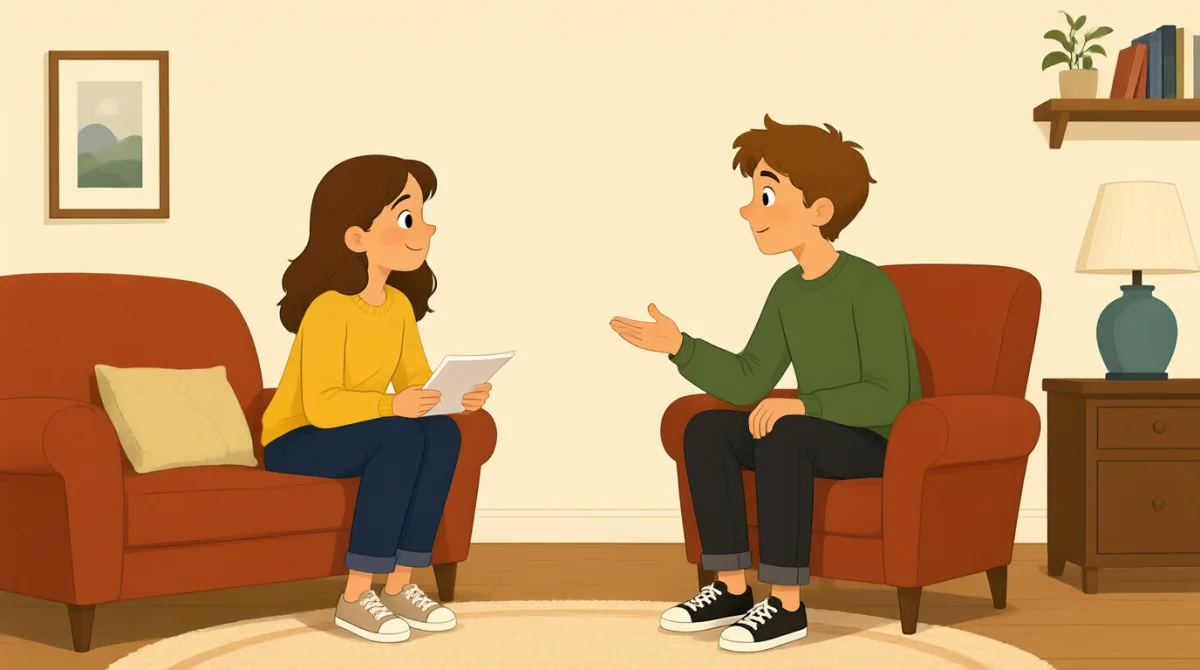
Emma and Jack agree to confirm important plans and let each other know as early as possible if something changes. They talk about how to bring up frustrations before they build into another argument.
Emma e Jack combinam confirmar os planos importantes e avisar um ao outro assim que possível se algo mudar. Eles conversam sobre como falar das frustrações antes que elas se transformem em outra discussão.
Diálogo10

I’m glad we’re talking about what to do differently. I don’t want us to keep revisiting the argument every time one of us feels let down.
Ainda bem que estamos conversando sobre o que podemos fazer diferente. Não quero que a gente fique voltando à discussão toda vez que um de nós se sentir decepcionado.

Me neither. Could we agree to confirm plans that really matter, maybe the day before? That way, we can catch a misunderstanding before it turns into a missed evening.
Nem eu. Podemos combinar de confirmar os planos que são realmente importantes, talvez no dia anterior? Assim, a gente pode perceber algum mal-entendido antes que acabe estragando uma noite.
That sounds reasonable. And if something changes, I’d rather hear about it as soon as you know, even if you’re still figuring out the details.
Parece razoável. E, se alguma coisa mudar, prefiro que você me avise assim que souber, mesmo que ainda esteja tentando resolver os detalhes.
I can do that. I sometimes put off sending a message because I think I need a complete solution first, but I can see how that leaves you in the dark.
Posso fazer isso. Às vezes, adio o envio de uma mensagem porque acho que preciso ter uma solução completa primeiro, mas entendo como isso deixa você sem saber o que está acontecendo.
And I’ll try to bring things up earlier, before I’ve been sitting with them for hours. I don’t want frustration to build until it comes out sharper than I mean it to.
E vou tentar falar das coisas mais cedo, antes de ficar horas remoendo. Não quero deixar a frustração crescer até acabar falando de um jeito mais duro do que eu gostaria.
That would help. Maybe we can say, “Something’s bothering me—can we talk about it?” That feels less like an accusation and more like an invitation to sort it out.
Isso ajudaria. Talvez a gente possa dizer: “Tem uma coisa me incomodando. Podemos conversar sobre isso?” Parece menos uma acusação e mais um convite para resolver a questão.
I like that. And if one of us isn’t ready to talk right away, we can say so and suggest a time to come back to it, instead of just going quiet.
Gostei. E, se um de nós não estiver pronto para conversar na hora, podemos dizer isso e sugerir um momento para retomar o assunto, em vez de simplesmente ficar em silêncio.
Agreed. I don’t expect us to get everything right, but I want us to be more upfront and give each other the benefit of the doubt when we can.
Combinado. Não espero que a gente acerte tudo, mas quero que sejamos mais sinceros e tentemos dar o benefício da dúvida um ao outro sempre que pudermos.
I want that too. Let’s try these things and check in after a few weeks to see whether they’re working for both of us.
Eu também quero isso. Vamos tentar fazer essas coisas e conversar daqui a algumas semanas para ver se estão funcionando para nós dois.
Deal. And if I forget to confirm, you can remind me without having to soften it into a hint. I’ll do my best to listen instead of getting defensive.
Combinado. E, se eu esquecer de confirmar, pode me lembrar sem precisar disfarçar como uma indireta. Vou fazer o possível para ouvir em vez de ficar na defensiva.
Vocabulário5
- keep revisiting the argumentficar voltando à discussão
To keep bringing up the same disagreement again and again. It suggests the speakers want to resolve the issue rather than repeatedly return to it.
É voltar a falar do mesmo desentendimento várias vezes. A expressão sugere que as pessoas querem resolver o problema, em vez de continuar retomando o assunto.
- confirm plansconfirmar os planos
To check and make sure an arrangement is still happening. You can use this phrase when agreeing on plans that are important to you.
É verificar se um plano combinado ainda vai acontecer. Você pode usar essa expressão ao combinar planos que são importantes para você.
- bring things upfalar das coisas
To start talking about a subject, especially a concern or problem. You can bring something up early to discuss it before it becomes more serious.
É começar a conversar sobre um assunto, especialmente uma preocupação ou um problema. Você pode falar de algo logo no início para conversar sobre isso antes que fique mais sério.
- build until it comes out sharper than I mean it tocrescer até eu acabar falando de um jeito mais duro do que gostaria
To grow stronger over time and eventually come out in a harsher way than intended. This phrase describes how unspoken frustration can affect the way someone speaks.
É ficar mais forte com o tempo e acabar se manifestando de um jeito mais duro do que a pessoa pretendia. A expressão descreve como uma frustração não expressa pode afetar a maneira de falar.
- give each other the benefit of the doubtdar o benefício da dúvida um ao outro
To assume that someone had good intentions rather than immediately thinking the worst. This can help people respond more generously when something goes wrong.
É presumir que alguém tinha boas intenções, em vez de logo pensar o pior. Isso pode ajudar as pessoas a reagir com mais compreensão quando algo dá errado.
Frases-chave8
- 1
Could we agree to confirm plans that really matter, maybe the day before?
Podemos combinar de confirmar os planos que são realmente importantes, talvez no dia anterior?
This is a polite way to suggest a practical agreement. Reuse “Could we agree to…” when you want to propose a shared routine or expectation.
Essa é uma maneira educada de propor um acordo prático. Reutilize “Could we agree to…” (Podemos combinar de…) quando quiser sugerir um hábito ou uma expectativa em comum.
- 2
And if something changes, I’d rather hear about it as soon as you know, even if you’re still figuring out the details.
E, se alguma coisa mudar, prefiro que você me avise assim que souber, mesmo que ainda esteja tentando resolver os detalhes.
This clearly explains what kind of update would help and allows for uncertainty. Reuse “I’d rather hear about it…” to express a communication preference.
Essa frase deixa claro que tipo de atualização ajudaria e dá espaço para a incerteza. Reutilize “I’d rather hear about it…” (Prefiro que você me avise…) para expressar uma preferência sobre comunicação.
- 3
I sometimes put off sending a message because I think I need a complete solution first, but I can see how that leaves you in the dark.
Às vezes, adio o envio de uma mensagem porque acho que preciso ter uma solução completa primeiro, mas entendo como isso deixa você sem saber o que está acontecendo.
This sentence explains a habit, acknowledges its effect on another person, and shows understanding. It is useful for taking responsibility without making excuses.
Essa frase explica um hábito, reconhece o efeito dele sobre outra pessoa e demonstra compreensão. É útil para assumir responsabilidade sem dar desculpas.
- 4
And I’ll try to bring things up earlier, before I’ve been sitting with them for hours.
E vou tentar falar das coisas mais cedo, antes de ficar horas remoendo.
This is a constructive way to commit to changing a behavior. Reuse “I’ll try to… earlier” when you want to discuss how you will handle a problem differently.
Essa é uma maneira construtiva de se comprometer a mudar um comportamento. Reutilize “I’ll try to… earlier” (Vou tentar… mais cedo) quando quiser explicar como vai lidar com um problema de outra forma.
- 5
Maybe we can say, “Something’s bothering me—can we talk about it?”
Talvez a gente possa dizer: “Tem uma coisa me incomodando. Podemos conversar sobre isso?”
This offers a direct but non-accusatory way to start a difficult conversation. You can use the question to raise a concern while inviting the other person to talk.
Essa frase oferece uma maneira direta, mas sem acusar, de iniciar uma conversa difícil. Você pode usar a pergunta para abordar uma preocupação e convidar a outra pessoa a conversar.
- 6
And if one of us isn’t ready to talk right away, we can say so and suggest a time to come back to it, instead of just going quiet.
E, se um de nós não estiver pronto para conversar na hora, podemos dizer isso e sugerir um momento para retomar o assunto, em vez de simplesmente ficar em silêncio.
This sentence sets a considerate boundary while keeping the conversation open. Reuse “suggest a time to come back to it” when you need a pause but still want to resolve an issue.
Essa frase estabelece um limite com consideração e mantém a conversa em aberto. Reutilize “suggest a time to come back to it” (sugerir um momento para retomar o assunto) quando precisar de uma pausa, mas ainda quiser resolver um problema.
- 7
I don’t expect us to get everything right, but I want us to be more upfront and give each other the benefit of the doubt when we can.
Não espero que a gente acerte tudo, mas quero que sejamos mais sinceros e tentemos dar o benefício da dúvida um ao outro sempre que pudermos.
This balances realistic expectations with a clear goal for the relationship. It is useful when agreeing to improve communication without expecting perfection.
Essa frase equilibra expectativas realistas com um objetivo claro para a relação. É útil para combinar de melhorar a comunicação sem esperar perfeição.
- 8
Let’s try these things and check in after a few weeks to see whether they’re working for both of us.
Vamos tentar fazer essas coisas e conversar daqui a algumas semanas para ver se estão funcionando para nós dois.
This proposes a practical follow-up and makes the agreement something both people can review. Reuse “check in after…” when you want to revisit a plan after some time.
Essa frase propõe um acompanhamento prático e permite que as duas pessoas avaliem o acordo. Reutilize “check in after…” (conversar depois de…) quando quiser voltar a um plano após algum tempo.