Agreeing on a Better Way Forward
ตกลงกันว่าจะปรับปรุงอย่างไรต่อไป
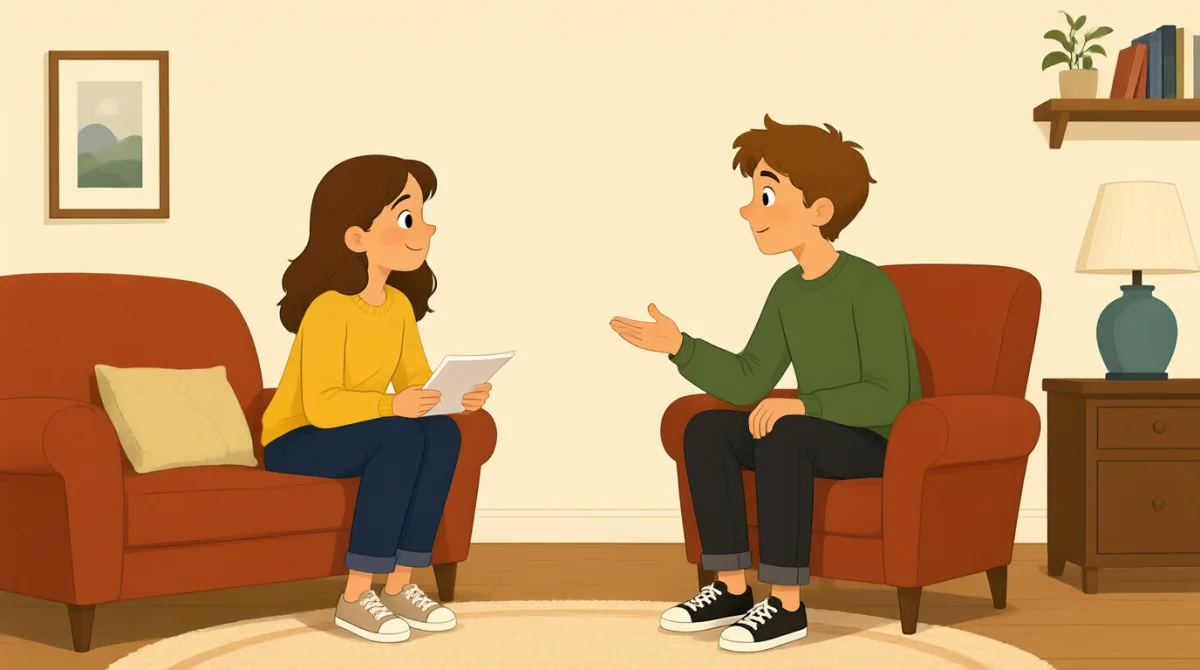
Emma and Jack agree to confirm important plans and let each other know as early as possible if something changes. They talk about how to bring up frustrations before they build into another argument.
เอ็มมากับแจ็กตกลงกันว่าจะยืนยันแผนสำคัญ และรีบบอกให้อีกฝ่ายรู้ทันทีที่มีอะไรเปลี่ยนแปลง ทั้งคู่คุยกันว่าจะพูดถึงเรื่องที่ไม่พอใจก่อนที่จะสะสมจนกลายเป็นการทะเลาะกันอีกครั้งได้อย่างไร
บทสนทนา10

I’m glad we’re talking about what to do differently. I don’t want us to keep revisiting the argument every time one of us feels let down.
ดีใจนะที่เราได้คุยกันว่าจะทำอะไรให้ต่างไปจากเดิม ฉันไม่อยากให้เราต้องย้อนกลับมาพูดถึงเรื่องทะเลาะกันทุกครั้งที่คนใดคนหนึ่งรู้สึกผิดหวัง

Me neither. Could we agree to confirm plans that really matter, maybe the day before? That way, we can catch a misunderstanding before it turns into a missed evening.
ฉันก็ไม่อยากเหมือนกัน เราตกลงกันได้ไหมว่าจะยืนยันแผนที่สำคัญจริง ๆ อาจจะวันก่อนก็ได้ แบบนั้นเราจะได้รู้ว่ามีอะไรเข้าใจผิดกันก่อนที่จะพลาดนัดกันทั้งคืน
That sounds reasonable. And if something changes, I’d rather hear about it as soon as you know, even if you’re still figuring out the details.
ฟังดูสมเหตุสมผลนะ แล้วถ้ามีอะไรเปลี่ยนแปลง ฉันอยากให้เธอบอกฉันทันทีที่รู้ ถึงแม้เธอยังจัดการรายละเอียดไม่เสร็จก็ตาม
I can do that. I sometimes put off sending a message because I think I need a complete solution first, but I can see how that leaves you in the dark.
ฉันทำได้ บางทีฉันก็ผัดวันส่งข้อความ เพราะคิดว่าต้องหาทางออกให้ได้ก่อน แต่ฉันเข้าใจแล้วว่ามันทำให้เธอไม่รู้อะไรเลย
And I’ll try to bring things up earlier, before I’ve been sitting with them for hours. I don’t want frustration to build until it comes out sharper than I mean it to.
ส่วนฉันจะพยายามพูดถึงเรื่องต่าง ๆ ให้เร็วขึ้น ก่อนที่จะเก็บมันไว้ในใจเป็นชั่วโมง ฉันไม่อยากปล่อยให้ความไม่พอใจสะสมจนเผลอพูดแรงกว่าที่ตั้งใจ
That would help. Maybe we can say, “Something’s bothering me—can we talk about it?” That feels less like an accusation and more like an invitation to sort it out.
แบบนั้นคงช่วยได้ เราอาจพูดว่า “มีเรื่องกวนใจฉันอยู่ เราคุยกันได้ไหม?” ฟังดูไม่เหมือนการกล่าวหา แต่เหมือนชวนกันมาหาทางแก้มากกว่า
I like that. And if one of us isn’t ready to talk right away, we can say so and suggest a time to come back to it, instead of just going quiet.
ฉันชอบนะ แล้วถ้าคนใดคนหนึ่งยังไม่พร้อมคุยตอนนั้น เราก็บอกกันได้และนัดเวลาค่อยกลับมาคุย แทนที่จะเงียบหายไปเฉย ๆ
Agreed. I don’t expect us to get everything right, but I want us to be more upfront and give each other the benefit of the doubt when we can.
ตกลง ฉันไม่ได้คาดหวังว่าเราจะทำทุกอย่างได้ถูกต้อง แต่ฉันอยากให้เราพูดกันตรง ๆ มากขึ้น และพยายามมองเจตนาของกันและกันในแง่ดี
I want that too. Let’s try these things and check in after a few weeks to see whether they’re working for both of us.
ฉันก็อยากให้เป็นแบบนั้นเหมือนกัน ลองทำตามนี้ แล้วอีกสองสามสัปดาห์เรามาคุยกันดูว่ามันได้ผลกับเราทั้งคู่ไหม
Deal. And if I forget to confirm, you can remind me without having to soften it into a hint. I’ll do my best to listen instead of getting defensive.
ตกลง ถ้าฉันลืมยืนยัน เธอเตือนฉันตรง ๆ ได้เลย ไม่ต้องพูดอ้อมเป็นคำใบ้ ฉันจะพยายามตั้งใจฟังแทนที่จะตั้งท่าปกป้องตัวเอง
คำศัพท์5
- keep revisiting the argumentย้อนกลับมาพูดถึงเรื่องทะเลาะกันซ้ำ ๆ
To keep bringing up the same disagreement again and again. It suggests the speakers want to resolve the issue rather than repeatedly return to it.
หมายถึงการหยิบเรื่องขัดแย้งเรื่องเดิมขึ้นมาพูดซ้ำแล้วซ้ำอีก สื่อว่าผู้พูดอยากแก้ปัญหาให้จบ มากกว่าจะกลับมาพูดเรื่องเดิมซ้ำ ๆ
- confirm plansยืนยันแผน
To check and make sure an arrangement is still happening. You can use this phrase when agreeing on plans that are important to you.
หมายถึงตรวจสอบให้แน่ใจว่าสิ่งที่ตกลงกันไว้ยังจะเกิดขึ้นตามแผน ใช้สำนวนนี้ได้เมื่อต้องการยืนยันแผนที่สำคัญกับตัวเอง
- bring things upพูดถึงเรื่องต่าง ๆ
To start talking about a subject, especially a concern or problem. You can bring something up early to discuss it before it becomes more serious.
หมายถึงเริ่มพูดถึงหัวข้อใดหัวข้อหนึ่ง โดยเฉพาะเรื่องที่กังวลหรือปัญหา คุณสามารถพูดถึงเรื่องนั้นตั้งแต่เนิ่น ๆ เพื่อคุยกันก่อนที่ปัญหาจะบานปลาย
- build until it comes out sharper than I mean it toสะสมจนเผลอพูดแรงกว่าที่ตั้งใจ
To grow stronger over time and eventually come out in a harsher way than intended. This phrase describes how unspoken frustration can affect the way someone speaks.
หมายถึงความรู้สึกที่รุนแรงขึ้นเรื่อย ๆ จนสุดท้ายแสดงออกมาอย่างรุนแรงกว่าที่ตั้งใจ สำนวนนี้อธิบายว่าความไม่พอใจที่ไม่ได้พูดออกมาอาจส่งผลต่อวิธีพูดของคนเราได้อย่างไร
- give each other the benefit of the doubtมองเจตนาของกันและกันในแง่ดี
To assume that someone had good intentions rather than immediately thinking the worst. This can help people respond more generously when something goes wrong.
หมายถึงเชื่อว่าอีกฝ่ายมีเจตนาดี แทนที่จะคิดไปในทางร้ายทันที วิธีนี้ช่วยให้เราตอบสนองต่อปัญหาที่เกิดขึ้นอย่างเข้าอกเข้าใจกันมากขึ้น
ประโยคสำคัญ8
- 1
Could we agree to confirm plans that really matter, maybe the day before?
เราตกลงกันได้ไหมว่าจะยืนยันแผนที่สำคัญจริง ๆ อาจจะวันก่อนก็ได้?
This is a polite way to suggest a practical agreement. Reuse “Could we agree to…” when you want to propose a shared routine or expectation.
ประโยคนี้เป็นวิธีสุภาพในการเสนอข้อตกลงที่ทำได้จริง นำ “Could we agree to…” มาใช้ได้เมื่อต้องการเสนอแนวปฏิบัติหรือความคาดหวังร่วมกัน
- 2
And if something changes, I’d rather hear about it as soon as you know, even if you’re still figuring out the details.
แล้วถ้ามีอะไรเปลี่ยนแปลง ฉันอยากให้เธอบอกฉันทันทีที่รู้ ถึงแม้เธอยังจัดการรายละเอียดไม่เสร็จก็ตาม
This clearly explains what kind of update would help and allows for uncertainty. Reuse “I’d rather hear about it…” to express a communication preference.
ประโยคนี้บอกอย่างชัดเจนว่าการอัปเดตแบบไหนจะช่วยได้ และยังเปิดโอกาสให้สถานการณ์ไม่แน่นอน ลองใช้ “I’d rather hear about it…” เพื่อบอกความต้องการในการสื่อสารของคุณ
- 3
I sometimes put off sending a message because I think I need a complete solution first, but I can see how that leaves you in the dark.
บางทีฉันก็ผัดวันส่งข้อความ เพราะคิดว่าต้องหาทางออกให้ได้ก่อน แต่ฉันเข้าใจแล้วว่ามันทำให้เธอไม่รู้อะไรเลย
This sentence explains a habit, acknowledges its effect on another person, and shows understanding. It is useful for taking responsibility without making excuses.
ประโยคนี้อธิบายพฤติกรรมของตัวเอง ยอมรับผลกระทบที่มีต่ออีกฝ่าย และแสดงให้เห็นว่าเข้าใจความรู้สึกของเขา เหมาะสำหรับการรับผิดชอบโดยไม่แก้ตัว
- 4
And I’ll try to bring things up earlier, before I’ve been sitting with them for hours.
ส่วนฉันจะพยายามพูดถึงเรื่องต่าง ๆ ให้เร็วขึ้น ก่อนที่จะเก็บมันไว้ในใจเป็นชั่วโมง
This is a constructive way to commit to changing a behavior. Reuse “I’ll try to… earlier” when you want to discuss how you will handle a problem differently.
นี่เป็นวิธีสร้างสรรค์ในการตั้งใจปรับเปลี่ยนพฤติกรรม ลองใช้ “I’ll try to… earlier” เมื่อต้องการพูดถึงว่าจะจัดการปัญหาอย่างไรให้ต่างจากเดิม
- 5
Maybe we can say, “Something’s bothering me—can we talk about it?”
เราอาจพูดว่า “มีเรื่องกวนใจฉันอยู่ เราคุยกันได้ไหม?”
This offers a direct but non-accusatory way to start a difficult conversation. You can use the question to raise a concern while inviting the other person to talk.
ประโยคนี้เป็นวิธีเริ่มบทสนทนาที่ยากอย่างตรงไปตรงมาแต่ไม่กล่าวโทษ คุณใช้คำถามนี้เพื่อพูดถึงเรื่องที่กังวล พร้อมกับเชิญชวนให้อีกฝ่ายคุยด้วยได้
- 6
And if one of us isn’t ready to talk right away, we can say so and suggest a time to come back to it, instead of just going quiet.
แล้วถ้าคนใดคนหนึ่งยังไม่พร้อมคุยตอนนั้น เราก็บอกกันได้และนัดเวลาค่อยกลับมาคุย แทนที่จะเงียบหายไปเฉย ๆ
This sentence sets a considerate boundary while keeping the conversation open. Reuse “suggest a time to come back to it” when you need a pause but still want to resolve an issue.
ประโยคนี้ช่วยกำหนดขอบเขตอย่างใส่ใจ โดยยังเปิดโอกาสให้คุยกันต่อได้ ลองใช้ “suggest a time to come back to it” เมื่อคุณต้องการพักก่อน แต่ยังอยากแก้ปัญหาให้จบ
- 7
I don’t expect us to get everything right, but I want us to be more upfront and give each other the benefit of the doubt when we can.
ฉันไม่ได้คาดหวังว่าเราจะทำทุกอย่างได้ถูกต้อง แต่ฉันอยากให้เราพูดกันตรง ๆ มากขึ้น และพยายามมองเจตนาของกันและกันในแง่ดี
This balances realistic expectations with a clear goal for the relationship. It is useful when agreeing to improve communication without expecting perfection.
ประโยคนี้แสดงความคาดหวังที่เป็นจริง พร้อมกับบอกเป้าหมายที่ชัดเจนสำหรับความสัมพันธ์ เหมาะสำหรับใช้เมื่อตกลงกันว่าจะปรับปรุงการสื่อสาร โดยไม่คาดหวังความสมบูรณ์แบบ
- 8
Let’s try these things and check in after a few weeks to see whether they’re working for both of us.
ลองทำตามนี้ แล้วอีกสองสามสัปดาห์เรามาคุยกันดูว่ามันได้ผลกับเราทั้งคู่ไหม
This proposes a practical follow-up and makes the agreement something both people can review. Reuse “check in after…” when you want to revisit a plan after some time.
ประโยคนี้เสนอให้ติดตามผลอย่างเป็นรูปธรรม และเปิดโอกาสให้ทั้งคู่ทบทวนข้อตกลง ลองใช้ “check in after…” เมื่อต้องการกลับมาทบทวนแผนหลังจากผ่านไประยะหนึ่ง