Agreeing on a Better Way Forward
এগিয়ে যাওয়ার আরও ভালো উপায়ে একমত হওয়া
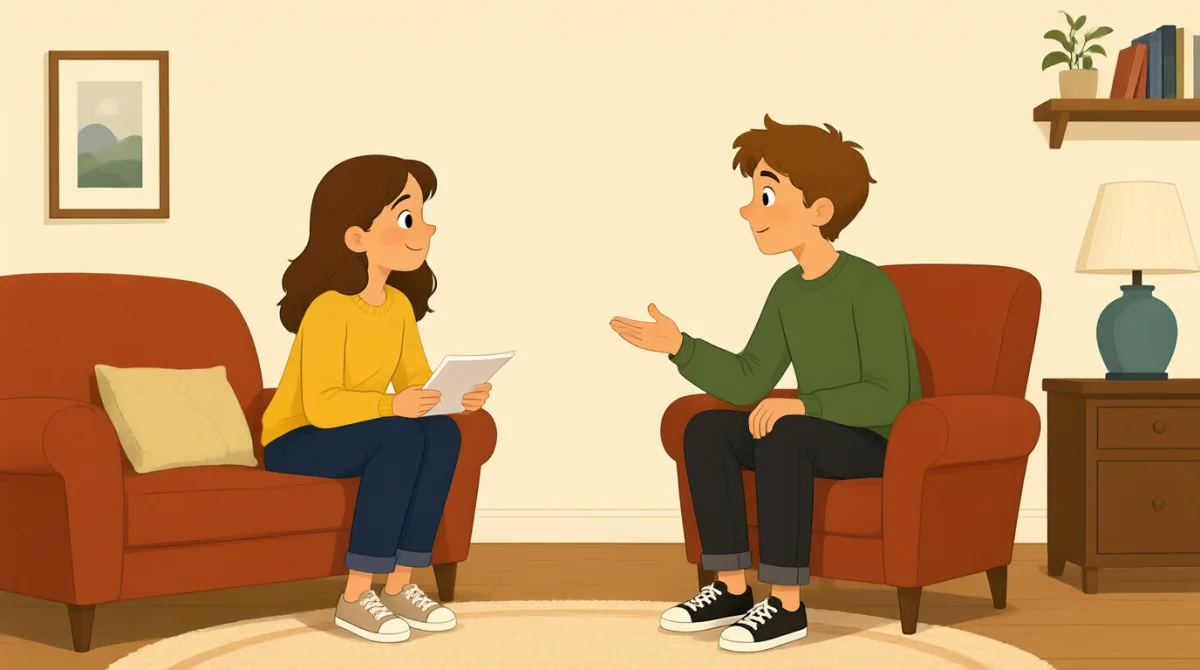
Emma and Jack agree to confirm important plans and let each other know as early as possible if something changes. They talk about how to bring up frustrations before they build into another argument.
এমা ও জ্যাক গুরুত্বপূর্ণ পরিকল্পনাগুলো নিশ্চিত করে নেওয়ার এবং কিছু বদলালে যত তাড়াতাড়ি সম্ভব একে অপরকে জানানোর বিষয়ে একমত হয়। তারা কথা বলে, কীভাবে হতাশার কথা সেগুলো আরেকটি তর্কে রূপ নেওয়ার আগেই তোলা যায়।
সংলাপ10

I’m glad we’re talking about what to do differently. I don’t want us to keep revisiting the argument every time one of us feels let down.
কীভাবে অন্যভাবে এগোনো যায়, তা নিয়ে কথা বলছি বলে ভালো লাগছে। আমাদের কারও মন খারাপ হলেই আমি চাই না আমরা বারবার সেই তর্কের প্রসঙ্গ টেনে আনি।

Me neither. Could we agree to confirm plans that really matter, maybe the day before? That way, we can catch a misunderstanding before it turns into a missed evening.
আমিও না। যেসব পরিকল্পনা সত্যিই গুরুত্বপূর্ণ, সেগুলো আগের দিন নিশ্চিত করে নেওয়ার ব্যাপারে কি আমরা একমত হতে পারি? তাহলে ভুল বোঝাবুঝিটা একটা সন্ধ্যা নষ্ট করার আগেই আমরা বুঝতে পারব।
That sounds reasonable. And if something changes, I’d rather hear about it as soon as you know, even if you’re still figuring out the details.
শুনতে যুক্তিসংগত লাগছে। আর কিছু বদলালে, তুমি জানামাত্রই আমি সেটা জানতে চাই—যদিও তখনও সব খুঁটিনাটি ঠিক করে উঠতে না পারো।
I can do that. I sometimes put off sending a message because I think I need a complete solution first, but I can see how that leaves you in the dark.
আমি সেটা করতে পারব। কখনো কখনো পুরো সমাধান আগে বের করতে হবে ভেবে মেসেজ পাঠানো পিছিয়ে দিই। কিন্তু বুঝতে পারছি, এতে তুমি কিছুই জানতে পারো না।
And I’ll try to bring things up earlier, before I’ve been sitting with them for hours. I don’t want frustration to build until it comes out sharper than I mean it to.
আর আমিও বিষয়গুলো আগে তুলতে চেষ্টা করব, ঘণ্টার পর ঘণ্টা সেগুলো মনে চেপে রাখার আগেই। আমি চাই না হতাশা জমতে জমতে এমনভাবে বেরিয়ে আসুক, যা আমার উদ্দেশ্যের চেয়ে বেশি রূঢ় শোনায়।
That would help. Maybe we can say, “Something’s bothering me—can we talk about it?” That feels less like an accusation and more like an invitation to sort it out.
তাহলে ভালো হয়। আমরা হয়তো বলতে পারি, “একটা ব্যাপার আমাকে ভাবাচ্ছে—এটা নিয়ে কি কথা বলতে পারি?” এতে দোষারোপের মতো কম লাগে, বরং সমাধান খুঁজে বের করার আমন্ত্রণ মনে হয়।
I like that. And if one of us isn’t ready to talk right away, we can say so and suggest a time to come back to it, instead of just going quiet.
আমার কথাটা ভালো লেগেছে। আর আমাদের কেউ যদি তখনই কথা বলতে প্রস্তুত না থাকে, তাহলে চুপ করে না থেকে সেটা বলতে পারি এবং পরে আবার বিষয়টা নিয়ে কথা বলার একটা সময় ঠিক করতে পারি।
Agreed. I don’t expect us to get everything right, but I want us to be more upfront and give each other the benefit of the doubt when we can.
একমত। আমি আশা করি না যে আমরা সবকিছু ঠিকঠাক করব, তবে চাই আমরা যেন আরও খোলাখুলি কথা বলি আর পারলে একে অপরের উদ্দেশ্য ভালো বলে ধরে নিই।
I want that too. Let’s try these things and check in after a few weeks to see whether they’re working for both of us.
আমিও সেটাই চাই। চলো, এগুলো চেষ্টা করে দেখি, তারপর কয়েক সপ্তাহ পর কথা বলে দেখি দুজনের জন্যই এগুলো কাজ করছে কি না।
Deal. And if I forget to confirm, you can remind me without having to soften it into a hint. I’ll do my best to listen instead of getting defensive.
ঠিক আছে। আর আমি নিশ্চিত করতে ভুলে গেলে, ইঙ্গিতে বলার জন্য কথাটা নরম না করেও তুমি আমাকে মনে করিয়ে দিতে পারো। আমি আত্মপক্ষ সমর্থন না করে মন দিয়ে শোনার যথাসাধ্য চেষ্টা করব।
শব্দভান্ডার5
- keep revisiting the argumentএকই তর্ক বারবার তোলা
To keep bringing up the same disagreement again and again. It suggests the speakers want to resolve the issue rather than repeatedly return to it.
একই মতবিরোধের প্রসঙ্গ বারবার আবার তোলা। এতে বোঝায়, বক্তারা বিষয়টি মিটিয়ে ফেলতে চান, বারবার সেটিতেই ফিরে যেতে নয়।
- confirm plansপরিকল্পনা নিশ্চিত করা
To check and make sure an arrangement is still happening. You can use this phrase when agreeing on plans that are important to you.
কোনো ব্যবস্থা এখনও ঠিক আছে কি না, তা যাচাই করে নিশ্চিত হওয়া। তোমার কাছে গুরুত্বপূর্ণ কোনো পরিকল্পনা নিয়ে একমত হওয়ার সময় এই কথাটি ব্যবহার করতে পারো।
- bring things upকোনো বিষয় তোলা
To start talking about a subject, especially a concern or problem. You can bring something up early to discuss it before it becomes more serious.
কোনো বিষয় নিয়ে কথা শুরু করা, বিশেষ করে কোনো উদ্বেগ বা সমস্যা নিয়ে। কোনো বিষয় গুরুতর হয়ে ওঠার আগে আলোচনা করতে তুমি সেটি আগেভাগে তুলতে পারো।
- build until it comes out sharper than I mean it toজমতে জমতে আমার কথাকে উদ্দেশ্যের চেয়ে বেশি রূঢ় করে তোলা
To grow stronger over time and eventually come out in a harsher way than intended. This phrase describes how unspoken frustration can affect the way someone speaks.
সময়ের সঙ্গে তীব্র হয়ে ওঠা এবং শেষে উদ্দেশ্যের চেয়ে বেশি কঠোরভাবে প্রকাশ পাওয়া। এই কথাটি বোঝায়, না বলা হতাশা কারও কথা বলার ধরনকে কীভাবে প্রভাবিত করতে পারে।
- give each other the benefit of the doubtএকে অপরের উদ্দেশ্য ভালো বলে ধরে নেওয়া
To assume that someone had good intentions rather than immediately thinking the worst. This can help people respond more generously when something goes wrong.
সঙ্গে সঙ্গে সবচেয়ে খারাপটা না ভেবে ধরে নেওয়া যে কারও উদ্দেশ্য ভালো ছিল। কিছু ভুল হলে এটি মানুষকে আরও সহানুভূতিশীলভাবে প্রতিক্রিয়া জানাতে সাহায্য করতে পারে।
গুরুত্বপূর্ণ বাক্য8
- 1
Could we agree to confirm plans that really matter, maybe the day before?
যেসব পরিকল্পনা সত্যিই গুরুত্বপূর্ণ, সেগুলো আগের দিন নিশ্চিত করে নেওয়ার ব্যাপারে কি আমরা একমত হতে পারি?
This is a polite way to suggest a practical agreement. Reuse “Could we agree to…” when you want to propose a shared routine or expectation.
কোনো বাস্তবসম্মত বিষয়ে একমত হওয়ার প্রস্তাব দেওয়ার এটি একটি ভদ্র উপায়। যৌথ কোনো অভ্যাস বা প্রত্যাশার প্রস্তাব দিতে চাইলে “Could we agree to…” আবার ব্যবহার করতে পারো।
- 2
And if something changes, I’d rather hear about it as soon as you know, even if you’re still figuring out the details.
আর কিছু বদলালে, তুমি জানামাত্রই আমি সেটা জানতে চাই—যদিও তখনও সব খুঁটিনাটি ঠিক করে উঠতে না পারো।
This clearly explains what kind of update would help and allows for uncertainty. Reuse “I’d rather hear about it…” to express a communication preference.
কী ধরনের খবর পেলে উপকার হবে, এই বাক্যটি তা স্পষ্ট করে এবং অনিশ্চয়তার সুযোগও রাখে। যোগাযোগের ক্ষেত্রে নিজের পছন্দ জানাতে “I’d rather hear about it…” আবার ব্যবহার করতে পারো।
- 3
I sometimes put off sending a message because I think I need a complete solution first, but I can see how that leaves you in the dark.
কখনো কখনো পুরো সমাধান আগে বের করতে হবে ভেবে মেসেজ পাঠানো পিছিয়ে দিই, কিন্তু বুঝতে পারছি, এতে তুমি কিছুই জানতে পারো না।
This sentence explains a habit, acknowledges its effect on another person, and shows understanding. It is useful for taking responsibility without making excuses.
এই বাক্যটি একটি অভ্যাসের ব্যাখ্যা দেয়, অন্যের ওপর তার প্রভাব স্বীকার করে এবং বোঝাপড়া দেখায়। অজুহাত না দিয়ে নিজের দায়িত্ব স্বীকার করতে এটি কাজে লাগে।
- 4
And I’ll try to bring things up earlier, before I’ve been sitting with them for hours.
আর আমিও বিষয়গুলো আগে তুলতে চেষ্টা করব, ঘণ্টার পর ঘণ্টা সেগুলো মনে চেপে রাখার আগেই।
This is a constructive way to commit to changing a behavior. Reuse “I’ll try to… earlier” when you want to discuss how you will handle a problem differently.
আচরণ বদলানোর প্রতিশ্রুতি দেওয়ার এটি একটি গঠনমূলক উপায়। কোনো সমস্যা অন্যভাবে সামলানোর কথা বলতে চাইলে “I’ll try to… earlier” আবার ব্যবহার করতে পারো।
- 5
Maybe we can say, “Something’s bothering me—can we talk about it?”
আমরা হয়তো বলতে পারি, “একটা ব্যাপার আমাকে ভাবাচ্ছে—এটা নিয়ে কি কথা বলতে পারি?”
This offers a direct but non-accusatory way to start a difficult conversation. You can use the question to raise a concern while inviting the other person to talk.
কঠিন আলোচনা শুরু করার এটি একটি সরাসরি কিন্তু দোষারোপহীন উপায়। উদ্বেগের কথা তুলতে এবং একই সঙ্গে অন্য ব্যক্তিকে কথা বলার আমন্ত্রণ জানাতে এই প্রশ্নটি ব্যবহার করতে পারো।
- 6
And if one of us isn’t ready to talk right away, we can say so and suggest a time to come back to it, instead of just going quiet.
আর আমাদের কেউ যদি তখনই কথা বলতে প্রস্তুত না থাকে, তাহলে চুপ করে না থেকে সেটা বলতে পারি এবং পরে আবার বিষয়টা নিয়ে কথা বলার একটা সময় ঠিক করতে পারি।
This sentence sets a considerate boundary while keeping the conversation open. Reuse “suggest a time to come back to it” when you need a pause but still want to resolve an issue.
এই বাক্যটি আলোচনার পথ খোলা রেখেই অন্যের প্রতি বিবেচনাপূর্ণ একটি সীমা নির্ধারণ করে। একটু বিরতি দরকার হলেও সমস্যা মেটাতে চাইলে “suggest a time to come back to it” আবার ব্যবহার করতে পারো।
- 7
I don’t expect us to get everything right, but I want us to be more upfront and give each other the benefit of the doubt when we can.
আমি আশা করি না যে আমরা সবকিছু ঠিকঠাক করব, তবে চাই আমরা যেন আরও খোলাখুলি কথা বলি আর পারলে একে অপরের উদ্দেশ্য ভালো বলে ধরে নিই।
This balances realistic expectations with a clear goal for the relationship. It is useful when agreeing to improve communication without expecting perfection.
এই বাক্যে বাস্তবসম্মত প্রত্যাশার সঙ্গে সম্পর্কের একটি স্পষ্ট লক্ষ্যকে মিলিয়ে বলা হয়েছে। নিখুঁত হওয়ার প্রত্যাশা না করে যোগাযোগ উন্নত করার বিষয়ে একমত হতে এটি কাজে লাগে।
- 8
Let’s try these things and check in after a few weeks to see whether they’re working for both of us.
চলো, এগুলো চেষ্টা করে দেখি, তারপর কয়েক সপ্তাহ পর কথা বলে দেখি দুজনের জন্যই এগুলো কাজ করছে কি না।
This proposes a practical follow-up and makes the agreement something both people can review. Reuse “check in after…” when you want to revisit a plan after some time.
এতে পরে আবার আলোচনা করার একটি বাস্তবসম্মত প্রস্তাব দেওয়া হয় এবং দুজনকেই চুক্তিটি পর্যালোচনা করার সুযোগ দেওয়া হয়। কিছু সময় পর কোনো পরিকল্পনা নিয়ে আবার কথা বলতে চাইলে “check in after…” আবার ব্যবহার করতে পারো।