Describing the Suitcase
スーツケースの特徴を説明する
Grace asks Emma about the suitcase’s color, size, and other details. Emma also explains what is inside it.
グレースがエマに、スーツケースの色や大きさ、その他の特徴を尋ねます。エマは中に何が入っていたかも説明します。
会話8
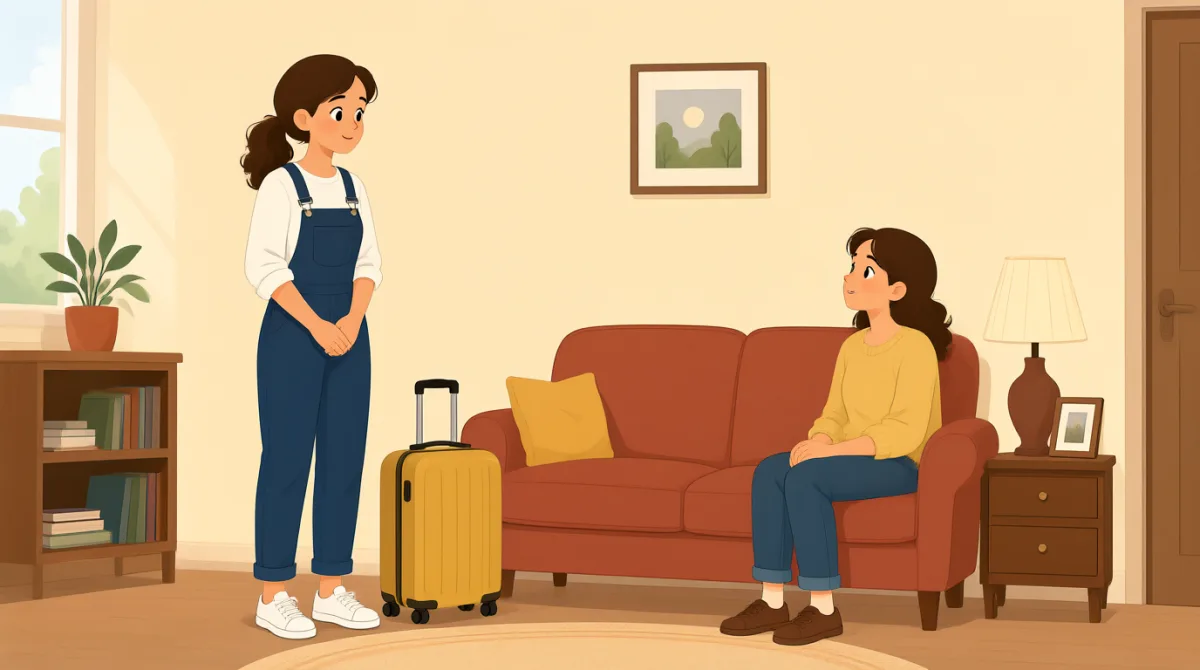

What color is your suitcase, and how big is it?
スーツケースは何色で、どのくらいの大きさ?

It’s black and medium-sized, with two wheels on each side.
黒で中くらいの大きさ。両側に車輪が2つずつ付いてるよ。
Does it have any special marks or a name tag?
何か目印やネームタグは付いてる?
It has a red ribbon on the handle and a white name tag.
持ち手に赤いリボンが付いていて、白いネームタグも付いてるよ。
Thank you. What was inside the suitcase?
ありがとう。スーツケースの中には何が入っていましたか?
Some clothes, a pair of shoes, and my toiletries. Nothing valuable.
服と靴が一足、それに洗面用具です。貴重品は入っていません。
All right. I’ll add those details to your report.
わかりました。その情報を報告書に加えておきますね。
Thanks. I hope you can find it soon.
ありがとう。早く見つかるといいな。
語彙8
- medium-sized中くらいの大きさの
This describes something that is not small or large. Use it to give the size of an object, such as a suitcase.
「medium-sized」は、小さくも大きくもないことを表します。スーツケースなど、物の大きさを伝えるときに使えます。
- on each side両側に
This means on both sides of something. Here, it tells Grace where the suitcase’s wheels are.
「on each side」は、物の両方の側にあることを表します。ここでは、スーツケースの車輪がどこにあるかを伝えています。
- special marks目印
These are noticeable details that help identify an item. You can mention special marks when describing lost property.
「special marks」は、物を見分ける手がかりになる目立つ特徴のことです。落とし物の特徴を説明するときに使えます。
- name tagネームタグ
A name tag shows a person’s name or contact details. It can help someone identify the owner of a suitcase.
「name tag」には、名前や連絡先が書かれています。スーツケースの持ち主を見分ける手がかりになります。
- on the handle持ち手に
This means attached to or placed on the part you hold. Use it to explain where a detail is on an object.
「on the handle」は、手で持つ部分に付いている、または置かれているという意味です。物のどこに特徴があるかを伝えるときに使えます。
- a pair of shoes靴一足
This means two shoes that belong together. It is a common way to describe something in your luggage.
「a pair of shoes」は、左右そろった2つの靴のことです。荷物の中身を説明するときによく使う表現です。
- toiletries洗面用具
These are personal items such as a toothbrush, soap, or shampoo. The word is useful when describing what you packed.
「toiletries」は、歯ブラシや石けん、シャンプーなどの身の回りの品を指します。荷造りした物を説明するときに便利な単語です。
- add those detailsその情報を加える
This means to include the information in a record or report. You can use it when someone is writing down details you provide.
「add those details」は、情報を記録や報告書に含めるという意味です。相手があなたの伝えた情報を書き留めているときに使えます。
重要な文8
- 1
What color is your suitcase, and how big is it?
スーツケースは何色で、どのくらいの大きさ?
Use this to ask about an item’s color and size. You can replace “suitcase” with another object, such as “bag” or “car.”
物の色と大きさを尋ねる表現です。「suitcase」を「bag」や「car」など、ほかの物に置き換えて使えます。
- 2
It’s black and medium-sized, with two wheels on each side.
黒で中くらいの大きさ。両側に車輪が2つずつ付いてるよ。
This sentence gives the color, size, and a useful identifying detail. Replace these descriptions with details about your own item.
色と大きさに加えて、見分けるのに役立つ特徴も伝える文です。自分の持ち物に合わせて説明を変えてみましょう。
- 3
Does it have any special marks or a name tag?
何か目印やネームタグは付いてる?
Use this yes-or-no question to ask about details that can help identify something. You can also ask, “Does it have a label?”
物を見分ける手がかりになる特徴について、はい・いいえで答えられる質問をするときに使います。「Does it have a label?」と尋ねることもできます。
- 4
It has a red ribbon on the handle and a white name tag.
持ち手に赤いリボンが付いていて、白いネームタグも付いてるよ。
This is a useful way to describe identifying details and where they are. Change the colors and objects to match what you see.
見分ける手がかりになる特徴と、それがどこにあるかを伝えるのに便利な表現です。実際に見た物に合わせて、色や物の名前を変えてみましょう。
- 5
What was inside the suitcase?
スーツケースの中には何が入っていましたか?
Use this question to ask what someone had in a bag or another container. “Was” is used because the question refers to the past.
バッグやほかの入れ物の中に何があったか尋ねる表現です。過去のことを尋ねているので、「was」を使っています。
- 6
Some clothes, a pair of shoes, and my toiletries.
服と靴が一足、それに洗面用具です。
This is a simple way to list several items. You can use the same pattern to describe what was in your luggage.
いくつかの物を簡潔に挙げる言い方です。同じ形を使って、荷物に何が入っていたか説明できます。
- 7
I’ll add those details to your report.
その情報を報告書に加えておきますね。
Use this to say that you will include information in a report or record. “I’ll” is a short form of “I will.”
情報を報告書や記録に含めると伝える表現です。「I’ll」は「I will」の短縮形です。
- 8
I hope you can find it soon.
早く見つかるといいな。
This sentence expresses a wish for something to happen. Use “I hope you can…” to talk about what you want someone to do.
何かが起きてほしいという願いを表す文です。「I hope you can…」は、相手に何かをしてほしいと思っていることを伝えるときに使えます。