Describing the Suitcase
บรรยายลักษณะกระเป๋าเดินทาง
Grace asks Emma about the suitcase’s color, size, and other details. Emma also explains what is inside it.
เกรซถามเอ็มมาเกี่ยวกับสี ขนาด และรายละเอียดอื่น ๆ ของกระเป๋าเดินทาง เอ็มมายังบอกด้วยว่าข้างในมีอะไรบ้าง
บทสนทนา8
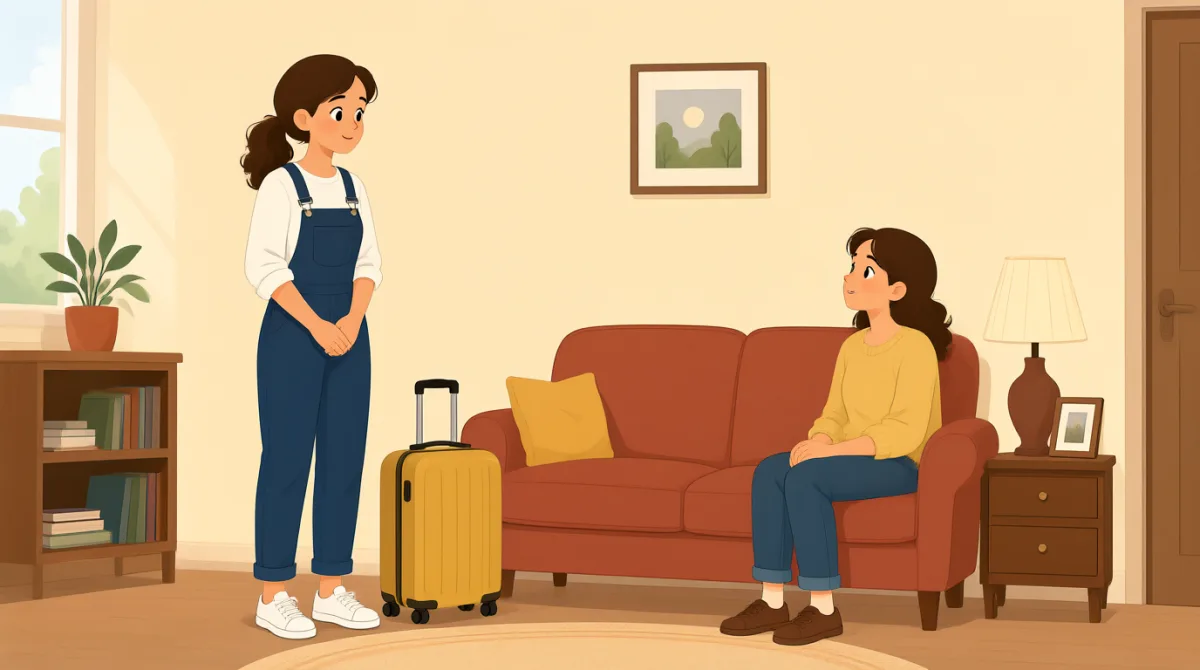

What color is your suitcase, and how big is it?
กระเป๋าเดินทางของคุณสีอะไร แล้วใบใหญ่แค่ไหนคะ

It’s black and medium-sized, with two wheels on each side.
สีดำ ขนาดกลาง มีล้อสองล้ออยู่แต่ละด้านค่ะ
Does it have any special marks or a name tag?
มีตำหนิพิเศษหรือป้ายชื่อไหมคะ
It has a red ribbon on the handle and a white name tag.
มีริบบิ้นสีแดงผูกอยู่ที่หูหิ้ว แล้วก็มีป้ายชื่อสีขาวค่ะ
Thank you. What was inside the suitcase?
ขอบคุณค่ะ ข้างในกระเป๋ามีอะไรบ้างคะ
Some clothes, a pair of shoes, and my toiletries. Nothing valuable.
เสื้อผ้าสองสามชิ้น รองเท้าหนึ่งคู่ แล้วก็ของใช้ส่วนตัวค่ะ ไม่มีของมีค่าเลย
All right. I’ll add those details to your report.
ได้ค่ะ ฉันจะเพิ่มรายละเอียดเหล่านั้นลงในรายงานของคุณนะคะ
Thanks. I hope you can find it soon.
ขอบคุณค่ะ หวังว่าคุณจะหาเจอเร็ว ๆ นะคะ
คำศัพท์8
- medium-sizedขนาดกลาง
This describes something that is not small or large. Use it to give the size of an object, such as a suitcase.
คำนี้ใช้บอกว่าสิ่งหนึ่งไม่ได้มีขนาดเล็กหรือใหญ่ ใช้บอกขนาดของสิ่งของ เช่น กระเป๋าเดินทางได้ค่ะ
- on each sideแต่ละด้าน
This means on both sides of something. Here, it tells Grace where the suitcase’s wheels are.
หมายถึงทั้งสองด้านของสิ่งใดสิ่งหนึ่ง ในประโยคนี้ใช้บอกเกรซว่าล้อของกระเป๋าอยู่ตรงไหนค่ะ
- special marksตำหนิพิเศษ
These are noticeable details that help identify an item. You can mention special marks when describing lost property.
หมายถึงรายละเอียดที่สังเกตเห็นได้และช่วยระบุสิ่งของได้ เวลาบอกรายละเอียดของของหาย คุณสามารถพูดถึงตำหนิพิเศษได้ค่ะ
- name tagป้ายชื่อ
A name tag shows a person’s name or contact details. It can help someone identify the owner of a suitcase.
ป้ายชื่อแสดงชื่อหรือข้อมูลติดต่อของคนคนหนึ่ง และอาจช่วยให้คนอื่นรู้ว่าใครเป็นเจ้าของกระเป๋าเดินทางค่ะ
- on the handleที่หูหิ้ว
This means attached to or placed on the part you hold. Use it to explain where a detail is on an object.
หมายถึงติดอยู่หรือวางอยู่บนส่วนที่ใช้จับ ใช้บอกตำแหน่งของรายละเอียดบนสิ่งของได้ค่ะ
- a pair of shoesรองเท้าหนึ่งคู่
This means two shoes that belong together. It is a common way to describe something in your luggage.
หมายถึงรองเท้าสองข้างที่เป็นคู่กัน เป็นวิธีพูดที่ใช้กันทั่วไปเมื่อบอกว่ามีอะไรอยู่ในกระเป๋าเดินทางค่ะ
- toiletriesของใช้ส่วนตัว
These are personal items such as a toothbrush, soap, or shampoo. The word is useful when describing what you packed.
หมายถึงของใช้ส่วนตัว เช่น แปรงสีฟัน สบู่ หรือแชมพู คำนี้มีประโยชน์เวลาบอกว่าคุณเก็บอะไรใส่กระเป๋าไปค่ะ
- add those detailsเพิ่มรายละเอียดเหล่านั้น
This means to include the information in a record or report. You can use it when someone is writing down details you provide.
หมายถึงใส่ข้อมูลลงในบันทึกหรือรายงาน ใช้ได้เมื่อมีคนกำลังจดรายละเอียดที่คุณให้ค่ะ
ประโยคสำคัญ8
- 1
What color is your suitcase, and how big is it?
กระเป๋าเดินทางของคุณสีอะไร แล้วใบใหญ่แค่ไหนคะ
Use this to ask about an item’s color and size. You can replace “suitcase” with another object, such as “bag” or “car.”
ใช้ถามเกี่ยวกับสีและขนาดของสิ่งของ คุณเปลี่ยน “suitcase” เป็นสิ่งของอย่างอื่น เช่น “bag” หรือ “car” ได้ค่ะ
- 2
It’s black and medium-sized, with two wheels on each side.
สีดำ ขนาดกลาง มีล้อสองล้ออยู่แต่ละด้านค่ะ
This sentence gives the color, size, and a useful identifying detail. Replace these descriptions with details about your own item.
ประโยคนี้บอกสี ขนาด และรายละเอียดที่ช่วยระบุสิ่งของได้ คุณเปลี่ยนคำบรรยายเหล่านี้เป็นรายละเอียดของสิ่งของของคุณเองได้ค่ะ
- 3
Does it have any special marks or a name tag?
มีตำหนิพิเศษหรือป้ายชื่อไหมคะ
Use this yes-or-no question to ask about details that can help identify something. You can also ask, “Does it have a label?”
ใช้คำถามแบบตอบรับหรือปฏิเสธนี้ถามถึงรายละเอียดที่ช่วยระบุสิ่งของได้ คุณอาจถามว่า “Does it have a label?” ก็ได้ค่ะ
- 4
It has a red ribbon on the handle and a white name tag.
มีริบบิ้นสีแดงผูกอยู่ที่หูหิ้ว แล้วก็มีป้ายชื่อสีขาวค่ะ
This is a useful way to describe identifying details and where they are. Change the colors and objects to match what you see.
นี่เป็นวิธีที่มีประโยชน์ในการบอกรายละเอียดที่ช่วยระบุสิ่งของและตำแหน่งของรายละเอียดเหล่านั้น เปลี่ยนสีและสิ่งของให้ตรงกับสิ่งที่คุณเห็นได้ค่ะ
- 5
What was inside the suitcase?
ข้างในกระเป๋าเดินทางมีอะไรบ้างคะ
Use this question to ask what someone had in a bag or another container. “Was” is used because the question refers to the past.
ใช้คำถามนี้ถามว่ามีอะไรอยู่ในกระเป๋าหรือภาชนะอื่น “Was” ใช้เพราะคำถามพูดถึงเรื่องในอดีตค่ะ
- 6
Some clothes, a pair of shoes, and my toiletries.
เสื้อผ้าสองสามชิ้น รองเท้าหนึ่งคู่ แล้วก็ของใช้ส่วนตัวค่ะ
This is a simple way to list several items. You can use the same pattern to describe what was in your luggage.
นี่เป็นวิธีง่าย ๆ ในการบอกสิ่งของหลายอย่าง คุณใช้รูปแบบเดียวกันนี้บอกว่ามีอะไรอยู่ในกระเป๋าเดินทางได้ค่ะ
- 7
I’ll add those details to your report.
ฉันจะเพิ่มรายละเอียดเหล่านั้นลงในรายงานของคุณค่ะ
Use this to say that you will include information in a report or record. “I’ll” is a short form of “I will.”
ใช้ประโยคนี้บอกว่าคุณจะใส่ข้อมูลลงในรายงานหรือบันทึก “I’ll” เป็นรูปย่อของ “I will” ค่ะ
- 8
I hope you can find it soon.
หวังว่าคุณจะหาเจอเร็ว ๆ นะคะ
This sentence expresses a wish for something to happen. Use “I hope you can…” to talk about what you want someone to do.
ประโยคนี้แสดงความหวังให้บางสิ่งเกิดขึ้น ใช้ “I hope you can…” เพื่อพูดถึงสิ่งที่คุณอยากให้อีกคนทำค่ะ