Signing Up
申し込み
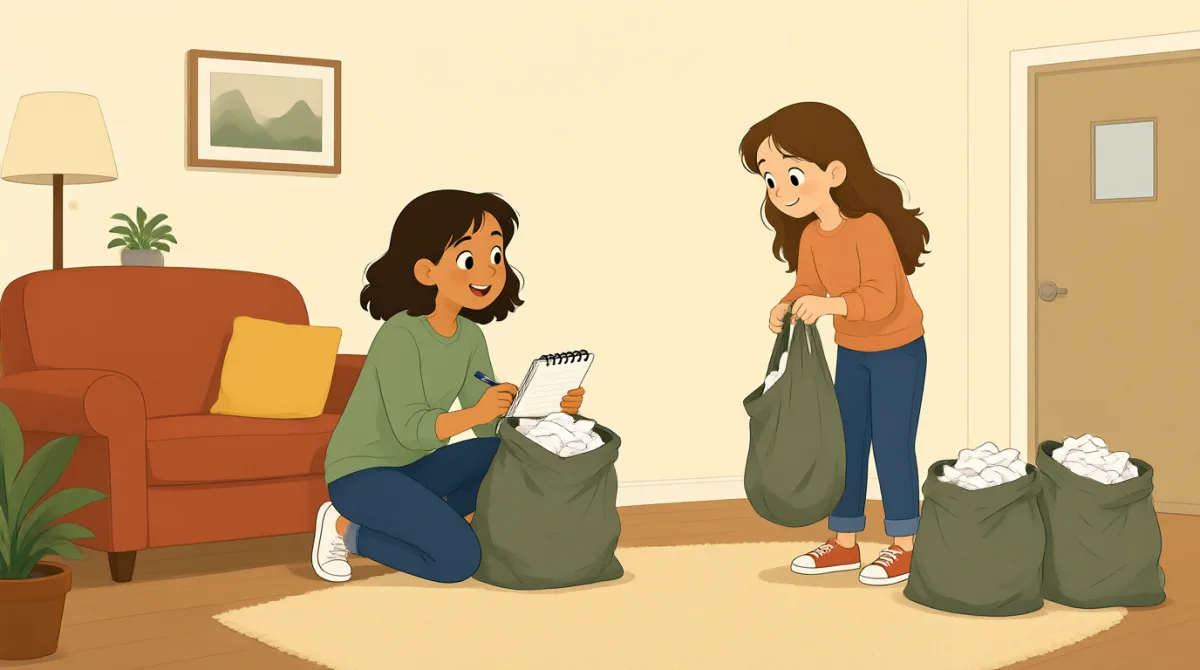
Emma and Mia meet Grace, who is organizing the clean-up. They sign up and learn when and where to meet.
エマとミアは、清掃活動を企画しているグレースに会います。2人は申し込み、集合する日時と場所を確認します。
会話8

Hi, Grace. Mia and I saw the clean-up poster. Can we sign up?
やあ、グレース。ミアと私は清掃活動のポスターを見たんだ。申し込める?

Of course! Please write your names on this sign-up sheet.
もちろんです!この申込用紙にお名前を書いてください。

Do we need to bring anything, like gloves or trash bags?
手袋やゴミ袋みたいに、何か持っていく必要はある?
No, I have tools for everyone. Just wear comfortable shoes and clothes.
いいえ、道具はこちらで皆さんの分を用意しています。動きやすい靴と服装で来てください。
Great! What time should we meet, and where in the park?
いいね!土曜日の何時に、 公園のどこで待ち合わせる?
Meet at nine on Saturday by the park's main entrance.
土曜日の9時に、公園の正門のそばに集合してください。
Got it. We’ll be there at nine. How long will we work?
わかった。9時に行くね。作業はどれくらいするの?
About two hours. Then we’ll take a short break and have snacks.
2時間くらいです。そのあと少し休憩して、おやつを食べます。
語彙7
- sign up申し込む
To sign up means to put your name on a list to join an activity. You can use it when you want to take part in an event or class.
“sign up”は、活動に参加するためにリストに名前を書くことです。イベントやクラスに参加したいときに使えます。
- sign-up sheet申込用紙
A sign-up sheet is a paper where people write their names to join an activity. It helps the organizer know who is coming.
“sign-up sheet”は、活動に参加する人が名前を書く用紙です。主催者が参加者を把握するのに役立ちます。
- bring anything何か持っていく
This asks if you need to take something with you. You can use it before an event or visit.
“bring anything”は、何か持っていく必要があるか尋ねる表現です。イベントや訪問の前に使えます。
- comfortable shoes and clothes動きやすい靴と服装
These are shoes and clothes that feel good to wear. You can use this phrase when asking what to wear for an activity.
“comfortable shoes and clothes”は、履いたり着たりしていて快適な靴や服のことです。活動に何を着ていけばいいか尋ねるときにも使えます。
- main entrance正面入口
The main entrance is the most important or usual way into a place. It is useful for giving a clear meeting point.
“main entrance”は、その場所の主な入口、または通常使われる入口のことです。待ち合わせ場所をはっきり伝えるのに便利です。
- be thereそこにいる・到着する
To be there means to arrive at or be in a place. You can use it to confirm that you will come.
“be there”は、ある場所に着く、またはその場所にいるという意味です。行くことを確認するときに使えます。
- take a short break少し休憩する
This means to stop working for a little while to rest. You can use it when talking about a pause during an activity.
“take a short break”は、少しの間作業を止めて休むことです。活動中の休憩について話すときに使えます。
重要な文8
- 1
Can we sign up?
申し込める?
Use this to ask if you can join an activity or event. You can replace “sign up” with another action, such as “come along.”
活動やイベントに参加できるか尋ねるときに使います。“sign up”を“come along”のような別の行動に置き換えることもできます。
- 2
Do we need to bring anything, like gloves or trash bags?
手袋やゴミ袋みたいに、何か持っていく必要はある?
This is a useful way to ask what you should take with you. You can name a few examples after “like.”
持っていくものを尋ねるときに便利な表現です。“like”のあとに、例をいくつか挙げられます。
- 3
Just wear comfortable shoes and clothes.
動きやすい靴と服装で来てください。
Use this to give simple advice about what to wear. Replace “comfortable shoes and clothes” with other suitable clothing.
何を着ていけばいいか、簡単にアドバイスするときに使います。“comfortable shoes and clothes”を、活動に合った別の服装に置き換えられます。
- 4
What time should we meet, and where in the park?
何時に、 公園のどこで待ち合わせる?
This asks for both the meeting time and place. You can use the same question pattern to make plans for other locations.
待ち合わせの時間と場所の両方を尋ねる表現です。同じ質問の形で、ほかの場所での予定も立てられます。
- 5
Meet at nine on Saturday by the park's main entrance.
土曜日の9時に、公園の正面入口のそばに集合してください。
This gives a clear meeting time, day, and place. You can use this pattern to tell someone where and when to meet.
待ち合わせの時間、曜日、場所をはっきり伝えています。この形を使って、いつどこで会うか伝えられます。
- 6
We’ll be there at nine.
9時に行くね。
Use this to confirm that you will arrive at a certain time. Replace “nine” with another time.
決まった時間に到着すると伝えるときに使います。“nine”を別の時間に置き換えられます。
- 7
How long will we work?
作業はどれくらいするの?
Use this to ask about the length of a future activity. You can replace “work” with another activity, such as “clean” or “wait.”
これから行う活動がどれくらい続くか尋ねる表現です。“work”を“clean”や“wait”など、別の活動に置き換えられます。
- 8
Then we’ll take a short break and have snacks.
そのあと少し休憩して、おやつを食べます。
This explains what will happen after the main activity. You can use “Then we’ll…” to describe the next steps in a plan.
主な活動のあとに何をするか説明する表現です。“Then we’ll…”を使って、予定の次の段取りを伝えられます。