Getting Gloves and Bags
手袋とゴミ袋を受け取る
At the park, Grace gives Emma and Mia gloves and bags. She explains where to put the trash.
公園でグレースがエマとミアに手袋とゴミ袋を渡し、ゴミをどこに置くか説明する。
会話8
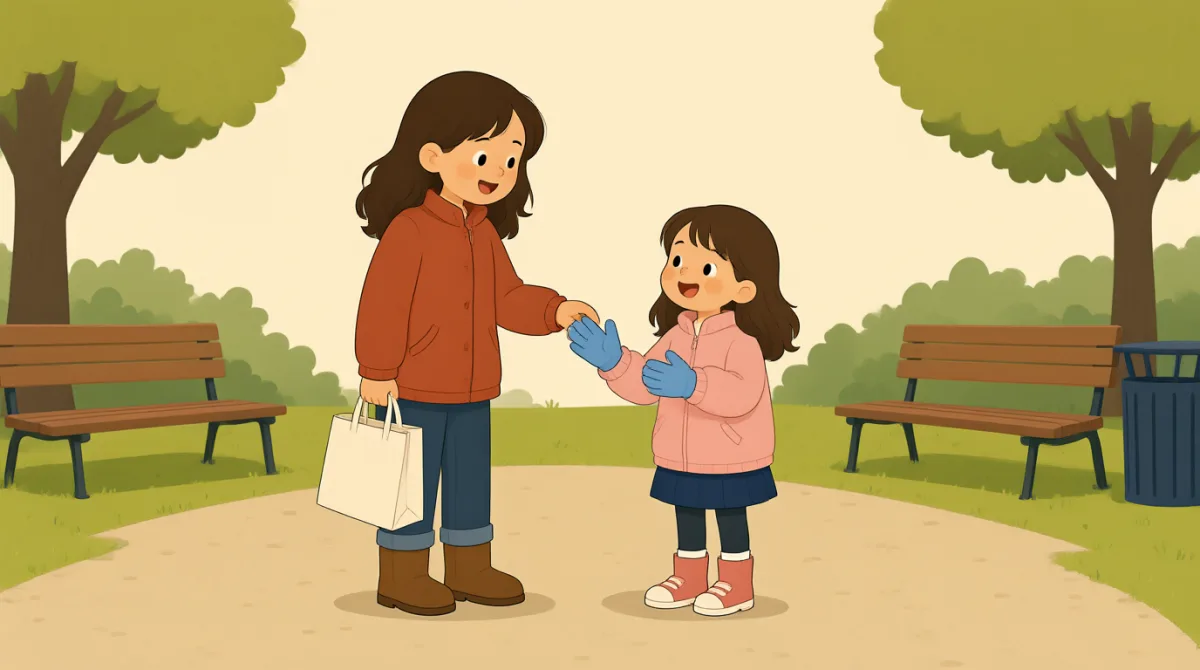

Here are your gloves and bags. Please put on the gloves before you start.
はい、手袋とゴミ袋だよ。始める前に手袋をはめてね。

Thanks, Grace. Where should we put the trash when our bags are full?
ありがとう、グレース。ゴミ袋がいっぱいになったら、ゴミはどこに置けばいい?
Leave full bags by the park entrance. We’ll collect them there later.
いっぱいになったゴミ袋は公園の入口のそばに置いてね。あとでそこに集めに行くよ。

Should we pick up broken glass too, or leave it for someone else?
割れたガラスも拾う?それとも誰かに任せたほうがいい?
Please don’t touch broken glass. Tell me, and I’ll bring a special container.
割れたガラスには触らないでね。私に教えてくれたら、専用の容器を持ってくるよ。
Got it. Are there any areas we should clean first?
わかった。先に掃除したほうがいい場所はある?
Start along the paths near the playground. Watch for people walking by.
遊び場の近くの小道から始めてね。通りかかる人に気をつけて。
Okay, we’ll take these bags and start near the playground.
わかった。このゴミ袋を持って、遊び場の近くから始めるね。
語彙8
- put on the gloves手袋をはめる
To put on the gloves means to wear them on your hands. You can use “put on” for clothes and accessories.
“put on the gloves”は、手に手袋をつけるという意味です。“put on”は服やアクセサリーを身につけるときにも使えます。
- bags are fullゴミ袋がいっぱいになる
This means there is no more space in the bags. You can say “My bag is full” when it cannot hold anything else.
ゴミ袋にもう何も入らない状態のことです。ほかの物が入らないときは、“My bag is full”(私のバッグはいっぱいです)のように言えます。
- park entrance公園の入口
The park entrance is the place where people enter the park. You can use this phrase to give someone a meeting place.
“park entrance”は、人が公園に入る場所のことです。待ち合わせ場所を伝えるときにも使えます。
- pick up拾う
Here, “pick up” means to collect something from the ground. You can also say “pick up litter” when cleaning outside.
ここでの“pick up”は、地面にある物を拾うという意味です。屋外の掃除でゴミを拾うときは、“pick up litter”とも言えます。
- broken glass割れたガラス
Broken glass is glass that has cracked into pieces. It can be dangerous, so people should not touch it.
“broken glass”は、割れて破片になったガラスのことです。危険なので、触らないようにしましょう。
- special container専用の容器
A special container is a particular box or holder made for a certain purpose. You can use “container” for something that holds or carries items.
“special container”は、特定の目的のために作られた箱や入れ物のことです。物を入れたり運んだりする容器は、“container”と言えます。
- walking by通りかかる
“Walking by” means passing near a place on foot. You can use it to talk about people moving past you.
“walking by”は、ある場所の近くを歩いて通り過ぎることです。近くを通り過ぎる人について話すときに使えます。
- near the playground遊び場の近く
This means close to the playground. You can use “near” to say that one place is not far from another.
“near the playground”は、遊び場から近い場所という意味です。“near”を使うと、ある場所が別の場所から遠くないことを表せます。
重要な文8
- 1
Please put on the gloves before you start.
始める前に手袋をはめてね。
This is a polite way to give someone an instruction. Use “Please” to make a request sound friendly.
相手に丁寧に指示するときの表現です。“Please”を使うと、お願いがやわらかく聞こえます。
- 2
Where should we put the trash when our bags are full?
ゴミ袋がいっぱいになったら、ゴミはどこに置けばいい?
This is a useful way to ask where something belongs. Replace “the trash” with another item to ask where to put it.
物をどこに置けばいいか尋ねるときに便利な表現です。“the trash”を別の物に置き換えて、置き場所を尋ねることもできます。
- 3
Leave full bags by the park entrance.
いっぱいになったゴミ袋は公園の入口のそばに置いてね。
This gives a clear instruction about where to leave something. You can replace “full bags” and “the park entrance” with other items and places.
物をどこに置くか、はっきり伝える指示です。“full bags”や“the park entrance”を別の物や場所に置き換えて使えます。
- 4
Please don’t touch broken glass.
割れたガラスには触らないでね。
This is a polite but clear warning. Use “Please don’t” to ask someone not to do something.
丁寧でありながら、はっきりと注意を伝える表現です。“Please don’t”を使うと、相手に何かをしないようお願いできます。
- 5
Tell me, and I’ll bring a special container.
私に教えてくれたら、専用の容器を持ってくるよ。
This offers help and explains what you will do next. Use “I’ll” to talk about a future action or decision.
手助けを申し出て、次に何をするか伝える表現です。“I’ll”は、これからすることや決めたことを話すときに使います。
- 6
Are there any areas we should clean first?
先に掃除したほうがいい場所はある?
This is a useful way to ask which task or place to begin with. Replace “areas we should clean” with another activity to ask what to do first.
どの作業や場所から始めればいいか尋ねるときに便利な表現です。“areas we should clean”を別の活動に置き換えて、何を先にすべきか尋ねられます。
- 7
Watch for people walking by.
通りかかる人に気をつけて。
This reminds someone to be careful and notice people nearby. Use “Watch for” to warn someone to look out for something.
近くにいる人に注意を払うよう促す表現です。“Watch for”を使うと、何かに気をつけるよう相手に伝えられます。
- 8
Okay, we’ll take these bags and start near the playground.
わかった。このゴミ袋を持って、遊び場の近くから始めるね。
This confirms a plan and says what will happen next. Use “we’ll” to describe a future action you have decided on.
計画を確認し、次にすることを伝える表現です。“we’ll”は、決めたこれからの行動を表すときに使います。