Signing Up
报名参加
Emma and Mia meet Grace, who is organizing the clean-up. They sign up and learn when and where to meet.
Emma 和 Mia 遇到活动组织者 Grace。她们报名参加,并了解集合的时间和地点。
对话8
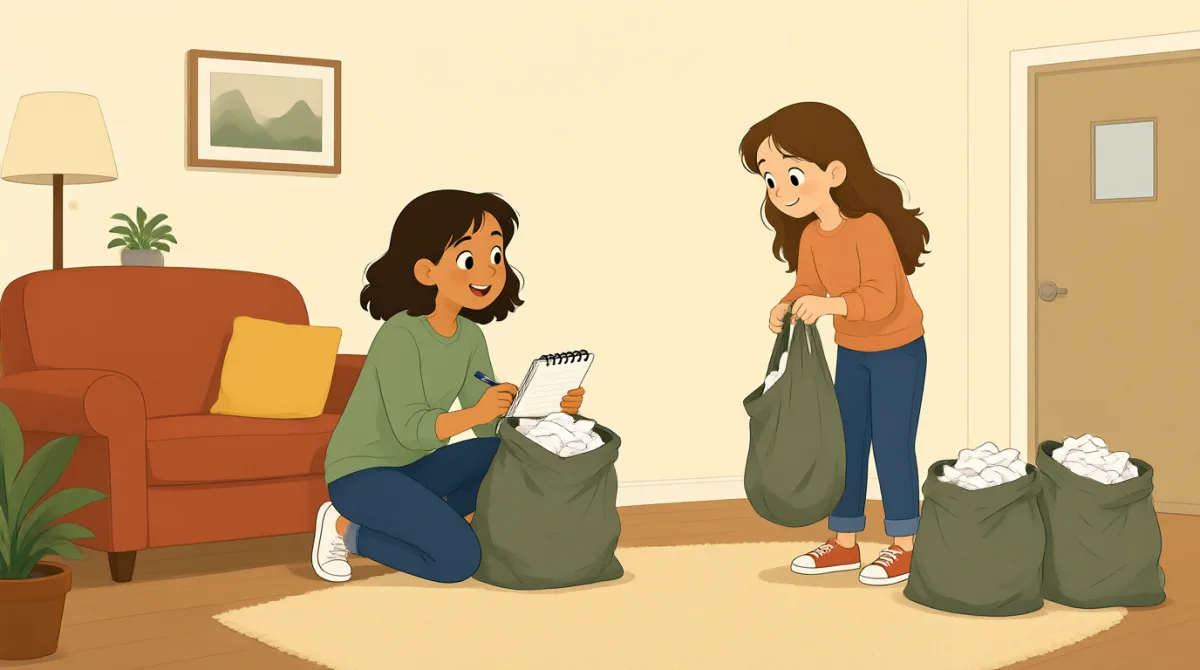

Hi, Grace. Mia and I saw the clean-up poster. Can we sign up?
你好,格蕾丝。我和米娅看到清洁活动的海报了。我们可以报名吗?

Of course! Please write your names on this sign-up sheet.
当然可以!请把你们的名字写在这张报名表上。

Do we need to bring anything, like gloves or trash bags?
我们需要带什么吗?比如手套或垃圾袋?
No, I have tools for everyone. Just wear comfortable shoes and clothes.
不用,我为大家准备了工具。穿舒适的鞋子和衣服就行。
Great! What time should we meet, and where in the park?
太好了!我们应该几点见面,在公园的什么地方?
Meet at nine on Saturday by the park's main entrance.
星期六九点在公园正门见面。
Got it. We’ll be there at nine. How long will we work?
知道了。我们九点会到。我们要干多久?
About two hours. Then we’ll take a short break and have snacks.
大约两个小时。之后我们会休息一会儿,吃点零食。
词汇7
- sign up报名参加
To sign up means to put your name on a list to join an activity. You can use it when you want to take part in an event or class.
“sign up”是指把自己的名字写在名单上,参加某项活动。想参加活动或课程时,可以用这个表达。
- sign-up sheet报名表
A sign-up sheet is a paper where people write their names to join an activity. It helps the organizer know who is coming.
“sign-up sheet”是一张供大家填写姓名、报名参加活动的表格。组织者可以通过它了解谁会来。
- bring anything带什么东西
This asks if you need to take something with you. You can use it before an event or visit.
这个表达是在问你是否需要带东西。参加活动或拜访别人之前,可以这样问。
- comfortable shoes and clothes舒适的鞋子和衣服
These are shoes and clothes that feel good to wear. You can use this phrase when asking what to wear for an activity.
指穿起来舒服的鞋子和衣服。询问参加某项活动时该穿什么,可以用这个表达。
- main entrance正门
The main entrance is the most important or usual way into a place. It is useful for giving a clear meeting point.
“main entrance”指一个地方最主要或通常使用的入口。说明明确的集合地点时,这个表达很实用。
- be there到那里;准时到场
To be there means to arrive at or be in a place. You can use it to confirm that you will come.
“be there”指到达某个地方或人在那里。你可以用它来确认自己会到场。
- take a short break休息一会儿
This means to stop working for a little while to rest. You can use it when talking about a pause during an activity.
“take a short break”是指停下手头的工作,稍微休息一会儿。谈到活动中的休息时间时,可以用这个表达。
重点句子8
- 1
Can we sign up?
我们可以报名吗?
Use this to ask if you can join an activity or event. You can replace “sign up” with another action, such as “come along.”
用这句话询问自己能不能参加某项活动。你可以把“sign up”换成其他动作,比如“come along”。
- 2
Do we need to bring anything, like gloves or trash bags?
我们需要带什么东西吗?比如手套或垃圾袋?
This is a useful way to ask what you should take with you. You can name a few examples after “like.”
这是一种询问应该带些什么的实用说法。你可以在“like”后面举几个例子。
- 3
Just wear comfortable shoes and clothes.
穿舒适的鞋子和衣服就行。
Use this to give simple advice about what to wear. Replace “comfortable shoes and clothes” with other suitable clothing.
用这句话简单地建议别人穿什么。你可以把“comfortable shoes and clothes”换成其他合适的衣物。
- 4
What time should we meet, and where in the park?
我们应该几点见面,在公园的什么地方?
This asks for both the meeting time and place. You can use the same question pattern to make plans for other locations.
这句话同时询问集合时间和地点。你也可以用同样的问法,安排在其他地方见面。
- 5
Meet at nine on Saturday by the park's main entrance.
星期六九点在公园正门见面。
This gives a clear meeting time, day, and place. You can use this pattern to tell someone where and when to meet.
这句话清楚地说明了集合的时间、日期和地点。告诉别人何时何地见面时,可以用这个句型。
- 6
We’ll be there at nine.
我们九点会到。
Use this to confirm that you will arrive at a certain time. Replace “nine” with another time.
用这句话确认自己会在某个时间到达。你可以把“nine”换成其他时间。
- 7
How long will we work?
我们要干多久?
Use this to ask about the length of a future activity. You can replace “work” with another activity, such as “clean” or “wait.”
用这句话询问未来某项活动要持续多久。你可以把“work”换成其他活动,比如“clean”或“wait”。
- 8
Then we’ll take a short break and have snacks.
之后我们会休息一会儿,吃点零食。
This explains what will happen after the main activity. You can use “Then we’ll…” to describe the next steps in a plan.
这句话说明主要活动结束后会做什么。你可以用“Then we’ll…”来描述计划中的下一步。