Signing Up
Inscrição
Emma and Mia meet Grace, who is organizing the clean-up. They sign up and learn when and where to meet.
Emma e Mia encontram Grace, que está organizando a limpeza. Elas se inscrevem e ficam sabendo quando e onde devem se encontrar.
Diálogo8
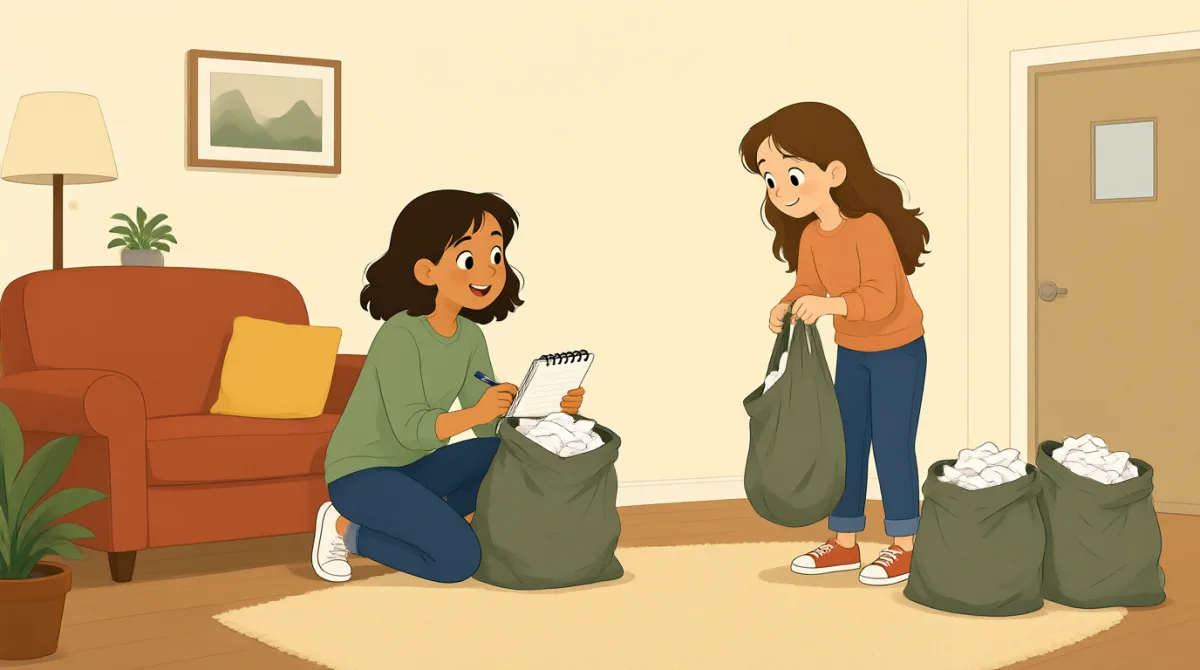

Hi, Grace. Mia and I saw the clean-up poster. Can we sign up?
Oi, Grace. A Mia e eu vimos o cartaz da limpeza. Podemos nos inscrever?

Of course! Please write your names on this sign-up sheet.
Claro! Por favor, escrevam seus nomes nesta lista de inscrição.

Do we need to bring anything, like gloves or trash bags?
Precisamos levar alguma coisa, como luvas ou sacos de lixo?
No, I have tools for everyone. Just wear comfortable shoes and clothes.
Não, tenho ferramentas para todo mundo. É só usar sapatos e roupas confortáveis.
Great! What time should we meet, and where in the park?
Ótimo! A que horas devemos nos encontrar e onde, no parque?
Meet at nine on Saturday by the park's main entrance.
Encontrem-se às nove de sábado, perto da entrada principal do parque.
Got it. We’ll be there at nine. How long will we work?
Entendi. Estaremos lá às nove. Por quanto tempo vamos trabalhar?
About two hours. Then we’ll take a short break and have snacks.
Por umas duas horas. Depois, faremos uma pausa rápida e comeremos alguns lanchinhos.
Vocabulário7
- sign upinscrever-se
To sign up means to put your name on a list to join an activity. You can use it when you want to take part in an event or class.
“Sign up” significa colocar seu nome em uma lista para participar de uma atividade. Você pode usar essa expressão quando quiser participar de um evento ou curso.
- sign-up sheetlista de inscrição
A sign-up sheet is a paper where people write their names to join an activity. It helps the organizer know who is coming.
Uma “sign-up sheet” é uma folha onde as pessoas escrevem seus nomes para participar de uma atividade. Ela ajuda o organizador a saber quem vai.
- bring anythinglevar alguma coisa
This asks if you need to take something with you. You can use it before an event or visit.
“Bring anything” é uma forma de perguntar se você precisa levar algo. Você pode usar essa expressão antes de um evento ou de uma visita.
- comfortable shoes and clothessapatos e roupas confortáveis
These are shoes and clothes that feel good to wear. You can use this phrase when asking what to wear for an activity.
“Comfortable shoes and clothes” são sapatos e roupas que são agradáveis de usar. Você pode usar essa expressão para perguntar o que vestir para uma atividade.
- main entranceentrada principal
The main entrance is the most important or usual way into a place. It is useful for giving a clear meeting point.
A “main entrance” é a entrada principal ou mais usada de um lugar. Essa expressão é útil para indicar um ponto de encontro com clareza.
- be thereestar lá
To be there means to arrive at or be in a place. You can use it to confirm that you will come.
“Be there” significa chegar a um lugar ou estar nele. Você pode usar essa expressão para confirmar que vai comparecer.
- take a short breakfazer uma pausa rápida
This means to stop working for a little while to rest. You can use it when talking about a pause during an activity.
“Take a short break” significa parar de trabalhar por um tempinho para descansar. Você pode usar essa expressão para falar de uma pausa durante uma atividade.
Frases-chave8
- 1
Can we sign up?
Podemos nos inscrever?
Use this to ask if you can join an activity or event. You can replace “sign up” with another action, such as “come along.”
Use “Can we sign up?” para perguntar se vocês podem participar de uma atividade ou evento. Você pode trocar “sign up” por outra ação, como “come along” (ir junto).
- 2
Do we need to bring anything, like gloves or trash bags?
Precisamos levar alguma coisa, como luvas ou sacos de lixo?
This is a useful way to ask what you should take with you. You can name a few examples after “like.”
Essa é uma maneira útil de perguntar o que você deve levar. Você pode dar alguns exemplos depois de “like” (como).
- 3
Just wear comfortable shoes and clothes.
É só usar sapatos e roupas confortáveis.
Use this to give simple advice about what to wear. Replace “comfortable shoes and clothes” with other suitable clothing.
Use “Just wear comfortable shoes and clothes.” para dar uma orientação simples sobre o que vestir. Substitua “comfortable shoes and clothes” por outras roupas adequadas.
- 4
What time should we meet, and where in the park?
A que horas devemos nos encontrar e onde, no parque?
This asks for both the meeting time and place. You can use the same question pattern to make plans for other locations.
Essa pergunta pede tanto o horário quanto o local do encontro. Você pode usar o mesmo padrão para combinar encontros em outros lugares.
- 5
Meet at nine on Saturday by the park's main entrance.
Encontrem-se às nove de sábado, perto da entrada principal do parque.
This gives a clear meeting time, day, and place. You can use this pattern to tell someone where and when to meet.
Essa frase informa claramente o horário, o dia e o local do encontro. Você pode usar esse padrão para dizer a alguém onde e quando se encontrar.
- 6
We’ll be there at nine.
Estaremos lá às nove.
Use this to confirm that you will arrive at a certain time. Replace “nine” with another time.
Use “We’ll be there at nine.” para confirmar que vocês chegarão em determinado horário. Substitua “nine” por outro horário.
- 7
How long will we work?
Por quanto tempo vamos trabalhar?
Use this to ask about the length of a future activity. You can replace “work” with another activity, such as “clean” or “wait.”
Use “How long will we work?” para perguntar quanto tempo vai durar uma atividade futura. Você pode substituir “work” por outra atividade, como “clean” (limpar) ou “wait” (esperar).
- 8
Then we’ll take a short break and have snacks.
Depois, faremos uma pausa rápida e comeremos alguns lanchinhos.
This explains what will happen after the main activity. You can use “Then we’ll…” to describe the next steps in a plan.
Essa frase explica o que vai acontecer depois da atividade principal. Você pode usar “Then we’ll…” para descrever as próximas etapas de um plano.