It Is Too Spicy!
辛すぎる!
Emma tries her curry and finds it too spicy. Jack checks if she is all right.
エマはカレーを食べてみて、辛すぎることに気づく。ジャックはエマが大丈夫か尋ねる。
会話6
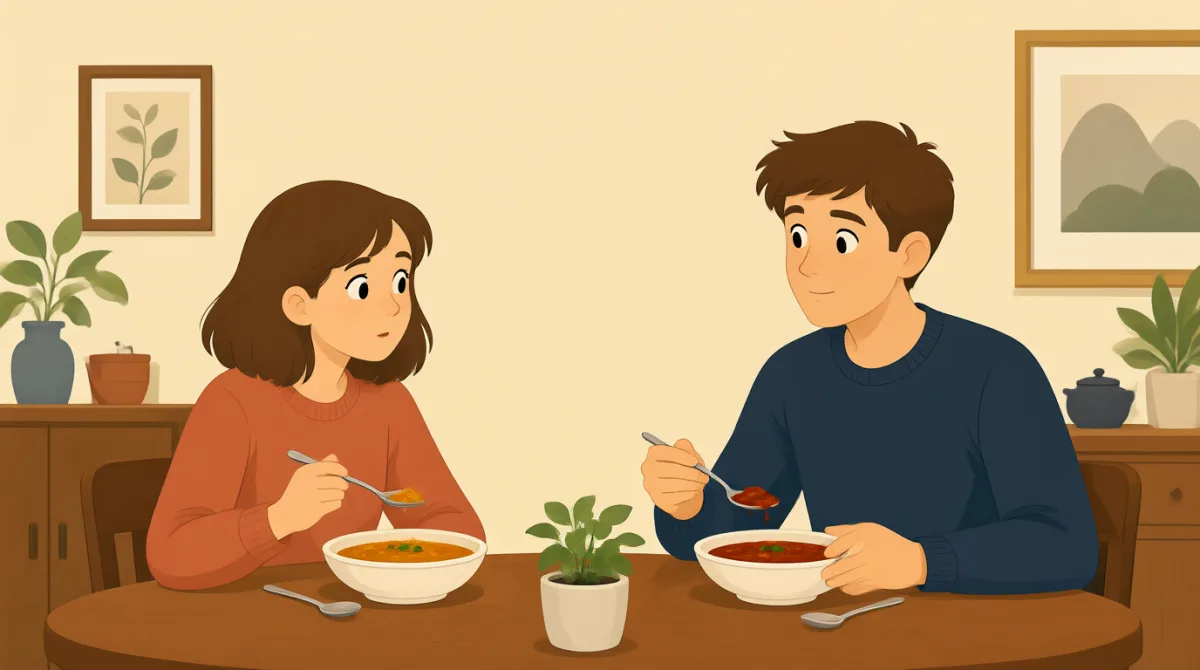

Oh, this curry is too spicy!
わあ、このカレー辛すぎる!

Are you all right, Emma?
大丈夫、エマ?
My mouth is so hot!
口の中がすごく熱い!
I'm sorry. Is it very hot?
ごめんね。そんなに辛いの?
Yes! I can't eat this.
うん!これ、食べられないよ。
Take a small bite. It's okay.
少しだけ食べてみて。大丈夫だよ。
語彙7
- too spicy辛すぎる
This means the food has more spice than you can enjoy. Use “too” before an adjective to say something is more than you want.
食べ物が、自分がおいしく食べられる範囲を超えて辛いという意味です。形容詞の前に “too” を置くと、「〜すぎる」と、度を超えていることを表せます。
- Are you all right?大丈夫?
This is a way to ask if someone is okay. You can use it when someone seems hurt or uncomfortable.
相手が大丈夫かどうかを尋ねる表現です。相手がけがをしたり、つらそうに見えたりするときに使えます。
- My mouth is so hot!口の中がすごく熱い!
Emma says this because the spicy curry makes her mouth feel hot. Use “My mouth is…” to describe how your mouth feels.
辛いカレーで口の中が熱く感じるので、エマはこう言っています。“My mouth is…” は、口の中がどんな感じかを表すときに使います。
- I'm sorry.ごめんね。
This is a simple way to show you feel bad about a problem. You can say it when something has gone wrong.
問題が起きて申し訳なく思っていることを伝える、簡単な表現です。何かうまくいかなかったときに使えます。
- I can't eat this.これ、食べられない。
This means you are not able to eat the food. You can use “I can't eat…” to explain that a food is difficult or not possible for you to eat.
その食べ物を食べられないという意味です。“I can't eat…” を使うと、食べるのが難しい、または食べられないことを伝えられます。
- Take a small bite.少しだけ食べてみて。
This means to eat a little piece of food. Use it to suggest trying just a little.
食べ物を少しだけ口にするという意味です。ほんの少し試してみるよう勧めるときに使います。
- It's okay.大丈夫だよ。
This can mean that something is all right or not a problem. Here, Jack uses it to reassure Emma.
問題ない、心配いらないという意味で使えます。ここではジャックがエマを安心させるために言っています。
重要な文8
- 1
Oh, this curry is too spicy!
わあ、このカレー辛すぎる!
Use “This [food] is too [adjective]” to say something is more than you want. For example, “This soup is too hot!”
“This [food] is too [adjective]” は、何かが望んでいる以上に〜だと伝える表現です。たとえば、“This soup is too hot!”(このスープ、熱すぎる!)と言えます。
- 2
Are you all right, Emma?
大丈夫、エマ?
This is a useful way to check if someone feels okay. You can use it with a name or leave the name out.
相手が大丈夫かどうかを確かめるのに便利な表現です。名前をつけて呼びかけても、名前を省いても使えます。
- 3
My mouth is so hot!
口の中がすごく熱い!
Use “My [body part] is so…” to describe a strong feeling. For example, “My feet are so cold!”
“My [body part] is so…” は、体の一部に強く感じることを表します。たとえば、“My feet are so cold!”(足がすごく冷たい!)と言えます。
- 4
I'm sorry.
ごめんね。
Use this short phrase to show concern or regret. It is common in everyday conversations.
心配や後悔を伝えるときに使う短い表現です。日常会話でよく使われます。
- 5
Is it very hot?
そんなに辛いの?
This is a yes-or-no question about how hot something is. You can use “Is it very [adjective]?” to ask about other things, too.
どれくらい熱いかを尋ねる、はい・いいえで答えられる質問です。“Is it very [adjective]?” は、ほかのことについて尋ねるときにも使えます。
- 6
Yes!
うん!
This short answer shows agreement. You can use it to answer a question when the meaning is clear.
同意を表す短い返事です。何に答えているかが明らかなときに使えます。
- 7
I can't eat this.
これ、食べられない。
Use “I can't eat…” to say that you are unable to eat something. You can replace “this” with a food name, like “I can't eat curry.”
“I can't eat…” は、何かを食べられないと伝える表現です。“this” を食べ物の名前に置き換えて、“I can't eat curry.”(カレーは食べられない)と言うこともできます。
- 8
Take a small bite.
少しだけ食べてみて。
Use this phrase to suggest trying a little food. You can change “small” to “big” to suggest a bigger bite.
食べ物を少し試してみるよう勧める表現です。“small” を “big” に変えると、もっと大きな一口を勧められます。