It Is Too Spicy!
Çok Acı!
Emma tries her curry and finds it too spicy. Jack checks if she is all right.
Emma körisinin tadına bakar ve çok acı olduğunu fark eder. Jack iyi olup olmadığını sorar.
Diyalog6
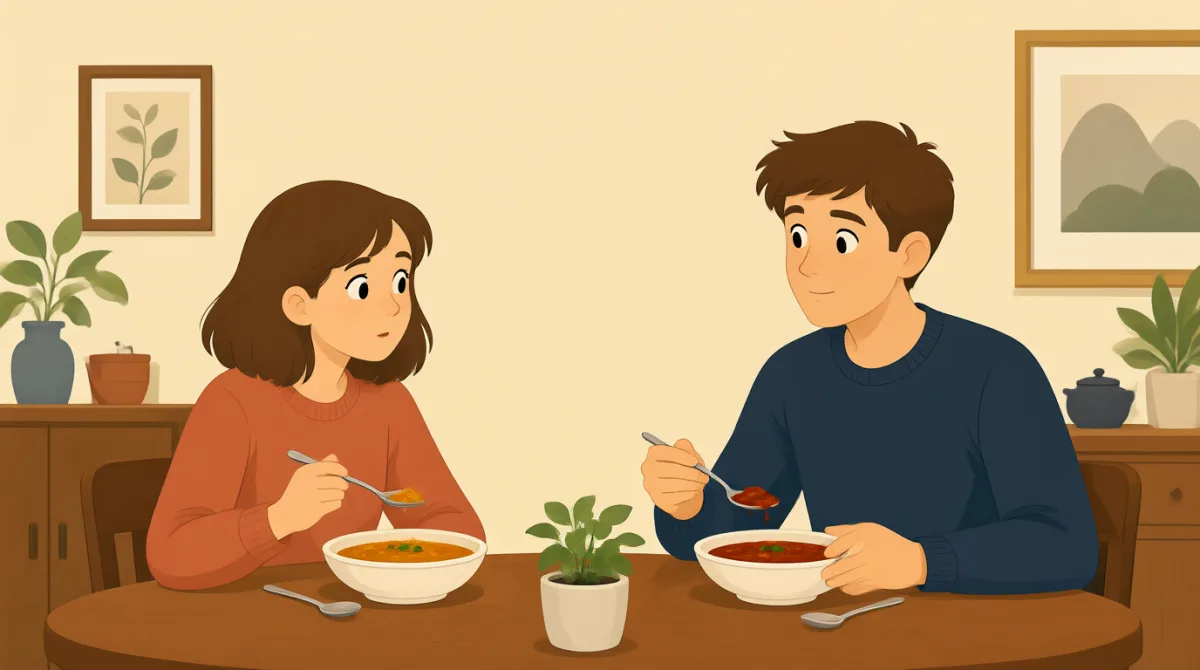

Oh, this curry is too spicy!
Ay, bu köri çok acı!

Are you all right, Emma?
İyi misin, Emma?
My mouth is so hot!
Ağzım cayır cayır yanıyor!
I'm sorry. Is it very hot?
Üzgünüm. Çok mu acı?
Yes! I can't eat this.
Evet! Bunu yiyemem.
Take a small bite. It's okay.
Küçük bir lokma al. Sorun yok.
Kelime Bilgisi7
- too spicyçok acı
This means the food has more spice than you can enjoy. Use “too” before an adjective to say something is more than you want.
Bu, yemeğin senin yiyebileceğinden daha acı olduğu anlamına gelir. Bir şeyin istediğinden daha fazla olduğunu söylemek için sıfattan önce “too” kullanılır.
- Are you all right?İyi misin?
This is a way to ask if someone is okay. You can use it when someone seems hurt or uncomfortable.
Birinin iyi olup olmadığını sormanın bir yoludur. Birisi yaralanmış ya da rahatsız görünüyorsa bu ifadeyi kullanabilirsin.
- My mouth is so hot!Ağzım cayır cayır yanıyor!
Emma says this because the spicy curry makes her mouth feel hot. Use “My mouth is…” to describe how your mouth feels.
Emma bunu, acı köri yüzünden ağzı yanıyormuş gibi hissettiği için söylüyor. Ağzının nasıl hissettiğini anlatmak için “My mouth is…” kalıbını kullanabilirsin.
- I'm sorry.Üzgünüm.
This is a simple way to show you feel bad about a problem. You can say it when something has gone wrong.
Bu, bir sorun yüzünden üzüldüğünü ifade etmenin basit bir yoludur. Bir şeyler ters gittiğinde söyleyebilirsin.
- I can't eat this.Bunu yiyemem.
This means you are not able to eat the food. You can use “I can't eat…” to explain that a food is difficult or not possible for you to eat.
Bu, yemeği yiyemediğin anlamına gelir. Bir yiyeceği yemenin zor ya da senin için imkânsız olduğunu anlatmak için “I can't eat…” kalıbını kullanabilirsin.
- Take a small bite.Küçük bir lokma al.
This means to eat a little piece of food. Use it to suggest trying just a little.
Bu, yiyecekten küçük bir parça yemek demektir. Biraz denemesini önermek için kullanabilirsin.
- It's okay.Sorun yok.
This can mean that something is all right or not a problem. Here, Jack uses it to reassure Emma.
Bu ifade, bir şeyin yolunda olduğunu ya da sorun olmadığını anlatabilir. Jack burada Emma'yı rahatlatmak için söylüyor.
Önemli Cümleler8
- 1
Oh, this curry is too spicy!
Ay, bu köri çok acı!
Use “This [food] is too [adjective]” to say something is more than you want. For example, “This soup is too hot!”
Bir şeyin istediğinden daha fazla olduğunu anlatmak için “This [food] is too [adjective]” kalıbını kullan. Örneğin: “This soup is too hot!”
- 2
Are you all right, Emma?
İyi misin, Emma?
This is a useful way to check if someone feels okay. You can use it with a name or leave the name out.
Birinin kendini iyi hissedip hissetmediğini sormak için kullanışlı bir ifadedir. Bir isimle birlikte kullanabilir ya da ismi söylemeyebilirsin.
- 3
My mouth is so hot!
Ağzım cayır cayır yanıyor!
Use “My [body part] is so…” to describe a strong feeling. For example, “My feet are so cold!”
Güçlü bir hissi anlatmak için “My [body part] is so…” kalıbını kullan. Örneğin: “My feet are so cold!”
- 4
I'm sorry.
Üzgünüm.
Use this short phrase to show concern or regret. It is common in everyday conversations.
Endişe ya da pişmanlık ifade etmek için bu kısa ifadeyi kullan. Günlük konuşmalarda sıkça duyulur.
- 5
Is it very hot?
Çok mu acı?
This is a yes-or-no question about how hot something is. You can use “Is it very [adjective]?” to ask about other things, too.
Bu, bir şeyin ne kadar acı olduğunu soran, evet ya da hayır diye cevaplanabilecek bir sorudur. Başka şeyleri sormak için de “Is it very [adjective]?” kalıbını kullanabilirsin.
- 6
Yes!
Evet!
This short answer shows agreement. You can use it to answer a question when the meaning is clear.
Bu kısa cevap, karşındakine katıldığını gösterir. Anlamın açık olduğu durumlarda bir soruyu cevaplamak için kullanabilirsin.
- 7
I can't eat this.
Bunu yiyemem.
Use “I can't eat…” to say that you are unable to eat something. You can replace “this” with a food name, like “I can't eat curry.”
Bir şeyi yiyemediğini söylemek için “I can't eat…” kalıbını kullan. “This” yerine “I can't eat curry.” örneğindeki gibi bir yiyeceğin adını koyabilirsin.
- 8
Take a small bite.
Küçük bir lokma al.
Use this phrase to suggest trying a little food. You can change “small” to “big” to suggest a bigger bite.
Biraz yiyecek denemesini önermek için bu ifadeyi kullan. Daha büyük bir lokma önermek için “small” yerine “big” diyebilirsin.