It Is Too Spicy!
这也太辣了!
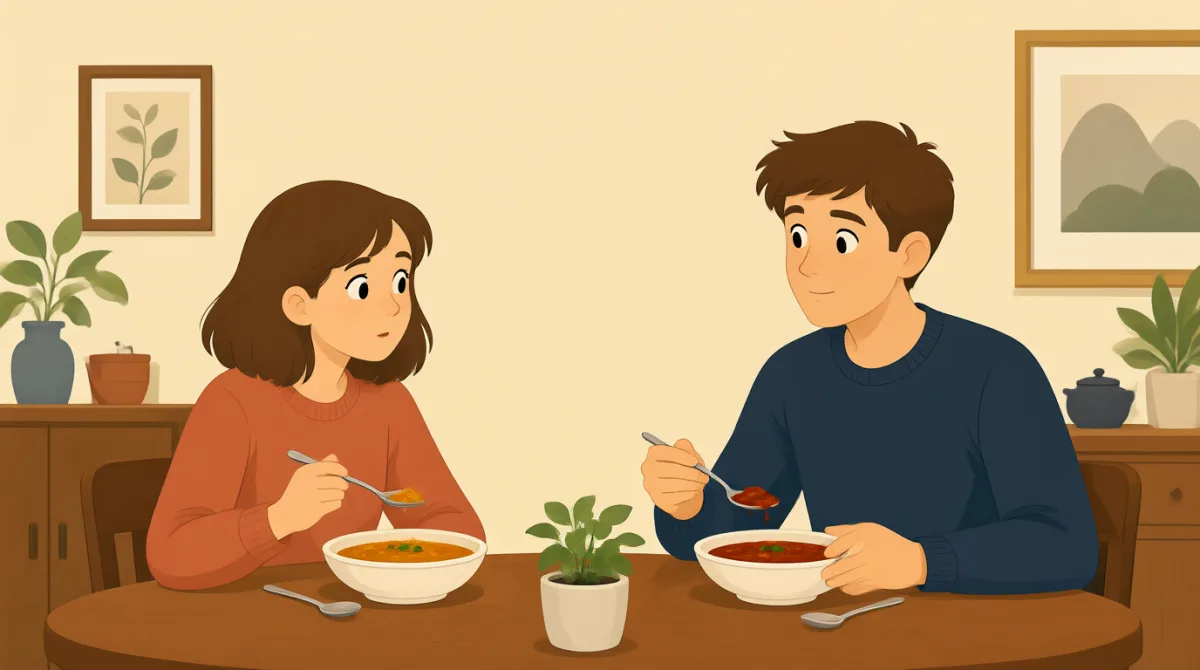
Emma tries her curry and finds it too spicy. Jack checks if she is all right.
Emma 尝了咖喱,发现它太辣了。Jack 问她还好吗。
对话6

Oh, this curry is too spicy!
哦,这咖喱太辣了!

Are you all right, Emma?
你还好吗,艾玛?
My mouth is so hot!
我的嘴好辣!
I'm sorry. Is it very hot?
对不起。是不是特别辣?
Yes! I can't eat this.
是的!我吃不了这个。
Take a small bite. It's okay.
吃一小口就好,没关系。
词汇7
- too spicy太辣了
This means the food has more spice than you can enjoy. Use “too” before an adjective to say something is more than you want.
这表示食物的辣度超过了你能接受的程度。在形容词前加上“too”,可以表示某事物的程度超出了你的预期或接受范围。
- Are you all right?你还好吗?
This is a way to ask if someone is okay. You can use it when someone seems hurt or uncomfortable.
这是询问别人是否安好的说法。看到有人受伤或感到不舒服时,可以这样问。
- My mouth is so hot!我的嘴好辣!
Emma says this because the spicy curry makes her mouth feel hot. Use “My mouth is…” to describe how your mouth feels.
艾玛这么说,是因为辣咖喱让她觉得嘴里火辣辣的。用“My mouth is…”可以描述嘴巴的感受。
- I'm sorry.对不起。
This is a simple way to show you feel bad about a problem. You can say it when something has gone wrong.
这是表达你对某个问题感到抱歉的简单说法。出了状况时可以这么说。
- I can't eat this.我吃不了这个。
This means you are not able to eat the food. You can use “I can't eat…” to explain that a food is difficult or not possible for you to eat.
这表示你没法吃这种食物。可以用“I can't eat…”来说明某种食物很难吃,或者你无法吃。
- Take a small bite.吃一小口。
This means to eat a little piece of food. Use it to suggest trying just a little.
这表示吃一点点食物。可以用这句话建议对方只尝一点。
- It's okay.没关系。
This can mean that something is all right or not a problem. Here, Jack uses it to reassure Emma.
这句话可以表示没事或不是什么问题。这里杰克用它来安慰艾玛。
重点句子8
- 1
Oh, this curry is too spicy!
哦,这咖喱太辣了!
Use “This [food] is too [adjective]” to say something is more than you want. For example, “This soup is too hot!”
用“This [food] is too [adjective]”可以表示某事物的程度超出了你的预期或接受范围。例如:“This soup is too hot!”(这汤太烫了!)
- 2
Are you all right, Emma?
你还好吗,艾玛?
This is a useful way to check if someone feels okay. You can use it with a name or leave the name out.
这是询问别人感觉是否还好的实用说法。可以加上对方的名字,也可以不加。
- 3
My mouth is so hot!
我的嘴好辣!
Use “My [body part] is so…” to describe a strong feeling. For example, “My feet are so cold!”
用“My [body part] is so…”可以描述强烈的感受。例如:“My feet are so cold!”(我的脚好冷!)
- 4
I'm sorry.
对不起。
Use this short phrase to show concern or regret. It is common in everyday conversations.
用这句简短的话表达关心或歉意。在日常对话中很常见。
- 5
Is it very hot?
很烫吗?
This is a yes-or-no question about how hot something is. You can use “Is it very [adjective]?” to ask about other things, too.
这是一个用“是”或“不是”来回答的问题,用来询问某样东西有多烫。你也可以用“Is it very [adjective]?”来询问其他事物的情况。
- 6
Yes!
是的!
This short answer shows agreement. You can use it to answer a question when the meaning is clear.
这个简短的回答表示赞同。意思明确时,可以用它来回答问题。
- 7
I can't eat this.
我吃不了这个。
Use “I can't eat…” to say that you are unable to eat something. You can replace “this” with a food name, like “I can't eat curry.”
用“I can't eat…”表示你无法吃某样东西。可以把“this”换成食物名称,比如“I can't eat curry.”
- 8
Take a small bite.
吃一小口。
Use this phrase to suggest trying a little food. You can change “small” to “big” to suggest a bigger bite.
用这句话建议对方尝一点食物。把“small”换成“big”,就可以建议对方咬大一口。