It Is Too Spicy!
這也太辣了!
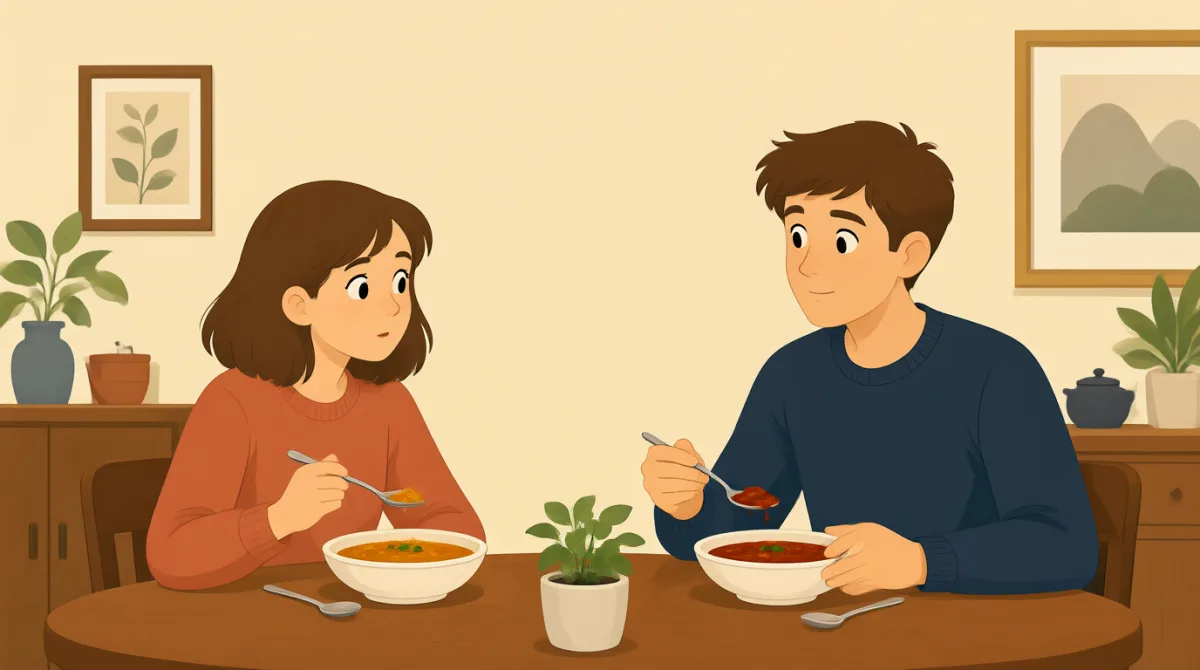
Emma tries her curry and finds it too spicy. Jack checks if she is all right.
Emma 嚐了咖哩,發現它太辣了。Jack 問她還好嗎。
對話6

Oh, this curry is too spicy!
哦,這咖哩太辣了!

Are you all right, Emma?
你還好嗎,艾瑪?
My mouth is so hot!
我的嘴好辣!
I'm sorry. Is it very hot?
對不起。是不是特別辣?
Yes! I can't eat this.
是的!我吃不了這個。
Take a small bite. It's okay.
吃一小口就好,沒關係。
詞彙7
- too spicy太辣了
This means the food has more spice than you can enjoy. Use “too” before an adjective to say something is more than you want.
這表示食物的辣度超過了你能接受的程度。在形容詞前加上“too”,可以表示某事物的程度超出了你的預期或接受範圍。
- Are you all right?你還好嗎?
This is a way to ask if someone is okay. You can use it when someone seems hurt or uncomfortable.
這是詢問別人是否安好的說法。看到有人受傷或感到不舒服時,可以這樣問。
- My mouth is so hot!我的嘴好辣!
Emma says this because the spicy curry makes her mouth feel hot. Use “My mouth is…” to describe how your mouth feels.
艾瑪這麼說,是因為辣咖哩讓她覺得嘴裡火辣辣的。用“My mouth is…”可以描述嘴巴的感受。
- I'm sorry.對不起。
This is a simple way to show you feel bad about a problem. You can say it when something has gone wrong.
這是表達你對某個問題感到抱歉的簡單說法。出了狀況時可以這麼說。
- I can't eat this.我吃不了這個。
This means you are not able to eat the food. You can use “I can't eat…” to explain that a food is difficult or not possible for you to eat.
這表示你沒法吃這種食物。可以用“I can't eat…”來說明某種食物很難吃,或者你無法吃。
- Take a small bite.吃一小口。
This means to eat a little piece of food. Use it to suggest trying just a little.
這表示吃一點點食物。可以用這句話建議對方只嘗一點。
- It's okay.沒關係。
This can mean that something is all right or not a problem. Here, Jack uses it to reassure Emma.
這句話可以表示沒事或不是什麼問題。這裡傑克用它來安慰艾瑪。
關鍵句8
- 1
Oh, this curry is too spicy!
哦,這咖哩太辣了!
Use “This [food] is too [adjective]” to say something is more than you want. For example, “This soup is too hot!”
用“This [food] is too [adjective]”可以表示某事物的程度超出了你的預期或接受範圍。例如:“This soup is too hot!”(這湯太燙了!)
- 2
Are you all right, Emma?
你還好嗎,艾瑪?
This is a useful way to check if someone feels okay. You can use it with a name or leave the name out.
這是詢問別人感覺是否還好的實用說法。可以加上對方的名字,也可以不加。
- 3
My mouth is so hot!
我的嘴好辣!
Use “My [body part] is so…” to describe a strong feeling. For example, “My feet are so cold!”
用“My [body part] is so…”可以描述強烈的感受。例如:“My feet are so cold!”(我的腳好冷!)
- 4
I'm sorry.
對不起。
Use this short phrase to show concern or regret. It is common in everyday conversations.
用這句簡短的話表達關心或歉意。在日常對話中很常見。
- 5
Is it very hot?
很燙嗎?
This is a yes-or-no question about how hot something is. You can use “Is it very [adjective]?” to ask about other things, too.
這是一個用“是”或“不是”來回答的問題,用來詢問某樣東西有多燙。你也可以用“Is it very [adjective]?”來詢問其他事物的情況。
- 6
Yes!
是的!
This short answer shows agreement. You can use it to answer a question when the meaning is clear.
這個簡短的回答表示贊同。意思明確時,可以用它來回答問題。
- 7
I can't eat this.
我吃不了這個。
Use “I can't eat…” to say that you are unable to eat something. You can replace “this” with a food name, like “I can't eat curry.”
用“I can't eat…”表示你無法吃某樣東西。可以把“this”換成食物名稱,比如“I can't eat curry.”
- 8
Take a small bite.
吃一小口。
Use this phrase to suggest trying a little food. You can change “small” to “big” to suggest a bigger bite.
用這句話建議對方嘗一點食物。把“small”換成“big”,就可以建議對方咬大一口。