Is It Under the Sofa?
क्या यह सोफ़े के नीचे है?
Mia asks if the keys are under the sofa. Emma looks and finds nothing there.
मिया पूछती है कि चाबियाँ सोफ़े के नीचे हैं या नहीं। एमा देखती है, लेकिन वहाँ कुछ नहीं मिलता।
संवाद7
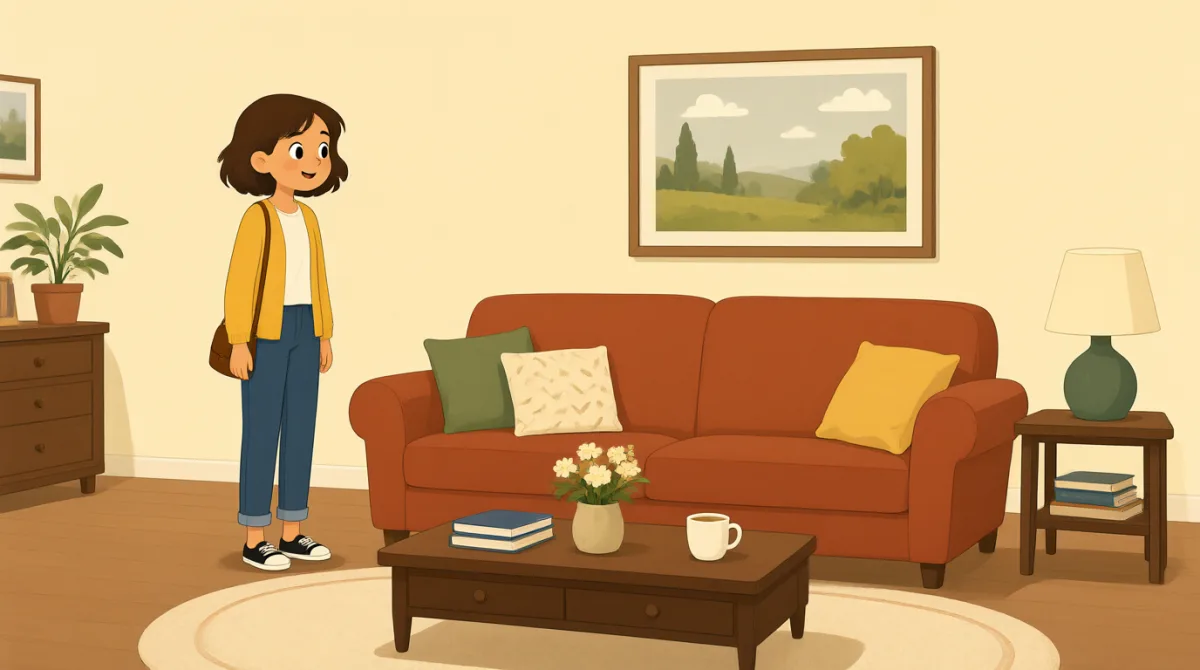

Is it under the sofa?
क्या यह सोफ़े के नीचे है?

Let me look. I don't see them.
मैं देखती हूँ। मुझे चाबियाँ नहीं दिख रहीं।
Look on the floor, too.
फ़र्श पर भी देखो।
No, they aren't on the floor.
नहीं, चाबियाँ फ़र्श पर नहीं हैं।
Maybe they're next to the sofa.
शायद वे सोफ़े के पास हों।
No. They're not here either.
नहीं। वे यहाँ भी नहीं हैं।
Let's check by the front door.
चलो, मुख्य दरवाज़े के पास देखते हैं।
शब्दावली6
- under the sofaसोफ़े के नीचे
This means below the sofa. Use it to say where you think something is.
इसका मतलब है सोफ़े से नीचे। इसका इस्तेमाल यह बताने के लिए करें कि आपको लगता है कोई चीज़ कहाँ है।
- Let me look.मैं देखती हूँ।
This means “I will check.” Use it when you want to search for something.
इसका मतलब है “मैं जाँच करूँगी।” किसी चीज़ को ढूँढ़ने के लिए इसका इस्तेमाल करें।
- on the floorफ़र्श पर
This means on the ground inside a room. Use it to say where something is.
इसका मतलब है कमरे के अंदर ज़मीन पर। इसका इस्तेमाल यह बताने के लिए करें कि कोई चीज़ कहाँ है।
- next to the sofaसोफ़े के पास
This means beside the sofa. Use it to describe where something may be.
इसका मतलब है सोफ़े के बगल में। इसका इस्तेमाल यह बताने के लिए करें कि कोई चीज़ कहाँ हो सकती है।
- eitherभी
Here, “either” means “also” in a negative sentence. Use it when saying something is not in another place, too.
यहाँ नकारात्मक वाक्य में “either” का मतलब “भी” है। जब आप कहें कि कोई चीज़ किसी दूसरी जगह पर भी नहीं है, तब इसका इस्तेमाल करें।
- front doorमुख्य दरवाज़ा
This is the main door at the front of a home. Use it when talking about the entrance.
यह घर के सामने की ओर बना मुख्य दरवाज़ा होता है। प्रवेश-द्वार की बात करते समय इसका इस्तेमाल करें।
मुख्य वाक्य8
- 1
Is it under the sofa?
क्या यह सोफ़े के नीचे है?
This is a useful way to ask if one thing is in a certain place. Change “under the sofa” to ask about another location.
किसी एक चीज़ के किसी खास जगह पर होने के बारे में पूछने का यह एक उपयोगी तरीका है। किसी दूसरी जगह के बारे में पूछने के लिए “under the sofa” की जगह उस जगह का नाम रखें।
- 2
Let me look.
मैं देखती हूँ।
Use this short sentence when you are going to check or search for something. You can also say it before looking for a person or an object.
जब आप किसी चीज़ की जाँच या तलाश करने जा रहे हों, तो इस छोटे वाक्य का इस्तेमाल करें। किसी व्यक्ति या वस्तु को ढूँढ़ने से पहले भी आप यह कह सकते हैं।
- 3
I don't see them.
मुझे वे नहीं दिख रहीं।
Use this to say that you cannot find or see something. “Them” refers to more than one person or thing.
जब आपको कोई चीज़ नहीं मिल रही हो या दिखाई न दे रही हो, तब यह कहें। “Them” एक से ज़्यादा लोगों या चीज़ों के लिए इस्तेमाल होता है।
- 4
Look on the floor, too.
फ़र्श पर भी देखो।
This is a simple way to ask someone to check another place. You can replace “on the floor” with a different location.
किसी से दूसरी जगह देखने के लिए कहने का यह एक आसान तरीका है। आप “on the floor” की जगह किसी दूसरी जगह का नाम रख सकते हैं।
- 5
No, they aren't on the floor.
नहीं, वे फ़र्श पर नहीं हैं।
Use this sentence to say that several things are not in a place. Replace “on the floor” with another location.
कई चीज़ों के किसी जगह पर न होने की बात कहने के लिए इस वाक्य का इस्तेमाल करें। “on the floor” की जगह किसी दूसरी जगह का नाम रखें।
- 6
Maybe they're next to the sofa.
शायद वे सोफ़े के पास हों।
Use “Maybe” to say where something could be when you are not sure. Change the location to suggest another place.
जब आपको पक्का न हो कि कोई चीज़ कहाँ है, तो संभावित जगह बताने के लिए “Maybe” का इस्तेमाल करें। किसी दूसरी जगह का सुझाव देने के लिए जगह का नाम बदल दें।
- 7
No. They're not here either.
नहीं। वे यहाँ भी नहीं हैं।
Use this to say that something is not in this place, just as it was not in another place. “Either” is common in negative sentences.
जब कोई चीज़ यहाँ भी न हो, ठीक वैसे ही जैसे वह दूसरी जगह पर नहीं थी, तब यह कहें। “Either” का इस्तेमाल अक्सर नकारात्मक वाक्यों में होता है।
- 8
Let's check by the front door.
चलो, मुख्य दरवाज़े के पास देखते हैं।
Use “Let's check” to suggest looking somewhere together. Replace “by the front door” with another place.
किसी जगह साथ मिलकर देखने का सुझाव देने के लिए “Let's check” का इस्तेमाल करें। “by the front door” की जगह किसी दूसरी जगह का नाम रखें।