Asking a Roommate
रूममेट से पूछना
Emma asks her roommate Jack if he has seen the keys. Jack remembers seeing them near the front door.
एमा अपने रूममेट जैक से पूछती है कि क्या उसने चाबियाँ देखी हैं। जैक को याद आता है कि उसने उन्हें सामने वाले दरवाज़े के पास देखा था।
संवाद7
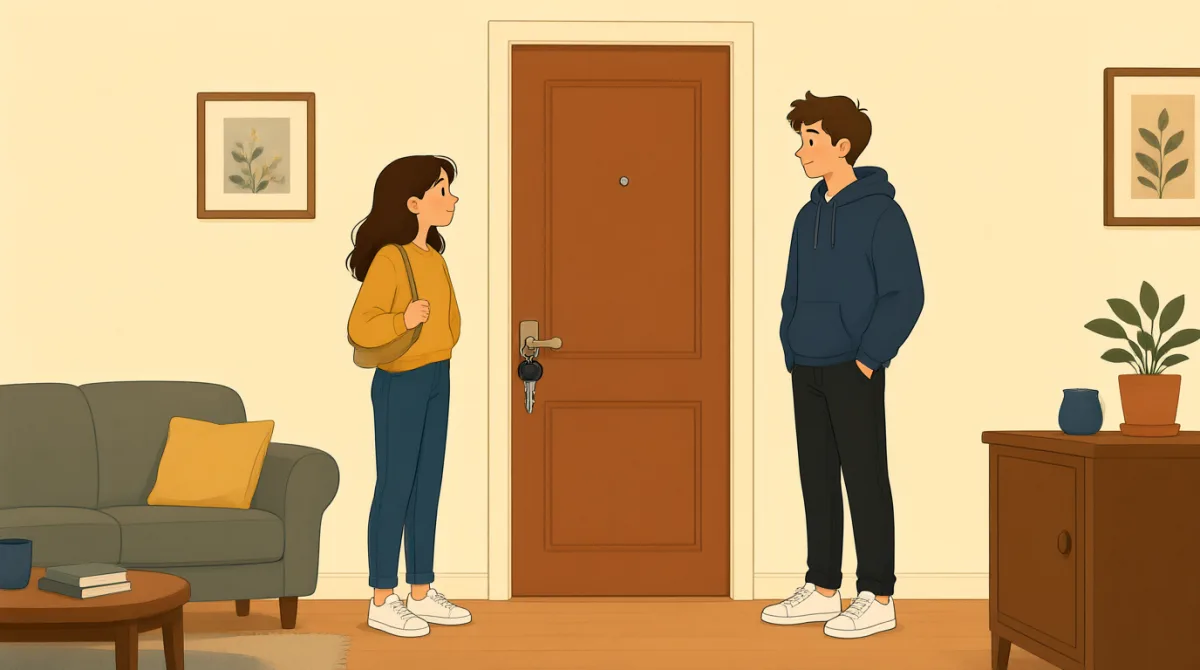

Jack, have you seen my keys?
जैक, क्या तुमने मेरी चाबियाँ देखी हैं?

Your keys? What do they look like?
तुम्हारी चाबियाँ? वे कैसी दिखती हैं?
They are small, with a blue key ring.
वे छोटी हैं, और उनका छल्ला नीला है।
I saw them near the front door earlier.
मैंने उन्हें थोड़ी देर पहले सामने वाले दरवाज़े के पास देखा था।
Were they on the table or on the floor?
वे मेज़ पर थीं या फ़र्श पर?
I think they were next to your bag.
मुझे लगता है, वे तुम्हारे बैग के पास थीं।
Okay, I'll look by the front door.
ठीक है, मैं सामने वाले दरवाज़े के पास देखती हूँ।
शब्दावली7
- have you seen my keys?क्या तुमने मेरी चाबियाँ देखी हैं?
Use this to ask if someone has seen your keys. You can replace “my keys” with another missing item.
किसी से यह पूछने के लिए इसका इस्तेमाल करो कि क्या उसने तुम्हारी चाबियाँ देखी हैं। “my keys” की जगह तुम किसी और खोई हुई चीज़ का नाम रख सकते हो।
- What do they look like?वे कैसी दिखती हैं?
Use this to ask someone to describe something. “They” refers to the keys.
किसी से किसी चीज़ का वर्णन पूछने के लिए इसका इस्तेमाल करो। “They” का मतलब यहाँ चाबियाँ हैं।
- key ringचाबी का छल्ला
A key ring holds keys together. You can describe its color to help someone find your keys.
चाबी का छल्ला चाबियों को एक साथ रखता है। किसी को तुम्हारी चाबियाँ ढूँढ़ने में मदद करने के लिए तुम उसके रंग का वर्णन कर सकते हो।
- front doorसामने वाला दरवाज़ा
The front door is the main entrance to a home or building. Use this phrase to say where something is.
सामने वाला दरवाज़ा घर या इमारत का मुख्य प्रवेश-द्वार होता है। किसी चीज़ की जगह बताने के लिए इस वाक्यांश का इस्तेमाल करो।
- on the tableमेज़ पर
Use this phrase to say that something is resting on a table. “On” tells us where it is.
यह बताने के लिए इस वाक्यांश का इस्तेमाल करो कि कोई चीज़ मेज़ पर रखी है। “On” से पता चलता है कि वह कहाँ है।
- next to your bagतुम्हारे बैग के पास
Use this phrase to say that something is beside a bag. You can replace “your bag” with another object.
यह बताने के लिए इस वाक्यांश का इस्तेमाल करो कि कोई चीज़ बैग के बगल में है। “your bag” की जगह तुम किसी दूसरी चीज़ का नाम रख सकते हो।
- look by the front doorसामने वाले दरवाज़े के पास ढूँढ़ना
Use this phrase to say that you will search near the front door. “By” means near.
यह बताने के लिए इस वाक्यांश का इस्तेमाल करो कि तुम सामने वाले दरवाज़े के पास तलाश करोगे। “By” का मतलब है पास।
मुख्य वाक्य7
- 1
Jack, have you seen my keys?
जैक, क्या तुमने मेरी चाबियाँ देखी हैं?
This is a simple way to ask if someone has seen something you cannot find. Replace “my keys” with another missing item.
जब तुम्हें कोई चीज़ नहीं मिल रही हो, तो यह पूछने का आसान तरीका है कि क्या किसी ने उसे देखा है। “my keys” की जगह किसी दूसरी खोई हुई चीज़ का नाम रखो।
- 2
What do they look like?
वे कैसी दिखती हैं?
Use this question to ask for a description. You can change “they” to “it” when asking about one item.
किसी चीज़ का वर्णन पूछने के लिए इस सवाल का इस्तेमाल करो। एक चीज़ के बारे में पूछते समय “they” की जगह “it” कह सकते हो।
- 3
They are small, with a blue key ring.
वे छोटी हैं, और उनका छल्ला नीला है।
This sentence describes the keys and their key ring. Use “They are…” to give details about more than one thing.
इस वाक्य में चाबियों और उनके छल्ले का वर्णन है। एक से ज़्यादा चीज़ों के बारे में जानकारी देने के लिए “They are…” का इस्तेमाल करो।
- 4
I saw them near the front door earlier.
मैंने उन्हें थोड़ी देर पहले सामने वाले दरवाज़े के पास देखा था।
Use this to say where and when you last saw something. Replace “them” with the thing you saw.
किसी चीज़ को आख़िरी बार कहाँ और कब देखा था, यह बताने के लिए इसका इस्तेमाल करो। “them” की जगह उस चीज़ का नाम रखो जिसे तुमने देखा था।
- 5
Were they on the table or on the floor?
वे मेज़ पर थीं या फ़र्श पर?
This question asks someone to choose between two possible places. You can use the same pattern to ask where something was.
इस सवाल में किसी से दो संभावित जगहों में से एक चुनने को कहा जाता है। किसी चीज़ की जगह पूछने के लिए भी तुम यही ढाँचा इस्तेमाल कर सकते हो।
- 6
I think they were next to your bag.
मुझे लगता है, वे तुम्हारे बैग के पास थीं।
Use “I think…” when you are not completely sure. “Next to” tells where something was.
जब तुम्हें पूरी तरह यक़ीन न हो, तो “I think…” का इस्तेमाल करो। “Next to” बताता है कि कोई चीज़ कहाँ थी।
- 7
Okay, I'll look by the front door.
ठीक है, मैं सामने वाले दरवाज़े के पास देखती हूँ।
Use this to say you will search near a place. “I'll” is short for “I will.”
किसी जगह के पास तलाश करने की बात कहने के लिए इसका इस्तेमाल करो। “I'll” का छोटा रूप “I will” है।