Saying Thanks the Next Day
अगले दिन धन्यवाद कहना
The next day, Emma thanks Leo for keeping the music low. Leo says he is glad she could study.
अगले दिन, एम्मा संगीत धीमा रखने के लिए लियो को धन्यवाद देती है। लियो कहता है कि उसे खुशी है कि वह पढ़ाई कर पाई।
संवाद6
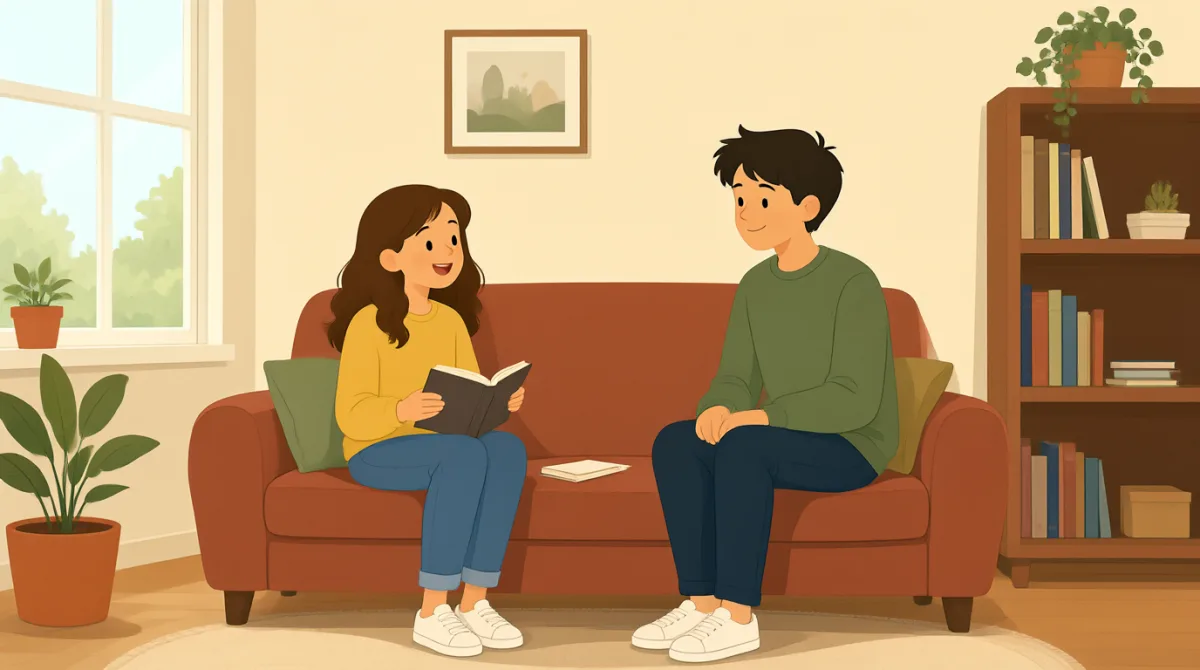

Thanks for keeping the music low yesterday.
कल संगीत धीमा रखने के लिए शुक्रिया।

No problem. I hope you studied well.
कोई बात नहीं। उम्मीद है, तुम्हारी पढ़ाई अच्छी हुई।
I did. It was much easier to study.
हाँ, हुई। पढ़ाई करना बहुत आसान हो गया था।
Great! I’m glad you had some quiet time.
बहुत बढ़िया! मुझे खुशी है कि तुम्हें कुछ समय शांति से पढ़ने को मिला।
Thanks. The test went well, too.
शुक्रिया। टेस्ट भी अच्छा हुआ।
That’s great news! We can keep the music low.
यह तो बहुत अच्छी खबर है! हम संगीत धीमा रख सकते हैं।
शब्दावली8
- Thanks for keeping the music lowसंगीत धीमा रखने के लिए शुक्रिया
Emma thanks Leo for playing the music quietly. Use “Thanks for…” to show you are grateful for something someone did.
एम्मा, संगीत धीमा बजाने के लिए लियो को धन्यवाद देती है। किसी के किए काम के लिए आभार जताने के लिए “Thanks for…” कहें।
- No problemकोई बात नहीं
Leo says that helping Emma was easy. You can say “No problem” when someone thanks you.
लियो कहता है कि एम्मा की मदद करना आसान था। कोई आपको धन्यवाद दे, तो आप “No problem” कह सकते हैं।
- I hope you studied wellउम्मीद है, तुम्हारी पढ़ाई अच्छी हुई
Leo hopes Emma was able to study. Use “I hope…” to say you want something good to happen.
लियो उम्मीद करता है कि एम्मा ठीक से पढ़ पाई। किसी अच्छी बात की कामना जताने के लिए “I hope…” कहें।
- much easierबहुत आसान
Emma says studying was easier when the music was low. Use “much” before a describing word to say something is a lot more easy, good, or difficult.
एम्मा कहती है कि संगीत धीमा होने पर पढ़ाई करना आसान था। किसी बात के बहुत ज़्यादा आसान, अच्छा या मुश्किल होने की बात कहने के लिए किसी विशेषण से पहले “much” लगाएँ।
- quiet timeशांति का समय
This means time without loud sounds or music. You can use it to talk about a calm time for studying or resting.
इसका मतलब है ऐसा समय जब तेज़ आवाज़ या संगीत न हो। पढ़ाई या आराम के लिए शांत समय की बात करते हुए आप इसका इस्तेमाल कर सकते हैं।
- went wellअच्छा हुआ
Emma says the test was good. Use “went well” to say an event or activity had a good result.
एम्मा कहती है कि टेस्ट अच्छा हुआ। किसी घटना या काम के अच्छे नतीजे के लिए “went well” कहें।
- That’s great newsयह बहुत अच्छी खबर है
Leo says this when he hears something good. Use it to show that you are happy about someone’s news.
कुछ अच्छी बात सुनकर लियो यह कहता है। किसी की अच्छी खबर पर खुशी जताने के लिए इसका इस्तेमाल करें।
- keep the music lowसंगीत धीमा रखना
This means to continue playing music quietly. Use “keep” plus an action to ask or say that something should continue.
इसका मतलब है संगीत धीमा बजाते रहना। किसी काम को जारी रखने की बात कहने या अनुरोध करने के लिए “keep” के बाद कोई काम बताने वाला शब्द लगाएँ।
मुख्य वाक्य8
- 1
Thanks for keeping the music low yesterday.
कल संगीत धीमा रखने के लिए शुक्रिया।
Use this sentence to thank someone for something they did in the past. You can change “keeping the music low” to another helpful action.
पहले किए गए किसी काम के लिए धन्यवाद देने हेतु इस वाक्य का इस्तेमाल करें। “keeping the music low” की जगह मददगार काम बताने वाला कोई दूसरा वाक्यांश रख सकते हैं।
- 2
No problem.
कोई बात नहीं।
This is a short, friendly reply to “thank you.” You can use it when helping someone was easy.
“Thank you” के जवाब में यह छोटा और दोस्ताना वाक्य कहें। जब किसी की मदद करना आसान रहा हो, तब इसका इस्तेमाल कर सकते हैं।
- 3
I hope you studied well.
उम्मीद है, तुम्हारी पढ़ाई अच्छी हुई।
Use “I hope…” to say you want something good for someone. Change “studied well” to another action, such as “slept well.”
किसी के लिए अच्छी बात की कामना जताने हेतु “I hope…” कहें। “studied well” की जगह कोई दूसरा काम, जैसे “slept well,” रख सकते हैं।
- 4
I did.
हाँ, हुई।
This short answer means “I studied well” here. You can use “I did” to answer a question about an action you did.
यहाँ इस छोटे जवाब का मतलब है “I studied well”। आपने कोई काम किया या नहीं, इस बारे में पूछे जाने पर जवाब में “I did” कह सकते हैं।
- 5
It was much easier to study.
पढ़ाई करना बहुत आसान हो गया था।
Use this sentence to say that something became easier. You can change “to study” to another activity.
कुछ आसान हो जाने की बात कहने के लिए इस वाक्य का इस्तेमाल करें। “to study” की जगह कोई दूसरी गतिविधि रख सकते हैं।
- 6
I’m glad you had some quiet time.
मुझे खुशी है कि तुम्हें कुछ समय शांति से पढ़ने को मिला।
Use “I’m glad…” to say you are happy about something. You can replace “quiet time” with another good experience.
किसी बात पर खुशी जताने के लिए “I’m glad…” कहें। “quiet time” की जगह किसी दूसरे अच्छे अनुभव का ज़िक्र कर सकते हैं।
- 7
The test went well, too.
टेस्ट भी अच्छा हुआ।
Use “went well” to say an event had a good result. Add “too” when you are adding another piece of good news.
किसी घटना के अच्छे नतीजे के लिए “went well” कहें। एक और अच्छी खबर जोड़ने के लिए “too” लगाएँ।
- 8
We can keep the music low.
हम संगीत धीमा रख सकते हैं।
Use “We can…” to suggest something you are able to do together. “Keep the music low” means to continue playing it quietly.
मिलकर किए जा सकने वाले काम का सुझाव देने के लिए “We can…” कहें। “Keep the music low” का मतलब है संगीत धीमा बजाते रहना।