Counter Pickup from a Station
पार्सल स्टेशन के काउंटर से पार्सल लेना
The user goes to a designated parcel pick-up station or small shop that handles deliveries. They need to provide identification or a pickup code to a staff member.
उपयोगकर्ता पार्सल लेने के लिए किसी तयशुदा पिकअप स्टेशन या डिलीवरी संभालने वाली छोटी दुकान पर जाता है। उसे कर्मचारी को अपनी पहचान का प्रमाण या पिकअप कोड देना होता है।
संवाद10
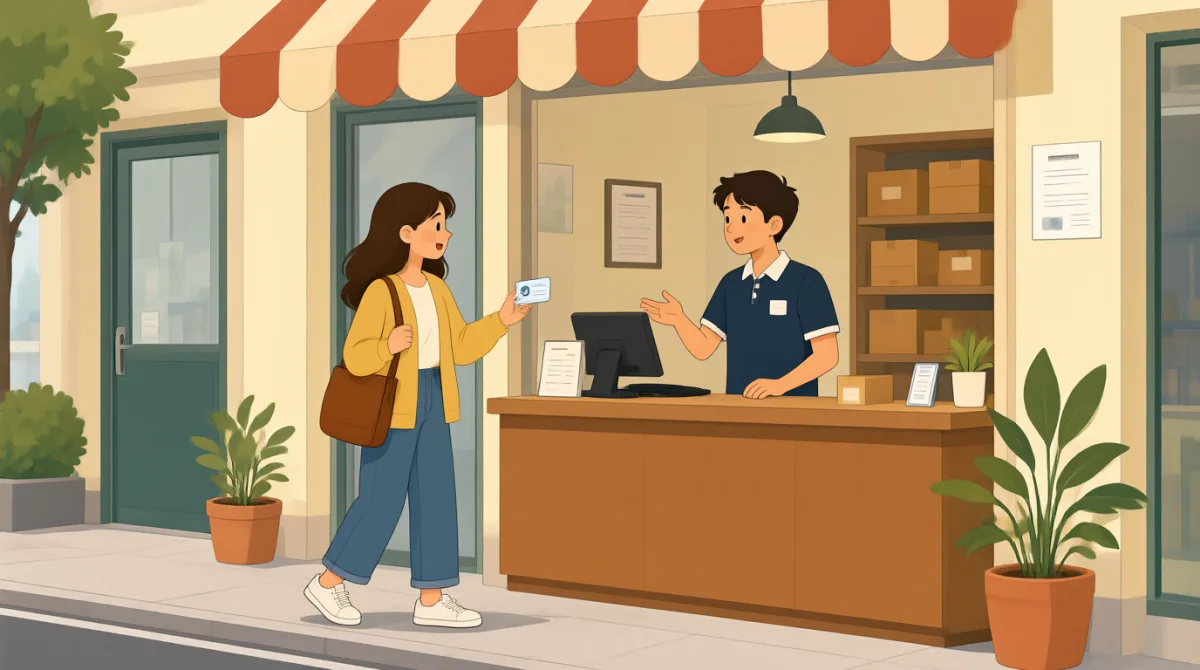

Hi there. I'm here to pick up a package. I have a pickup code.
नमस्ते। मैं पार्सल लेने आया हूँ। मेरे पास पिकअप कोड है।

Welcome! Could I please see your pickup code and an ID?
स्वागत है! क्या मैं आपका पिकअप कोड और कोई पहचान पत्र देख सकती हूँ?
Sure, here's the code on my phone, and here's my driver's license.
ज़रूर, यह रहा मेरे फ़ोन पर कोड और यह रहा मेरा ड्राइविंग लाइसेंस।
Thank you. Let me just check this for you. One moment, please.
धन्यवाद। मैं आपके लिए इसे ज़रा जाँच लूँ। कृपया एक मिनट रुकिए।
No problem. Is it usually busy around this time?
कोई बात नहीं। क्या इस समय आम तौर पर यहाँ काफ़ी भीड़ रहती है?
It can be, especially after work hours. Found it! It's a medium-sized box, right?
हो सकती है, खासकर काम के बाद। मिल गया! यह मध्यम आकार का डिब्बा है, है न?
Yes, that sounds right. It's from Amazon.
हाँ, यही लगता है। यह Amazon से है।
Okay, here you go. Please sign here to confirm receipt.
ठीक है, लीजिए। पार्सल मिलने की पुष्टि के लिए कृपया यहाँ हस्ताक्षर कर दीजिए।
Thanks a lot! Have a great day.
बहुत-बहुत धन्यवाद! आपका दिन अच्छा रहे।
You too! Come again soon.
आपका भी! फिर जल्दी आइएगा।
शब्दावली7
- packageपार्सल
A package is a wrapped item or box sent by mail or delivery service. Use it when talking about items you receive from online shopping or mail.
पार्सल वह लिपटी हुई चीज़ या डिब्बा होता है जिसे डाक या डिलीवरी सेवा से भेजा जाता है। ऑनलाइन खरीदारी या डाक से मिलने वाली चीज़ों की बात करते समय इस शब्द का इस्तेमाल करें।
- pickup codeपिकअप कोड
A pickup code is a special number or code provided by the delivery service to collect your package. It's like a password to claim your item at a station.
पिकअप कोड एक खास नंबर या कोड होता है, जो डिलीवरी सेवा आपको पार्सल लेने के लिए देती है। स्टेशन से अपना सामान लेने के लिए यह पासवर्ड जैसा काम करता है।
- IDपहचान पत्र
ID stands for identification, like a passport or driver's license, used to prove who you are. You often need it when picking up packages for security.
ID का मतलब पहचान का प्रमाण होता है, जैसे पासपोर्ट या ड्राइविंग लाइसेंस, जिससे पता चलता है कि आप कौन हैं। सुरक्षा के लिए पार्सल लेते समय अक्सर इसकी ज़रूरत पड़ती है।
- driver's licenseड्राइविंग लाइसेंस
A driver's license is an official card that proves you can drive and serves as personal ID. It's commonly used in the US for identification purposes.
ड्राइविंग लाइसेंस एक आधिकारिक कार्ड होता है जो साबित करता है कि आपको गाड़ी चलाने की अनुमति है। यह पहचान पत्र के रूप में भी काम आता है और अमेरिका में पहचान बताने के लिए आम तौर पर इस्तेमाल किया जाता है।
- checkजाँचना
In this context, to check means to verify or look at something carefully, like confirming details. It's useful for polite requests involving inspection.
इस संदर्भ में, check का मतलब किसी चीज़ को ध्यान से देखकर या उसकी पुष्टि करके जाँचना है। जाँच-पड़ताल से जुड़े विनम्र अनुरोधों में यह शब्द काम आता है।
- receiptप्राप्ति
A receipt is a document or signature confirming you have received something, like a package. Signing for receipt shows you accept the delivery.
receipt ऐसा दस्तावेज़ या हस्ताक्षर होता है जो इस बात की पुष्टि करता है कि आपको कोई चीज़, जैसे पार्सल, मिल गई है। प्राप्ति की पुष्टि के लिए हस्ताक्षर करने का मतलब है कि आप डिलीवरी स्वीकार कर रहे हैं।
- signहस्ताक्षर करना
To sign means to write your name on a document to confirm something, like agreeing you received a package. It's a common step in deliveries.
sign का मतलब किसी दस्तावेज़ पर अपना नाम लिखकर किसी बात की पुष्टि करना है, जैसे यह बताना कि आपको पार्सल मिल गया है। डिलीवरी के समय यह आम प्रक्रिया है।
मुख्य वाक्य8
- 1
I'm here to pick up a package. I have a pickup code.
मैं पार्सल लेने आया हूँ। मेरे पास पिकअप कोड है।
This sentence introduces your purpose clearly and provides necessary information. Use it at the start of a pickup interaction; it's polite and direct for intermediate learners to initiate service.
इस वाक्य से आप साफ़-साफ़ बताते हैं कि आप वहाँ क्यों आए हैं और ज़रूरी जानकारी भी देते हैं। पार्सल लेने की बातचीत शुरू करते समय इसका इस्तेमाल करें। यह विनम्र और सीधा तरीका है।
- 2
Could I please see your pickup code and an ID?
क्या मैं आपका पिकअप कोड और कोई पहचान पत्र देख सकती हूँ?
This is a polite request using 'Could I please' for formality. It's useful for service workers to ask for verification; practice it to sound professional and courteous.
'Could I please' का इस्तेमाल करके यह विनम्रता से कुछ माँगने का तरीका है। सेवा देने वाले कर्मचारी पहचान की पुष्टि करने के लिए इसका इस्तेमाल कर सकते हैं। पेशेवर और शिष्ट सुनाई देने के लिए इसका अभ्यास करें।
- 3
Sure, here's the code on my phone, and here's my driver's license.
ज़रूर, यह रहा मेरे फ़ोन पर कोड और यह रहा मेरा ड्राइविंग लाइसेंस।
This responds positively with 'Sure' and offers items clearly. Use it when providing information; the structure connects items with 'and' for smooth delivery.
'Sure' कहकर आप सकारात्मक जवाब देते हैं और चीज़ें साफ़-साफ़ दिखाते हैं। जानकारी देते समय यह वाक्य इस्तेमाल करें। इसमें 'and' दो चीज़ों को जोड़ता है, जिससे बात सहज लगती है।
- 4
Thank you. Let me just check this for you. One moment, please.
धन्यवाद। मैं आपके लिए इसे ज़रा जाँच लूँ। कृपया एक मिनट रुकिए।
This shows politeness with 'Thank you' and asks for patience using 'One moment, please.' It's practical for delaying slightly while verifying; teaches courteous interruption handling.
'Thank you' से विनम्रता दिखती है और 'One moment, please.' कहकर सामने वाले से थोड़ा इंतज़ार करने को कहा जाता है। किसी चीज़ की पुष्टि करते समय थोड़ी देर माँगने के लिए यह उपयोगी है।
- 5
No problem. Is it usually busy around this time?
कोई बात नहीं। क्या इस समय आम तौर पर यहाँ काफ़ी भीड़ रहती है?
'No problem' means it's okay, and the question makes small talk. Use it to respond casually and engage in conversation; good for building rapport in service situations.
'No problem' का मतलब है कि कोई बात नहीं। इसके बाद पूछा गया सवाल हल्की-फुल्की बातचीत शुरू करता है। सहजता से जवाब देकर बातचीत आगे बढ़ाने और सेवा-संबंधी स्थितियों में अच्छा तालमेल बनाने के लिए इसका इस्तेमाल करें।
- 6
Found it! It's a medium-sized box, right?
मिल गया! यह मध्यम आकार का डिब्बा है, है न?
This confirms the item with excitement ('Found it!') and seeks verification with 'right?'. Useful for double-checking details; the tag question 'right?' invites agreement politely.
'Found it!' कहकर आप खुशी से बताते हैं कि चीज़ मिल गई है, और 'right?' कहकर उसकी पुष्टि माँगते हैं। जानकारी दोबारा जाँचने के लिए यह उपयोगी है। आखिर में 'right?' जोड़ने से सामने वाले को विनम्रता से सहमति देने का मौका मिलता है।
- 7
Okay, here you go. Please sign here to confirm receipt.
ठीक है, लीजिए। पार्सल मिलने की पुष्टि के लिए कृपया यहाँ हस्ताक्षर कर दीजिए।
'Here you go' hands over the item casually, followed by a request to sign. It's a standard handover phrase; teaches imperative for instructions in service contexts.
'Here you go' कहते हुए आप चीज़ सामने वाले को देते हैं। इसके बाद हस्ताक्षर करने का अनुरोध किया जाता है। कोई चीज़ सौंपते समय यह आम वाक्यांश है और सेवा के संदर्भ में निर्देश देने का तरीका भी सिखाता है।
- 8
Thanks a lot! Have a great day.
बहुत-बहुत धन्यवाद! आपका दिन अच्छा रहे।
This expresses strong gratitude with 'Thanks a lot!' and ends positively. Use it to close interactions warmly; common in American English for friendly farewells.
'Thanks a lot!' से आप दिल से शुक्रिया अदा करते हैं और बातचीत का अंत सकारात्मक ढंग से करते हैं। बातचीत को गर्मजोशी से खत्म करने के लिए इसका इस्तेमाल करें। अमेरिकी अंग्रेज़ी में विदा कहते समय यह आम है।