Discussing Missed/Incomplete Chores
छूटे या अधूरे रह गए घर के कामों पर बात करना
One roommate confronts another about a chore that was missed, done poorly, or consistently neglected, leading to a potentially difficult conversation about accountability.
एक रूममेट दूसरे से ऐसे काम के बारे में बात करता है जो छूट गया, ठीक से नहीं किया गया या लगातार टाला जाता रहा है। इससे ज़िम्मेदारी को लेकर थोड़ी मुश्किल बातचीत हो सकती है।
संवाद8
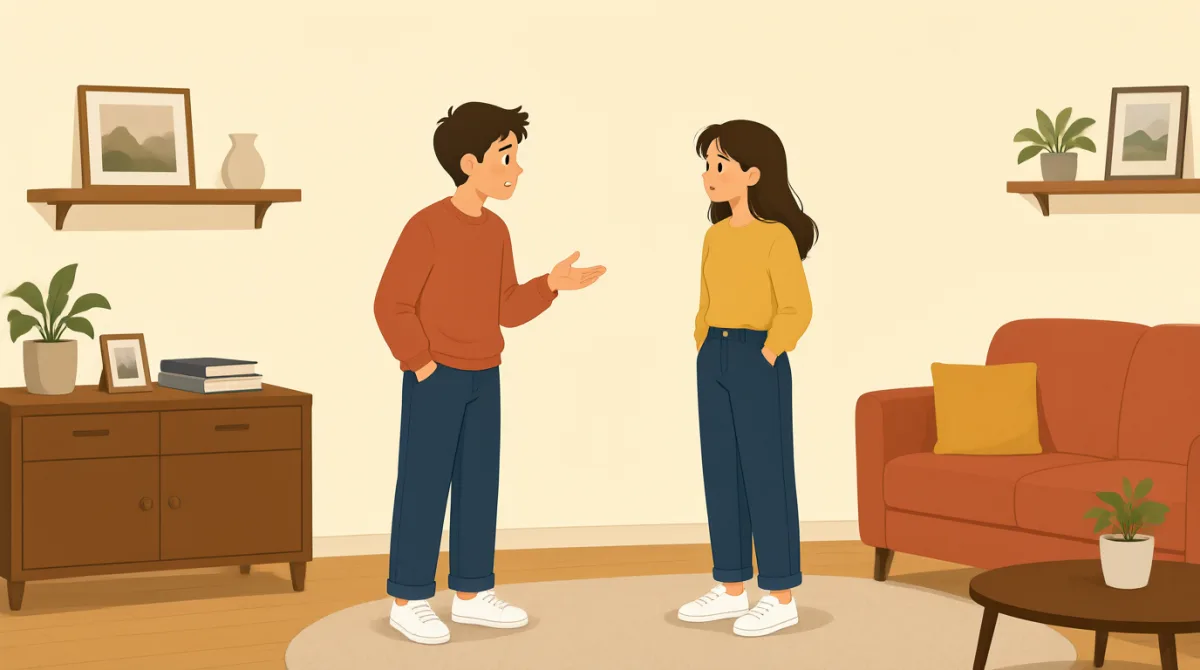

Hey Jack, can we talk for a sec about the kitchen? I noticed the trash hasn't been taken out since your turn on Tuesday.
अरे जैक, क्या रसोई के बारे में एक मिनट बात कर सकते हैं? मैंने देखा कि मंगलवार को तुम्हारी बारी के बाद से कचरा बाहर नहीं निकाला गया है।

Oh, right, the trash. My bad, I completely forgot about that. Things have been a bit hectic with work lately.
ओह, हाँ, कचरा। मेरी गलती, मैं तो बिल्कुल भूल ही गया। आजकल काम की वजह से काफ़ी भागदौड़ चल रही है।
I get that, but it's really starting to pile up, and it's attracting fruit flies. Plus, it's not the first time this chore has been missed.
समझ सकती हूँ, लेकिन कचरा सचमुच जमा होता जा रहा है और उस पर फल-मक्खियाँ आने लगी हैं। और यह पहली बार नहीं है कि यह काम छूटा हो।
Yeah, you're right. I'm really sorry about that. I need to be better about keeping track of the chore schedule. I'll take it out right now.
हाँ, तुम सही कह रही हो। इसके लिए मुझे सचमुच माफ़ करना। मुझे कामों के शेड्यूल पर ध्यान देना होगा। मैं अभी कचरा बाहर निकाल देता हूँ।
Thanks, Jack. I appreciate that. It's just important that we all pull our weight to keep the place tidy, you know?
शुक्रिया, जैक। मैं इसकी सराहना करती हूँ। बस घर को साफ़-सुथरा रखने के लिए ज़रूरी है कि हम सब अपनी-अपनी ज़िम्मेदारी निभाएँ, समझ रहे हो?
Absolutely. And I totally agree. Maybe we can set up a reminder system or something to help me stay on top of things?
बिल्कुल। मैं पूरी तरह सहमत हूँ। शायद हम कोई रिमाइंडर सिस्टम बना लें या ऐसा कुछ, ताकि मैं कामों का ध्यान रख सकूँ?
That's a good idea. We could use a shared app or just set up some recurring alarms. We can discuss it more later, but for now, if you could just get that trash taken care of.
अच्छा सुझाव है। हम कोई साझा ऐप इस्तेमाल कर सकते हैं या बार-बार बजने वाले अलार्म लगा सकते हैं। इस बारे में बाद में और बात कर लेंगे, लेकिन अभी तुम बस कचरे का इंतज़ाम कर दो।
Consider it done. And thanks for bringing it up. I know it's not easy to have these conversations.
समझो हो गया। और यह बात उठाने के लिए शुक्रिया। मुझे पता है कि ऐसी बातें करना आसान नहीं होता।
शब्दावली8
- choreघर का काम
A small job or task, especially one that is done regularly at home, like cleaning or washing dishes. In this dialogue, it refers to household responsibilities shared among roommates.
कोई छोटा-मोटा काम, ख़ासकर ऐसा काम जो घर पर नियमित रूप से किया जाता है, जैसे सफ़ाई करना या बर्तन धोना। इस बातचीत में इसका मतलब है रूममेट्स के बीच बाँटी गई घर की ज़िम्मेदारियाँ।
- trashकचरा
Garbage or waste that needs to be thrown away. In American English, it's commonly used for household rubbish, like in 'take out the trash'.
फेंकने लायक चीज़ें या अपशिष्ट। अमेरिकी अंग्रेज़ी में घर के कचरे के लिए यह शब्द आम है, जैसे 'take out the trash' में।
- my badमेरी गलती
An informal slang expression meaning 'my mistake' or 'I apologize'. It's casual and often used among friends to admit a small error without being too formal.
यह एक अनौपचारिक बोलचाल का मुहावरा है, जिसका मतलब है 'मेरी गलती' या 'माफ़ करना'। दोस्तों के बीच छोटी-सी गलती मानने के लिए इसका इस्तेमाल होता है, बिना ज़्यादा औपचारिक हुए।
- hecticभागदौड़ भरा
Very busy and full of activity, often in a chaotic way. For example, 'Things have been hectic' means life or work is overwhelming and hard to manage.
बहुत व्यस्त और गतिविधियों से भरा हुआ, अक्सर कुछ हद तक अस्त-व्यस्त भी। उदाहरण के लिए, 'Things have been hectic' का मतलब है कि ज़िंदगी या काम इतना व्यस्त और भारी रहा है कि उसे सँभालना मुश्किल हो रहा है।
- pile upजमा होना
To accumulate or build up over time, like dirt or items. In the dialogue, 'it's starting to pile up' describes the trash growing and becoming a problem.
समय के साथ इकट्ठा या बढ़ते जाना, जैसे गंदगी या चीज़ें। बातचीत में 'it's starting to pile up' का मतलब है कि कचरा बढ़ता जा रहा है और समस्या बन रहा है।
- pull our weightअपनी ज़िम्मेदारी निभाना
An idiom meaning to do one's fair share of work in a group. It's useful for talking about shared responsibilities, like 'We all need to pull our weight in the house.'
इस मुहावरे का मतलब है समूह में अपने हिस्से का उचित काम करना। साझा ज़िम्मेदारियों की बात करते समय यह काम आता है, जैसे 'We all need to pull our weight in the house.'
- stay on top of thingsकामों पर नज़र रखना
To keep control or manage tasks effectively so nothing gets forgotten. In the context, it means remembering and completing chores on time.
कामों को अच्छी तरह सँभालना ताकि कुछ भी भूल न जाए। इस संदर्भ में इसका मतलब है घर के काम समय पर याद रखना और पूरे करना।
- recurringबार-बार होने वाला
Happening repeatedly or on a regular schedule. For example, 'recurring alarms' are reminders that repeat daily or weekly, helpful for routines like chores.
जो बार-बार या नियमित समय-सारणी के अनुसार होता हो। उदाहरण के लिए, 'recurring alarms' ऐसे रिमाइंडर हैं जो रोज़ या हर हफ़्ते दोहराए जाते हैं और घर के कामों जैसी दिनचर्या में मदद करते हैं।
मुख्य वाक्य8
- 1
Hey Jack, can we talk for a sec about the kitchen?
अरे जैक, क्या रसोई के बारे में एक मिनट बात कर सकते हैं?
This is a casual way to start a conversation politely. 'For a sec' means 'for a second' or briefly. It's useful for roommates to bring up issues without sounding too serious; use it when you need to discuss something quickly.
बातचीत शुरू करने का यह एक अनौपचारिक लेकिन विनम्र तरीका है। 'For a sec' का मतलब है 'एक पल के लिए' या 'थोड़ी देर के लिए'। रूममेट्स किसी मुद्दे को बहुत गंभीर बनाए बिना उठाने के लिए इसका इस्तेमाल कर सकते हैं। जब किसी बात पर जल्दी से चर्चा करनी हो, तब यह वाक्य काम आता है।
- 2
My bad, I completely forgot about that.
मेरी गलती, मैं तो बिल्कुल भूल ही गया।
An informal admission of fault using 'my bad' for 'my mistake', and 'completely forgot' emphasizes the error. This sentence shows how to apologize casually; it's great for everyday situations like forgetting a task, helping to keep the tone light.
'My bad' का इस्तेमाल करके अनौपचारिक ढंग से अपनी गलती मानी जाती है। इसका मतलब है 'मेरी गलती', और 'completely forgot' गलती को ज़ोर देकर बताता है। रोज़मर्रा की किसी बात, जैसे कोई काम भूल जाने पर, हल्के-फुल्के अंदाज़ में माफ़ी माँगने के लिए यह वाक्य अच्छा है।
- 3
I get that, but it's really starting to pile up.
समझ सकती हूँ, लेकिन कचरा सचमुच जमा होता जा रहा है।
This acknowledges the other person's point ('I get that' means 'I understand') but adds a counter with 'but'. 'Pile up' means accumulating. It's useful for polite disagreements in conversations about responsibilities, showing empathy while stating the problem.
इस वाक्य में पहले सामने वाले की बात मानी जाती है: 'I get that' का मतलब है 'मैं समझती हूँ'। फिर 'but' से अपनी अलग बात रखी जाती है। 'Pile up' का मतलब है जमा होते जाना। ज़िम्मेदारियों पर बात करते हुए विनम्रता से असहमति जताने के लिए यह उपयोगी है—इससे आप समस्या बताते हुए सामने वाले की बात भी समझते हैं।
- 4
I'm really sorry about that. I need to be better about keeping track of the chore schedule.
इसके लिए मुझे सचमुच माफ़ करना। मुझे कामों के शेड्यूल पर ध्यान देना होगा।
A sincere apology followed by self-reflection. 'Keeping track' means monitoring. This pattern is helpful for showing accountability; use it when admitting a repeated mistake and committing to improvement in shared living situations.
इसमें दिल से माफ़ी माँगने के बाद अपनी गलती पर विचार किया गया है। 'Keeping track' का मतलब है नज़र रखना या हिसाब रखना। साझा घर में बार-बार हुई गलती मानते हुए उसे सुधारने का इरादा जताने के लिए यह ढाँचा मददगार है।
- 5
It's just important that we all pull our weight to keep the place tidy.
घर को साफ़-सुथरा रखने के लिए ज़रूरी है कि हम सब अपनी-अपनी ज़िम्मेदारी निभाएँ।
Uses the idiom 'pull our weight' for fair contribution, with 'the place' referring to the home. The structure 'It's important that...' explains why something matters. This is practical for discussing group duties; say it to remind others of shared effort without blaming.
इस वाक्य में 'pull our weight' मुहावरे का मतलब है अपना उचित हिस्सा निभाना, और 'the place' से घर का मतलब है। 'It's important that...' का इस्तेमाल यह बताने के लिए होता है कि कोई बात क्यों ज़रूरी है। समूह के कामों पर चर्चा करते समय यह उपयोगी है; किसी पर दोष लगाए बिना सबको साझा कोशिश की याद दिलाने के लिए इसे कहें।
- 6
Maybe we can set up a reminder system or something to help me stay on top of things?
शायद हम कोई रिमाइंडर सिस्टम बना लें या ऐसा कुछ, ताकि मैं कामों का ध्यान रख सकूँ?
A suggestion using 'maybe' for a soft proposal, and 'or something' to keep it casual. 'Stay on top of things' means managing well. This is useful for problem-solving in dialogues; use it to offer solutions collaboratively after an issue is raised.
'Maybe' से सुझाव नरम ढंग से दिया जाता है और 'or something' बात को अनौपचारिक बनाए रखता है। 'Stay on top of things' का मतलब है कामों को अच्छी तरह सँभालना। किसी समस्या के सामने आने के बाद मिलकर समाधान सुझाने के लिए यह वाक्य उपयोगी है।
- 7
Consider it done.
समझो हो गया।
A confident assurance meaning 'it's already handled' or 'I'll take care of it immediately'. It's idiomatic and reassuring. Use this short phrase when promising quick action, like fixing a chore, to end a conversation positively.
यह भरोसा दिलाने वाला वाक्य है, जिसका मतलब है 'यह काम हो गया समझो' या 'मैं इसे अभी सँभाल लूँगा'। यह एक मुहावरेदार और आश्वस्त करने वाला जवाब है। कोई काम जल्दी करने का वादा करते हुए, जैसे घर का कोई काम निपटाने के लिए, बातचीत को अच्छे ढंग से ख़त्म करने हेतु इसका इस्तेमाल करें।
- 8
Thanks for bringing it up. I know it's not easy to have these conversations.
यह बात उठाने के लिए शुक्रिया। मुझे पता है कि ऐसी बातें करना आसान नहीं होता।
Expresses gratitude for raising the issue and empathy ('bringing it up' means mentioning it). This shows appreciation and understanding. It's valuable for de-escalating tense talks; use it to acknowledge the difficulty of confronting someone about responsibilities.
इसमें मुद्दा उठाने के लिए शुक्रिया कहा गया है और सामने वाले के प्रति समझ भी दिखाई गई है। 'Bringing it up' का मतलब है किसी बात का ज़िक्र करना। इससे सराहना और समझदारी जाहिर होती है। तनाव भरी बातचीत को शांत करने में यह वाक्य काम आता है; किसी को उसकी ज़िम्मेदारियों के बारे में टोकना मुश्किल हो सकता है, यह मानने के लिए इसका इस्तेमाल करें।