Asking for Utensils/Bags
बर्तन और बैग माँगना
The customer realizes they might need plastic utensils or a carry bag for the takeout boxes and asks the server for them.
ग्राहक को लगता है कि टेकआउट के डिब्बों के लिए उन्हें प्लास्टिक के बर्तन या साथ ले जाने के लिए एक बैग की ज़रूरत पड़ सकती है, इसलिए वे वेटर से माँगते हैं।
संवाद7
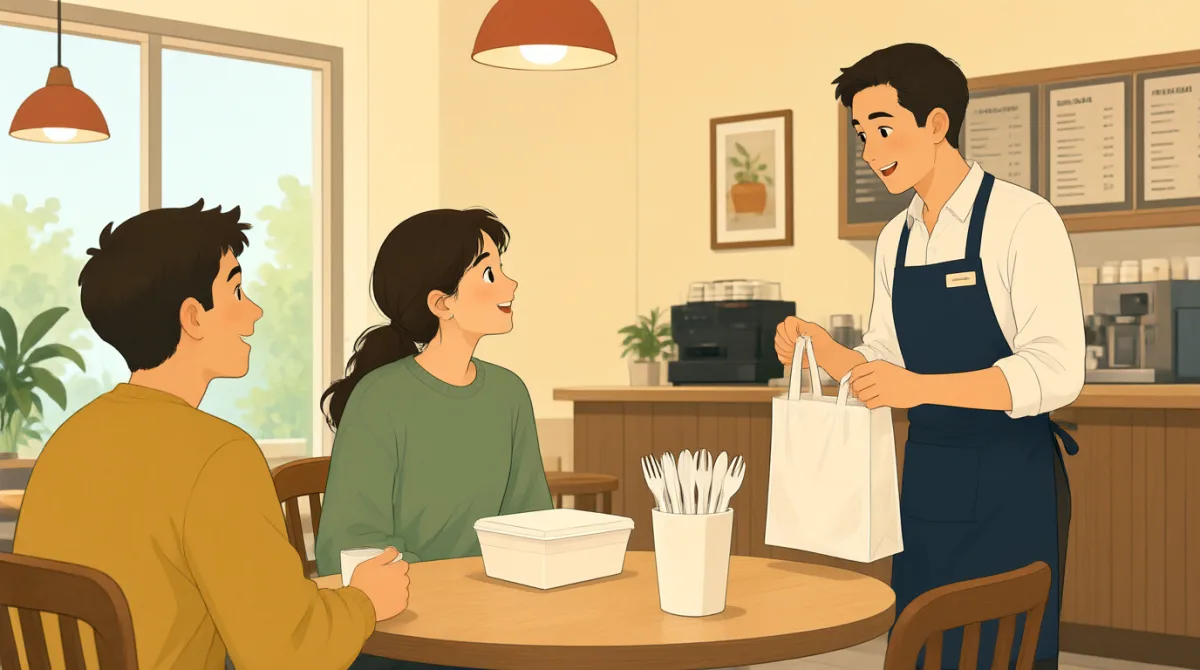

Excuse me, could we also get a plastic bag for these boxes? It would make it easier to carry.
सुनिए, क्या हमें इन डिब्बों के लिए एक प्लास्टिक बैग भी मिल सकता है? इससे इन्हें ले जाना आसान होगा।

Certainly! No problem at all. Do you need any plastic utensils as well, like forks or spoons?
ज़रूर! कोई दिक्कत नहीं। क्या आपको प्लास्टिक के बर्तन भी चाहिए, जैसे काँटे या चम्मच?
Oh, that's a good point! Yes, a couple of forks would be great. We might want to finish these leftovers later.
ओह, हाँ, यह तो अच्छी बात बताई! जी, दो काँटे मिल जाएँ तो अच्छा होगा। शायद हम बचा हुआ खाना बाद में खाएँगे।
Okay, one moment. I'll grab those for you.
ठीक है, एक मिनट। मैं अभी आपके लिए ले आता हूँ।
Here's the bag and two forks. Is there anything else I can get for you today?
लीजिए, बैग और दो काँटे। क्या आज आपको और कुछ चाहिए?
No, that should be everything. Thank you so much!
नहीं, बस इतना ही। आपका बहुत-बहुत धन्यवाद!
You're welcome. Have a great evening!
कोई बात नहीं। आपकी शाम अच्छी गुज़रे!
शब्दावली6
- plastic bagप्लास्टिक का बैग
A lightweight bag made of plastic material, often used to carry items like food containers when leaving a restaurant.
प्लास्टिक से बना हल्का बैग, जिसका इस्तेमाल अक्सर रेस्तराँ से निकलते समय खाने के डिब्बे जैसी चीज़ें ले जाने के लिए किया जाता है।
- utensilsखाने के बर्तन
Tools or instruments used for eating or serving food, such as forks, spoons, or knives; in this context, it refers to disposable plastic ones for takeout.
खाना खाने या परोसने के औज़ार, जैसे काँटे, चम्मच या छुरी। इस संदर्भ में इसका मतलब टेकआउट के लिए इस्तेमाल होने वाले एक बार उपयोग के प्लास्टिक के बर्तनों से है।
- forksकाँटे
Eating utensils with a handle and prongs at the end, used to pick up solid food; commonly requested for takeout meals.
खाने का ऐसा बर्तन जिसमें एक हत्था और आगे नुकीले सिरे होते हैं। इसका इस्तेमाल ठोस खाना उठाने के लिए किया जाता है और टेकआउट खाने के साथ अक्सर माँगा जाता है।
- spoonsचम्मच
Utensils with a bowl-shaped end for scooping liquids or soft foods; useful for soups or desserts in leftovers.
खाने का ऐसा बर्तन जिसका सिरा कटोरी जैसा होता है। इसका इस्तेमाल तरल या नरम खाना उठाने के लिए किया जाता है; बची हुई सूप या मिठाई खाने में यह काम आता है।
- leftoversबचा हुआ खाना
Food that remains uneaten after a meal, which people often take home from restaurants to eat later.
खाने के बाद बचा हुआ भोजन, जिसे लोग अक्सर बाद में खाने के लिए रेस्तराँ से घर ले जाते हैं।
- grabले आना
An informal verb meaning to quickly get or fetch something; here, used by the server to mean 'I'll go get them right away.'
जल्दी से कोई चीज़ लेने या लाने के लिए इस्तेमाल होने वाली अनौपचारिक क्रिया। यहाँ वेटर का मतलब है, “मैं अभी जाकर ये चीज़ें ले आता हूँ।”
मुख्य वाक्य7
- 1
Excuse me, could we also get a plastic bag for these boxes? It would make it easier to carry.
सुनिए, क्या हमें इन डिब्बों के लिए एक प्लास्टिक बैग भी मिल सकता है? इससे इन्हें ले जाना आसान होगा।
This polite request uses 'could we...get' for asking permission, and 'also' to add to a previous request; 'It would make it easier' explains the benefit. Useful for politely asking for extra items in a restaurant to make carrying food home convenient.
'could we...get' का इस्तेमाल विनम्रता से कुछ माँगने के लिए किया जाता है, और 'also' पहले की माँग में एक और चीज़ जोड़ता है। 'It would make it easier' से फ़ायदा बताया जाता है। घर खाना ले जाने में सुविधा के लिए रेस्तराँ में अतिरिक्त चीज़ें विनम्रता से माँगने के काम आता है।
- 2
Certainly! No problem at all.
ज़रूर! कोई दिक्कत नहीं।
A friendly way to agree and reassure; 'certainly' means 'of course,' and 'no problem at all' emphasizes it's easy to help. Great for service workers to respond positively to customer requests.
सहमत होने और सामने वाले को आश्वस्त करने का यह दोस्ताना तरीका है। 'certainly' का मतलब 'बिलकुल' है, और 'no problem at all' बताता है कि मदद करना आसान है। ग्राहक की माँग का सकारात्मक जवाब देने के लिए सेवा-कर्मचारी यह कह सकते हैं।
- 3
Do you need any plastic utensils as well, like forks or spoons?
क्या आपको प्लास्टिक के बर्तन भी चाहिए, जैसे काँटे या चम्मच?
This is a helpful question using 'do you need...as well' to offer more options, with 'like' giving examples. It's useful for servers to anticipate customer needs in takeout situations.
'do you need...as well' का इस्तेमाल और विकल्प देने के लिए किया जाता है, जबकि 'like' उदाहरण पेश करता है। टेकआउट के समय ग्राहक की ज़रूरतों का पहले से ध्यान रखने के लिए वेटर यह सवाल पूछ सकते हैं।
- 4
Oh, that's a good point! Yes, a couple of forks would be great.
ओह, हाँ, यह तो अच्छी बात बताई! जी, दो काँटे मिल जाएँ तो अच्छा होगा।
Expresses agreement with 'that's a good point,' and uses 'a couple of' for 'two,' with 'would be great' for polite appreciation. Helpful for customers to acknowledge suggestions and make specific requests.
'that's a good point' कहकर सहमति जताई जाती है। 'a couple of' का मतलब 'दो' होता है, और 'would be great' विनम्रता से अपनी खुशी या आभार जताता है। ग्राहक सुझाव की सराहना करके कोई खास चीज़ माँगने के लिए इसका इस्तेमाल कर सकते हैं।
- 5
Okay, one moment. I'll grab those for you.
ठीक है, एक मिनट। मैं अभी आपके लिए ले आता हूँ।
A casual way to say 'wait a second' with 'one moment,' and 'I'll grab those' means 'I'll fetch them quickly.' Use this when briefly leaving to get items, showing efficiency.
'one moment' कहकर अनौपचारिक ढंग से “एक मिनट रुकिए” कहा जाता है, और 'I'll grab those' का मतलब है “मैं वे चीज़ें जल्दी से ले आता हूँ।” कोई चीज़ लेने के लिए थोड़ी देर जाने से पहले यह कह सकते हैं।
- 6
Is there anything else I can get for you today?
क्या आज आपको और कुछ चाहिए?
A standard closing question in service using 'is there anything else' to check for more needs, with 'I can get for you' offering help. Essential for servers to ensure customer satisfaction before ending the interaction.
सेवा के दौरान बातचीत के अंत में पूछा जाने वाला यह एक आम सवाल है। 'is there anything else' से पता किया जाता है कि सामने वाले को और कुछ चाहिए या नहीं, और 'I can get for you' मदद की पेशकश करता है। बातचीत खत्म करने से पहले ग्राहक की ज़रूरतें पूरी करने के लिए वेटर यह पूछते हैं।
- 7
No, that should be everything. Thank you so much!
नहीं, बस इतना ही। आपका बहुत-बहुत धन्यवाद!
Politely declines more help with 'that should be everything,' and shows strong gratitude with 'thank you so much.' Use this to wrap up a conversation in a restaurant when you're all set.
'that should be everything' कहकर विनम्रता से बताया जाता है कि और मदद की ज़रूरत नहीं है, और 'thank you so much' से दिल से आभार जताया जाता है। रेस्तराँ में सब कुछ मिल जाने पर बातचीत खत्म करने के लिए यह कह सकते हैं।