Inquiring About Lost and Found Procedures
खोई हुई वस्तुओं के बारे में जानकारी लेना
The learner asks what the next steps are, how long items are kept, or if there's a specific lost and found office. The staff explains the venue's procedures.
सीखने वाला पूछता है कि आगे क्या करना होगा, वस्तुओं को कितने समय तक रखा जाता है, या खोई हुई वस्तुओं का कोई अलग कार्यालय है या नहीं। कर्मचारी वहाँ की प्रक्रिया समझाता है।
संवाद10
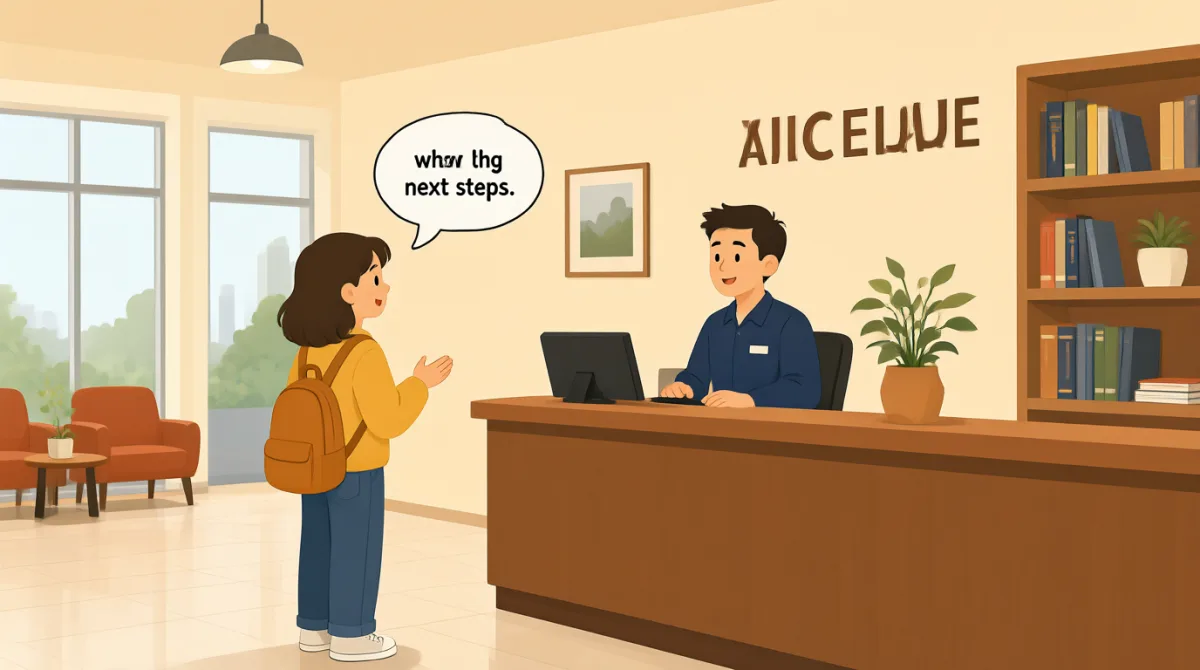

Excuse me, I reported a lost umbrella a little while ago. I was wondering what the next steps are?
माफ़ कीजिए, मैंने थोड़ी देर पहले छाते के खोने की सूचना दी थी। मैं जानना चाहती थी कि अब आगे क्या करना होगा।

Certainly, ma'am. After you've reported it, we'll keep an eye out for it. All lost items are brought to our main Lost and Found office, which is located on the ground floor near the main entrance.
ज़रूर, मैडम। सूचना मिलने के बाद हम उस पर नज़र रखेंगे। खोई हुई सभी वस्तुएँ हमारे मुख्य खोया-पाया कार्यालय में लाई जाती हैं। यह भूतल पर, मुख्य प्रवेश द्वार के पास है।
Okay, so should I go there to check, or will they contact me if it's found?
अच्छा, तो क्या मुझे वहाँ जाकर देखना चाहिए, या अगर छाता मिल गया तो आप मुझसे संपर्क करेंगे?
We'll contact you directly if we find it, since you left your contact details. However, if you're in the area and want to check personally, you're welcome to visit the office during opening hours.
आपने अपनी संपर्क जानकारी दी है, इसलिए अगर हमें वह मिल गया तो हम सीधे आपसे संपर्क करेंगे। हालाँकि, अगर आप आसपास हों और खुद आकर देखना चाहें, तो कार्यालय के खुलने के समय आप वहाँ आ सकती हैं।
And how long do you typically keep lost items before they're discarded or donated?
और आम तौर पर खोई हुई चीज़ों को फेंकने या दान करने से पहले आप कितने समय तक रखते हैं?
We hold onto items for a maximum of 30 days. After that, if they haven't been claimed, they are either disposed of or, if in good condition, donated to charity. Valuables, like wallets or phones, are kept longer, up to 90 days.
हम वस्तुओं को ज़्यादा से ज़्यादा 30 दिनों तक रखते हैं। उसके बाद, अगर किसी ने उन्हें वापस लेने का दावा नहीं किया हो, तो उन्हें या तो फेंक दिया जाता है या, अगर वे अच्छी हालत में हों, तो किसी धर्मार्थ संस्था को दान कर दिया जाता है। बटुए या फ़ोन जैसी कीमती चीज़ें ज़्यादा समय तक, 90 दिनों तक रखी जाती हैं।
That's good to know. So, for my umbrella, it's 30 days. And what are the office hours for the Lost and Found?
यह जानकर अच्छा लगा। तो मेरे छाते को 30 दिनों तक रखा जाएगा। और खोया-पाया कार्यालय के खुलने का समय क्या है?
The Lost and Found office is open Monday to Friday, from 9 AM to 5 PM. It's closed on weekends and public holidays. Is there anything else I can help you with today?
खोया-पाया कार्यालय सोमवार से शुक्रवार, सुबह 9 बजे से शाम 5 बजे तक खुला रहता है। सप्ताहांत और सार्वजनिक छुट्टियों पर बंद रहता है। क्या आज मैं आपकी किसी और तरह से मदद कर सकता हूँ?
No, that's all for now. Thank you very much for the information.
नहीं, अभी के लिए बस इतना ही। जानकारी देने के लिए आपका बहुत-बहुत धन्यवाद।
You're very welcome. We hope your umbrella turns up soon!
आपका बहुत स्वागत है। उम्मीद है आपका छाता जल्द मिल जाएगा!
शब्दावली8
- reportedसूचना दी
The past tense of 'report', meaning to tell officials about a lost item so they can help find it. Use this when you have already informed someone about your loss.
'reported', 'report' का भूतकाल है। इसका मतलब है किसी अधिकारी को खोई हुई चीज़ के बारे में बताना, ताकि वे उसे ढूँढ़ने में मदद कर सकें। जब आप किसी को अपने सामान के खोने की सूचना दे चुके हों, तब इस शब्द का इस्तेमाल करें।
- Lost and Foundखोया-पाया कार्यालय
A special office or area in places like stations or libraries where lost items are kept until the owner claims them. It's a common term in English-speaking countries for handling lost belongings.
'Lost and Found' ऐसी जगह या कार्यालय होता है, जैसे स्टेशन या पुस्तकालय में, जहाँ खोई हुई चीज़ें उनके मालिक के उन्हें लेने आने तक रखी जाती हैं। अंग्रेज़ी बोलने वाले देशों में खोई हुई चीज़ों के लिए यह आम शब्द है।
- keep an eye outनज़र रखना
An idiom meaning to watch carefully for something. It's useful in situations where you want someone to look out for your lost item.
'keep an eye out' का मतलब है किसी चीज़ पर ध्यान से नज़र रखना। जब आप किसी से अपनी खोई हुई चीज़ पर ध्यान देने के लिए कहना चाहते हैं, तो यह मुहावरा काम आता है।
- contact detailsसंपर्क जानकारी
Information like your phone number or email that allows others to reach you. Always provide this when reporting something lost so staff can call you.
'contact details' में आपका फ़ोन नंबर या ईमेल जैसी जानकारी शामिल होती है, जिससे दूसरे लोग आपसे संपर्क कर सकते हैं। कोई चीज़ खोने की सूचना देते समय यह जानकारी ज़रूर दें, ताकि कर्मचारी आपको फ़ोन कर सकें।
- claimedवापस लेने का दावा किया
To say officially that something belongs to you, often to get it back from lost and found. Use this when picking up your item.
'claimed' का मतलब है आधिकारिक तौर पर कहना कि कोई चीज़ आपकी है। खोया-पाया कार्यालय से अपनी चीज़ वापस लेते समय इस शब्द का इस्तेमाल किया जाता है।
- discardedफेंक दिया
Thrown away as useless. In lost and found contexts, it means items not claimed are disposed of after a certain time.
'discarded' का मतलब है बेकार समझकर फेंक दिया गया। खोया-पाया कार्यालय के संदर्भ में, इसका मतलब है कि एक तय समय के बाद बिना दावा की गई चीज़ों को हटा दिया जाता है।
- donatedदान किया
Given to a charity or organization for good use. Lost items in good condition might be donated if no one claims them.
'donated' का मतलब है किसी अच्छे काम के लिए किसी धर्मार्थ संस्था या संगठन को देना। अगर खोई हुई चीज़ अच्छी हालत में हो और कोई उसे लेने न आए, तो उसे दान किया जा सकता है।
- valuablesकीमती चीज़ें
Items that are expensive or important, like jewelry, wallets, or phones. These are often kept longer in lost and found than ordinary items.
'valuables' ऐसी चीज़ों को कहते हैं जो महँगी या महत्वपूर्ण हों, जैसे गहने, बटुए या फ़ोन। खोया-पाया कार्यालय में इन्हें आम चीज़ों से ज़्यादा समय तक रखा जाता है।
मुख्य वाक्य8
- 1
Excuse me, I reported a lost umbrella a little while ago. I was wondering what the next steps are?
माफ़ कीजिए, मैंने थोड़ी देर पहले छाते के खोने की सूचना दी थी। मैं जानना चाहती थी कि अब आगे क्या करना होगा।
This polite way to start a conversation uses 'Excuse me' to get attention and 'I was wondering' to ask indirectly about procedures. It's useful for inquiring about follow-up after reporting a loss; the past continuous 'was wondering' softens the question.
बात शुरू करने का यह विनम्र तरीका ध्यान खींचने के लिए 'Excuse me' और प्रक्रिया के बारे में सीधे पूछने के बजाय नरमी से पूछने के लिए 'I was wondering' का इस्तेमाल करता है। नुकसान की सूचना देने के बाद आगे क्या करना है, यह पूछने के लिए यह उपयोगी है। भूतकाल में 'was wondering' कहने से सवाल और नरम लगता है।
- 2
After you've reported it, we'll keep an eye out for it.
सूचना मिलने के बाद हम उस पर नज़र रखेंगे।
This explains the process after reporting, using future tense 'we'll' for reassurance. The idiom 'keep an eye out' shows how staff will watch for the item. Use this pattern to describe steps in service situations.
यह वाक्य सूचना देने के बाद की प्रक्रिया समझाता है। भरोसा दिलाने के लिए इसमें भविष्यकाल का 'we'll' इस्तेमाल हुआ है। 'keep an eye out' मुहावरा बताता है कि कर्मचारी उस चीज़ पर नज़र रखेंगे। सेवा-संबंधी स्थितियों में आगे के कदम बताने के लिए इस ढाँचे का इस्तेमाल करें।
- 3
All lost items are brought to our main Lost and Found office, which is located on the ground floor near the main entrance.
खोई हुई सभी वस्तुएँ हमारे मुख्य खोया-पाया कार्यालय में लाई जाती हैं। यह भूतल पर, मुख्य प्रवेश द्वार के पास है।
This gives directions using passive voice 'are brought' to describe general procedures, and a relative clause 'which is located' for details. It's practical for explaining where to find lost and found; helps learners describe locations.
इस वाक्य में सामान्य प्रक्रिया बताने के लिए कर्मवाच्य 'are brought' का और जगह की जानकारी देने के लिए संबंधवाचक उपवाक्य 'which is located' का इस्तेमाल हुआ है। खोया-पाया कार्यालय कहाँ है, यह बताने के लिए यह उपयोगी है।
- 4
We'll contact you directly if we find it, since you left your contact details.
आपने अपनी संपर्क जानकारी दी है, इसलिए अगर हमें वह मिल गया तो हम सीधे आपसे संपर्क करेंगे।
A conditional sentence with 'if' for possible future actions, and 'since' to explain the reason. Useful for confirming how communication works; emphasizes providing contact info when reporting losses.
इस वाक्य में भविष्य में हो सकने वाली कार्रवाई के लिए 'if' वाला शर्तिया वाक्य और कारण बताने के लिए 'since' इस्तेमाल हुआ है। यह समझाने के लिए उपयोगी है कि संपर्क कैसे किया जाएगा और खोने की सूचना देते समय संपर्क जानकारी देना क्यों ज़रूरी है।
- 5
We hold onto items for a maximum of 30 days. After that, if they haven't been claimed, they are either disposed of or donated to charity.
हम वस्तुओं को ज़्यादा से ज़्यादा 30 दिनों तक रखते हैं। उसके बाद, अगर किसी ने उन्हें वापस लेने का दावा नहीं किया हो, तो उन्हें या तो हटा दिया जाता है या दान कर दिया जाता है।
This uses time expressions like 'for a maximum of' and 'after that' to explain policies, with a conditional 'if' for unclaimed items. Great for asking or stating retention periods; teaches alternatives with 'either...or'.
इसमें नियम समझाने के लिए 'for a maximum of' और 'after that' जैसे समय बताने वाले वाक्यांश हैं और बिना दावा की गई चीज़ों के लिए 'if' वाली शर्त है। चीज़ें कितने समय तक रखी जाती हैं, यह पूछने या बताने के लिए यह उपयोगी है। 'either...or' के ज़रिए दो विकल्प भी बताए गए हैं।
- 6
The Lost and Found office is open Monday to Friday, from 9 AM to 5 PM.
खोया-पाया कार्यालय सोमवार से शुक्रवार, सुबह 9 बजे से शाम 5 बजे तक खुला रहता है।
Simple present tense for schedules, using 'from...to' for time ranges and days of the week. Essential for inquiring about opening hours; helps learners describe business times in English.
खुलने के समय बताने के लिए वर्तमान काल का इस्तेमाल किया गया है। समय-सीमा बताने के लिए 'from...to' का प्रयोग होता है। कार्यालय के खुलने के समय के बारे में पूछने और व्यावसायिक समय बताने के लिए यह वाक्य उपयोगी है।
- 7
Is there anything else I can help you with today?
क्या आज मैं आपकी किसी और तरह से मदद कर सकता हूँ?
A polite closing question in customer service using 'can' for offers of help. It's a standard phrase to end conversations; teaches how to check if more assistance is needed.
ग्राहक सेवा में बातचीत समाप्त करते समय मदद की पेशकश के लिए 'can' का इस्तेमाल करके यह विनम्र सवाल पूछा जाता है। यह पूछने का आम तरीका है कि क्या किसी को और सहायता चाहिए।
- 8
You're very welcome. We hope your umbrella turns up soon!
आपका बहुत स्वागत है। उम्मीद है आपका छाता जल्द मिल जाएगा!
A response to thanks with 'You're very welcome', and an expression of hope using 'turns up' (meaning appears or is found). Useful for polite endings; 'turns up' is idiomatic for lost items reappearing.
धन्यवाद के जवाब में 'You're very welcome' कहा जाता है। उम्मीद जताने के लिए 'turns up' का इस्तेमाल हुआ है, जिसका मतलब है कि कोई चीज़ दिखाई दे जाए या मिल जाए। विनम्रता से बातचीत समाप्त करने के लिए यह उपयोगी है; 'turns up' खोई हुई चीज़ के फिर से मिल जाने के लिए इस्तेमाल होने वाला मुहावरा है।