Explaining Food and Walks
توضیح دربارهٔ غذا و پیادهروی
Emma shows Jack where the dog food and leash are. She explains when Buddy eats and how often he needs walks.
اما به جک نشان میدهد غذای سگ و قلاده کجا هستند. او توضیح میدهد که بادی چه وقت غذا میخورد و هر چند وقت یکبار باید به پیادهروی برود.
گفتوگو8
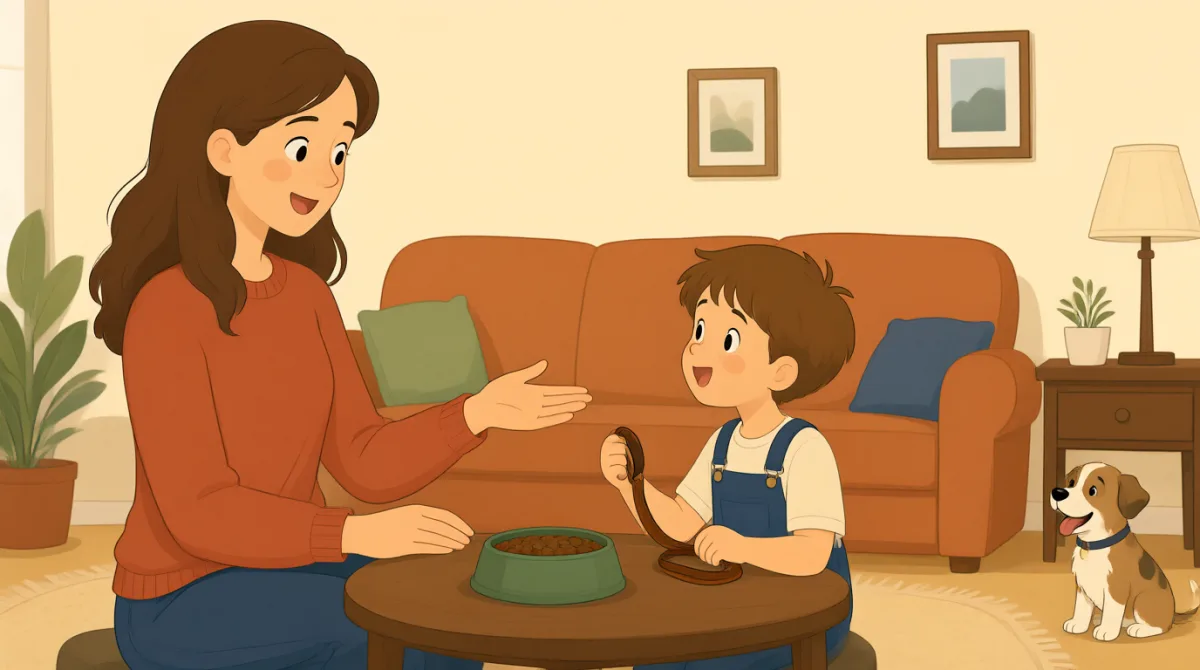

The dog food is in this bin. Buddy eats one cup in the morning and one at night.
غذای سگ توی این سطل است. بادی صبحها یک پیمانه و شبها هم یک پیمانه غذا میخورد.

Got it. Should I give him breakfast before or after his walk?
فهمیدم. صبحانهاش را قبل از پیادهروی بهش بدهم یا بعدش؟
After his morning walk, please. He likes to eat when he gets back.
لطفاً بعد از پیادهروی صبحش بهش غذا بده. دوست دارد وقتی برمیگردد غذا بخورد.
Okay. Where do you keep his leash?
باشه. قلادهاش را کجا میگذاری؟
It’s hanging by the front door. Please take him out three times a day.
کنار در ورودی آویزان است. لطفاً روزی سه بار ببرش بیرون.
How long should each walk be?
هر بار پیادهرویاش چقدر طول بکشد؟
About twenty minutes is good. Keep him on the leash, please.
حدود بیست دقیقه خوب است. لطفاً قلادهاش را ببند.
Sure. I’ll take him out after breakfast, in the afternoon, and before dinner.
حتماً. بعد از صبحانه، بعدازظهر و قبل از شام میبرمش بیرون.
واژگان8
- dog foodغذای سگ
Food that is made for dogs. You can use this phrase when talking about what a dog eats.
غذایی که مخصوص سگها تهیه شده است. وقتی دربارهٔ چیزی که یک سگ میخورد حرف میزنید، میتوانید از این عبارت استفاده کنید.
- one cupیک پیمانه
A measurement for the amount of food Buddy should eat. You can use it to explain how much to give someone or something.
مقداری از غذا که بادی باید بخورد. میتوانید از این عبارت برای توضیح مقدار غذایی که باید به کسی یا چیزی بدهید استفاده کنید.
- morning walkپیادهروی صبحگاهی
A walk taken in the morning. You can use this phrase to talk about a regular daily activity.
پیادهرویای که صبح انجام میشود. میتوانید از این عبارت برای صحبت دربارهٔ یک فعالیت روزانهٔ همیشگی استفاده کنید.
- gets backبرمیگردد
Returns to a place. Here, Buddy gets back home after his walk.
به جایی بازمیگردد. اینجا یعنی بادی بعد از پیادهروی به خانه برمیگردد.
- leashقلاده
A strap used to keep a dog safely beside you while walking. You can ask where someone keeps a pet’s leash.
بندی که برای حفظ امنیت سگ هنگام پیادهروی، او را کنار شما نگه میدارد. میتوانید بپرسید کسی قلادهٔ حیوان خانگیاش را کجا میگذارد.
- take him outاو را بیرون بردن
Take Buddy outside, usually for a walk. You can use this phrase when talking about caring for a dog.
بادی را به بیرون بردن، معمولاً برای پیادهروی. میتوانید وقتی دربارهٔ مراقبت از سگ حرف میزنید از این عبارت استفاده کنید.
- three times a dayروزی سه بار
Three times during each day. You can use this phrase to explain how often an activity should happen.
سه بار در طول هر روز. میتوانید از این عبارت برای توضیح اینکه کاری هر چند وقت یکبار باید انجام شود استفاده کنید.
- keep him on the leashقلادهاش را بسته نگه داشتن
Make sure Buddy stays attached to his leash. You can use this phrase to give a simple safety instruction.
مطمئن شوید قلادهٔ بادی به او وصل میماند. میتوانید از این عبارت برای دادن یک دستور سادهٔ ایمنی استفاده کنید.
جملات کلیدی8
- 1
Buddy eats one cup in the morning and one at night.
بادی صبحها یک پیمانه و شبها هم یک پیمانه غذا میخورد.
This sentence explains a daily feeding schedule. Reuse the pattern “one [amount] in the morning and one at night” to describe routines.
این جمله برنامهٔ روزانهٔ غذا دادن را توضیح میدهد. برای توصیف برنامههای روزمره، از الگوی “one [amount] in the morning and one at night” (صبحها یک [مقدار] و شبها هم یک [مقدار]) استفاده کنید.
- 2
Should I give him breakfast before or after his walk?
صبحانهاش را قبل از پیادهروی بهش بدهم یا بعدش؟
This is a polite way to ask about the order of two activities. Replace “breakfast” and “his walk” with other tasks to ask about a routine.
این یک روش مؤدبانه برای پرسیدن ترتیب دو کار است. برای پرسیدن دربارهٔ یک برنامهٔ روزمره، “breakfast” و “his walk” را با کارهای دیگری جایگزین کنید.
- 3
After his morning walk, please.
لطفاً بعد از پیادهروی صبحش.
This gives a short, clear answer about when to do something. You can use “After [activity], please” to give a simple instruction.
این جمله پاسخی کوتاه و روشن دربارهٔ زمان انجام کاری میدهد. برای دادن یک دستور ساده میتوانید از “After [activity], please” (لطفاً بعد از [فعالیت]) استفاده کنید.
- 4
It’s hanging by the front door.
کنار در ورودی آویزان است.
This tells someone where an item is. Reuse “It’s hanging by…” to describe where something can be found.
این جمله به کسی میگوید یک وسیله کجاست. برای توضیح اینکه چیزی را کجا میتوان پیدا کرد، از الگوی “It’s hanging by…” (کنارِ ... آویزان است) استفاده کنید.
- 5
Please take him out three times a day.
لطفاً روزی سه بار ببرش بیرون.
This politely explains how often Buddy needs to go outside. You can use “Please [action] [number] times a day” for regular instructions.
این جمله بهطور مؤدبانه توضیح میدهد که بادی هر چند وقت یکبار باید بیرون برود. برای بیان دستورهای همیشگی، از الگوی “Please [action] [number] times a day” (لطفاً روزی [تعداد] بار [کاری را انجام دهید]) استفاده کنید.
- 6
About twenty minutes is good.
حدود بیست دقیقه خوب است.
This gives an approximate amount of time. Use “About [length of time] is good” to suggest how long an activity should last.
این جمله مدتزمان تقریبی را بیان میکند. برای پیشنهاد دادن اینکه کاری چقدر طول بکشد، از الگوی “About [length of time] is good” (حدود [مدتزمان] خوب است) استفاده کنید.
- 7
Keep him on the leash, please.
لطفاً قلادهاش را ببند.
This is a polite safety instruction. You can use “Keep [someone or something] on…” to explain what should stay attached or in place.
این یک دستور مؤدبانه برای حفظ ایمنی است. برای توضیح اینکه چه کسی یا چه چیزی باید به چیزی وصل یا در جای خود نگه داشته شود، از الگوی “Keep [someone or something] on…” ( [کسی یا چیزی] را به ... وصل نگه دارید) استفاده کنید.
- 8
I’ll take him out after breakfast, in the afternoon, and before dinner.
بعد از صبحانه، بعدازظهر و قبل از شام میبرمش بیرون.
This sentence lays out a plan for the day using clear time expressions. Reuse “I’ll [action] after…, in…, and before…” to describe a schedule.
این جمله با عبارتهای روشنِ مربوط به زمان، برنامهٔ روز را مشخص میکند. برای توضیح برنامهٔ زمانی از الگوی “I’ll [action] after…, in…, and before…” (من [کاری را] بعد از ...، در ... و قبل از ... انجام میدهم) استفاده کنید.