Explaining Food and Walks
說明餵食和遛狗安排
Emma shows Jack where the dog food and leash are. She explains when Buddy eats and how often he needs walks.
Emma告訴Jack狗糧和牽引繩放在哪裡,並說明Buddy的餵食時間和遛狗頻率。
對話8
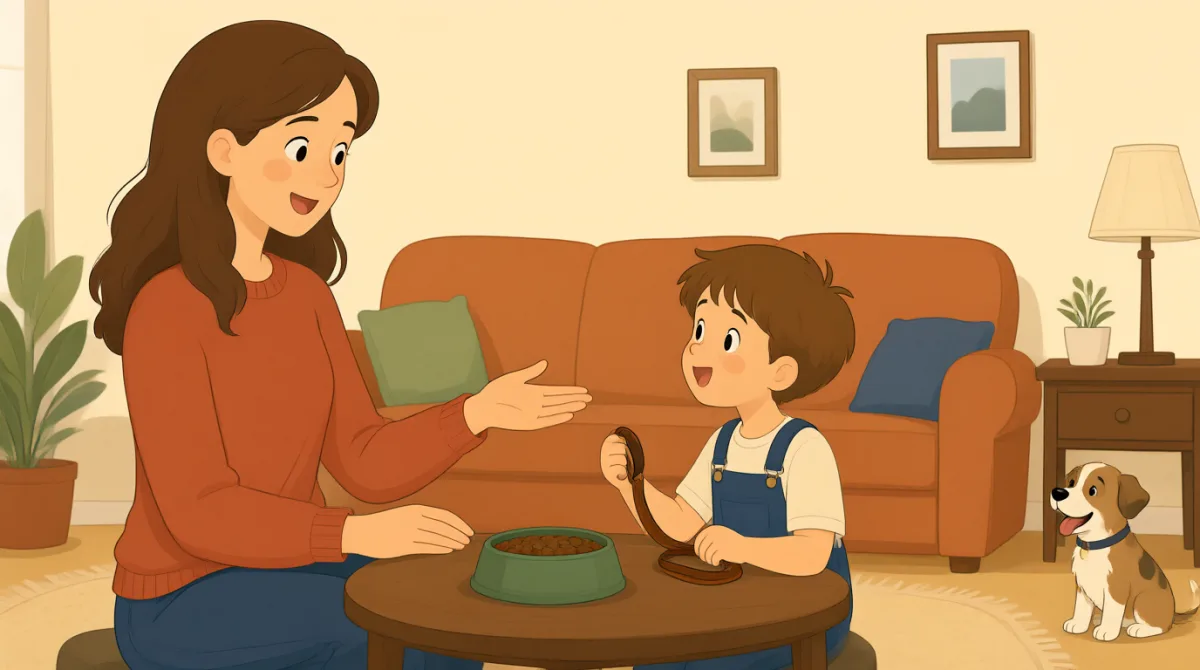

The dog food is in this bin. Buddy eats one cup in the morning and one at night.
狗糧在這個箱子裡。Buddy早上吃一杯,晚上也吃一杯。

Got it. Should I give him breakfast before or after his walk?
知道了。我應該在遛他之前還是之後給他吃早飯?
After his morning walk, please. He likes to eat when he gets back.
請在早上遛完他之後喂。他喜歡回來後吃東西。
Okay. Where do you keep his leash?
好的。他的牽引繩放在哪裡?
It’s hanging by the front door. Please take him out three times a day.
牽引繩掛在前門旁邊。請每天帶他出去三次。
How long should each walk be?
每次應該遛多久?
About twenty minutes is good. Keep him on the leash, please.
大約二十分鐘就行。請一直用牽引繩牽著他。
Sure. I’ll take him out after breakfast, in the afternoon, and before dinner.
沒問題。我會在早飯後、下午和晚飯前帶他出去。
詞彙8
- dog food狗糧
Food that is made for dogs. You can use this phrase when talking about what a dog eats.
專門給狗吃的食物。談到狗吃什麼時,可以用這個短語。
- one cup一杯
A measurement for the amount of food Buddy should eat. You can use it to explain how much to give someone or something.
用來衡量Buddy該吃多少食物。你可以用它來說明應該給某人或某種動物多少東西。
- morning walk早晨遛狗
A walk taken in the morning. You can use this phrase to talk about a regular daily activity.
在早上散步。你可以用這個短語來談論每天固定會做的活動。
- gets back回來
Returns to a place. Here, Buddy gets back home after his walk.
回到某個地方。這裡指Buddy遛完狗後回到家。
- leash牽引繩
A strap used to keep a dog safely beside you while walking. You can ask where someone keeps a pet’s leash.
遛狗時用來把狗安全地牽在身邊的帶子。你可以問別人寵物的牽引繩放在哪裡。
- take him out帶他出去
Take Buddy outside, usually for a walk. You can use this phrase when talking about caring for a dog.
帶Buddy到外面,通常是帶他去散步。談到照顧狗時可以用這個短語。
- three times a day每天三次
Three times during each day. You can use this phrase to explain how often an activity should happen.
每天進行三次。你可以用這個短語來說明一項活動應該多頻繁地進行。
- keep him on the leash給他繫好牽引繩
Make sure Buddy stays attached to his leash. You can use this phrase to give a simple safety instruction.
確保Buddy一直系著牽引繩。你可以用這個短語來給出簡單的安全提醒。
關鍵句8
- 1
Buddy eats one cup in the morning and one at night.
Buddy早上吃一杯,晚上也吃一杯。
This sentence explains a daily feeding schedule. Reuse the pattern “one [amount] in the morning and one at night” to describe routines.
這句話說明了每天的餵食安排。可以套用“one [amount] in the morning and one at night”來描述日常安排。
- 2
Should I give him breakfast before or after his walk?
我應該在遛他之前還是之後給他吃早飯?
This is a polite way to ask about the order of two activities. Replace “breakfast” and “his walk” with other tasks to ask about a routine.
這是一種禮貌詢問兩項活動先後順序的說法。把“breakfast”和“his walk”換成其他事情,也可以用來詢問日常安排。
- 3
After his morning walk, please.
早上遛完他之後喂就行。
This gives a short, clear answer about when to do something. You can use “After [activity], please” to give a simple instruction.
這是一種簡短、清楚地回答何時做某事的方式。你可以用“After [activity], please”來給出簡單的指示。
- 4
It’s hanging by the front door.
它掛在前門旁邊。
This tells someone where an item is. Reuse “It’s hanging by…” to describe where something can be found.
這句話告訴別人某樣東西在哪裡。可以套用“It’s hanging by…”來說明東西放在哪裡。
- 5
Please take him out three times a day.
請每天帶他出去三次。
This politely explains how often Buddy needs to go outside. You can use “Please [action] [number] times a day” for regular instructions.
這句話禮貌地說明Buddy需要多頻繁地出去。你可以用“Please [action] [number] times a day”來說明日常安排。
- 6
About twenty minutes is good.
大約二十分鐘就行。
This gives an approximate amount of time. Use “About [length of time] is good” to suggest how long an activity should last.
這句話給出了一個大概的時長。你可以用“About [length of time] is good”來建議一項活動持續多久。
- 7
Keep him on the leash, please.
請一直給他繫好牽引繩。
This is a polite safety instruction. You can use “Keep [someone or something] on…” to explain what should stay attached or in place.
這是一句禮貌的安全提醒。你可以用“Keep [someone or something] on…”來說明應該讓某人或某物保持繫著或處於某個位置。
- 8
I’ll take him out after breakfast, in the afternoon, and before dinner.
我會在早飯後、下午和晚飯前帶他出去。
This sentence lays out a plan for the day using clear time expressions. Reuse “I’ll [action] after…, in…, and before…” to describe a schedule.
這句話用清楚的時間表達安排了當天的計劃。可以套用“I’ll [action] after…, in…, and before…”來描述日程。