Explaining Food and Walks
说明喂食和遛狗安排
Emma shows Jack where the dog food and leash are. She explains when Buddy eats and how often he needs walks.
Emma告诉Jack狗粮和牵引绳放在哪里,并说明Buddy的喂食时间和遛狗频率。
对话8
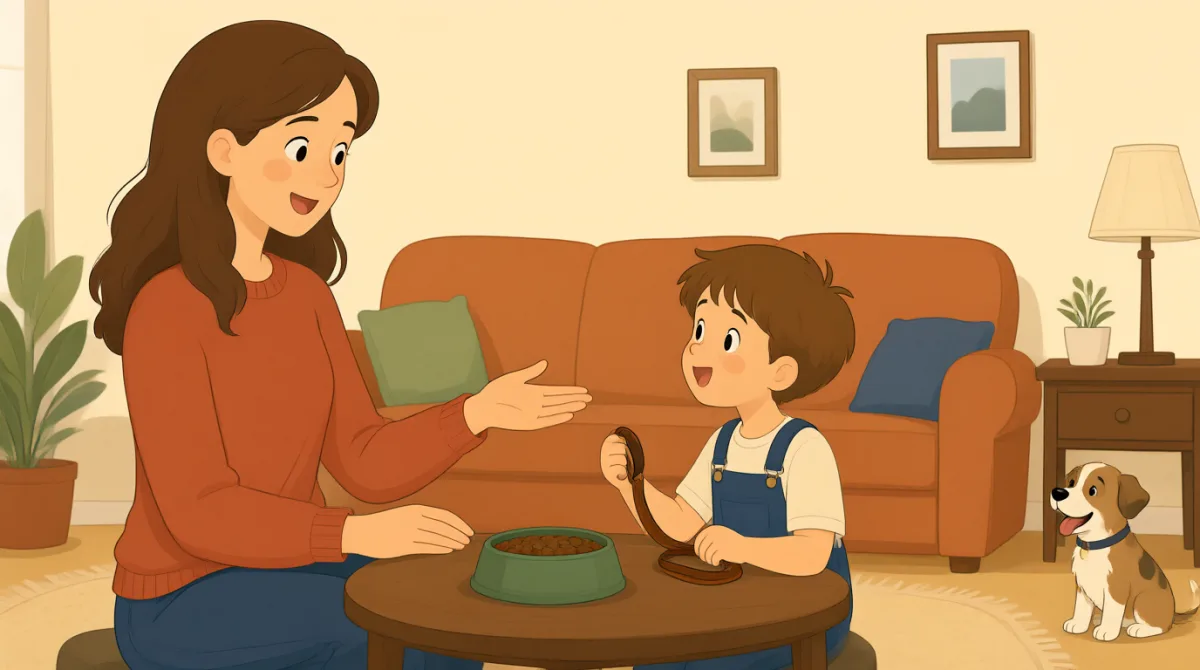

The dog food is in this bin. Buddy eats one cup in the morning and one at night.
狗粮在这个箱子里。Buddy早上吃一杯,晚上也吃一杯。

Got it. Should I give him breakfast before or after his walk?
知道了。我应该在遛他之前还是之后给他吃早饭?
After his morning walk, please. He likes to eat when he gets back.
请在早上遛完他之后喂。他喜欢回来后吃东西。
Okay. Where do you keep his leash?
好的。他的牵引绳放在哪里?
It’s hanging by the front door. Please take him out three times a day.
牵引绳挂在前门旁边。请每天带他出去三次。
How long should each walk be?
每次应该遛多久?
About twenty minutes is good. Keep him on the leash, please.
大约二十分钟就行。请一直用牵引绳牵着他。
Sure. I’ll take him out after breakfast, in the afternoon, and before dinner.
没问题。我会在早饭后、下午和晚饭前带他出去。
词汇8
- dog food狗粮
Food that is made for dogs. You can use this phrase when talking about what a dog eats.
专门给狗吃的食物。谈到狗吃什么时,可以用这个短语。
- one cup一杯
A measurement for the amount of food Buddy should eat. You can use it to explain how much to give someone or something.
用来衡量Buddy该吃多少食物。你可以用它来说明应该给某人或某种动物多少东西。
- morning walk早晨遛狗
A walk taken in the morning. You can use this phrase to talk about a regular daily activity.
在早上散步。你可以用这个短语来谈论每天固定会做的活动。
- gets back回来
Returns to a place. Here, Buddy gets back home after his walk.
回到某个地方。这里指Buddy遛完狗后回到家。
- leash牵引绳
A strap used to keep a dog safely beside you while walking. You can ask where someone keeps a pet’s leash.
遛狗时用来把狗安全地牵在身边的带子。你可以问别人宠物的牵引绳放在哪里。
- take him out带他出去
Take Buddy outside, usually for a walk. You can use this phrase when talking about caring for a dog.
带Buddy到外面,通常是带他去散步。谈到照顾狗时可以用这个短语。
- three times a day每天三次
Three times during each day. You can use this phrase to explain how often an activity should happen.
每天进行三次。你可以用这个短语来说明一项活动应该多频繁地进行。
- keep him on the leash给他系好牵引绳
Make sure Buddy stays attached to his leash. You can use this phrase to give a simple safety instruction.
确保Buddy一直系着牵引绳。你可以用这个短语来给出简单的安全提醒。
重点句子8
- 1
Buddy eats one cup in the morning and one at night.
Buddy早上吃一杯,晚上也吃一杯。
This sentence explains a daily feeding schedule. Reuse the pattern “one [amount] in the morning and one at night” to describe routines.
这句话说明了每天的喂食安排。可以套用“one [amount] in the morning and one at night”来描述日常安排。
- 2
Should I give him breakfast before or after his walk?
我应该在遛他之前还是之后给他吃早饭?
This is a polite way to ask about the order of two activities. Replace “breakfast” and “his walk” with other tasks to ask about a routine.
这是一种礼貌询问两项活动先后顺序的说法。把“breakfast”和“his walk”换成其他事情,也可以用来询问日常安排。
- 3
After his morning walk, please.
早上遛完他之后喂就行。
This gives a short, clear answer about when to do something. You can use “After [activity], please” to give a simple instruction.
这是一种简短、清楚地回答何时做某事的方式。你可以用“After [activity], please”来给出简单的指示。
- 4
It’s hanging by the front door.
它挂在前门旁边。
This tells someone where an item is. Reuse “It’s hanging by…” to describe where something can be found.
这句话告诉别人某样东西在哪里。可以套用“It’s hanging by…”来说明东西放在哪里。
- 5
Please take him out three times a day.
请每天带他出去三次。
This politely explains how often Buddy needs to go outside. You can use “Please [action] [number] times a day” for regular instructions.
这句话礼貌地说明Buddy需要多频繁地出去。你可以用“Please [action] [number] times a day”来说明日常安排。
- 6
About twenty minutes is good.
大约二十分钟就行。
This gives an approximate amount of time. Use “About [length of time] is good” to suggest how long an activity should last.
这句话给出了一个大概的时长。你可以用“About [length of time] is good”来建议一项活动持续多久。
- 7
Keep him on the leash, please.
请一直给他系好牵引绳。
This is a polite safety instruction. You can use “Keep [someone or something] on…” to explain what should stay attached or in place.
这是一句礼貌的安全提醒。你可以用“Keep [someone or something] on…”来说明应该让某人或某物保持系着或处于某个位置。
- 8
I’ll take him out after breakfast, in the afternoon, and before dinner.
我会在早饭后、下午和晚饭前带他出去。
This sentence lays out a plan for the day using clear time expressions. Reuse “I’ll [action] after…, in…, and before…” to describe a schedule.
这句话用清楚的时间表达安排了当天的计划。可以套用“I’ll [action] after…, in…, and before…”来描述日程。