Explaining Food and Walks
شرح مواعيد الطعام والتنزه
Emma shows Jack where the dog food and leash are. She explains when Buddy eats and how often he needs walks.
تُري إيما جاك أين يوجد طعام الكلب ومقوده. وتشرح له مواعيد أكل بَدي وعدد مرات حاجته إلى التنزه.
حوار8
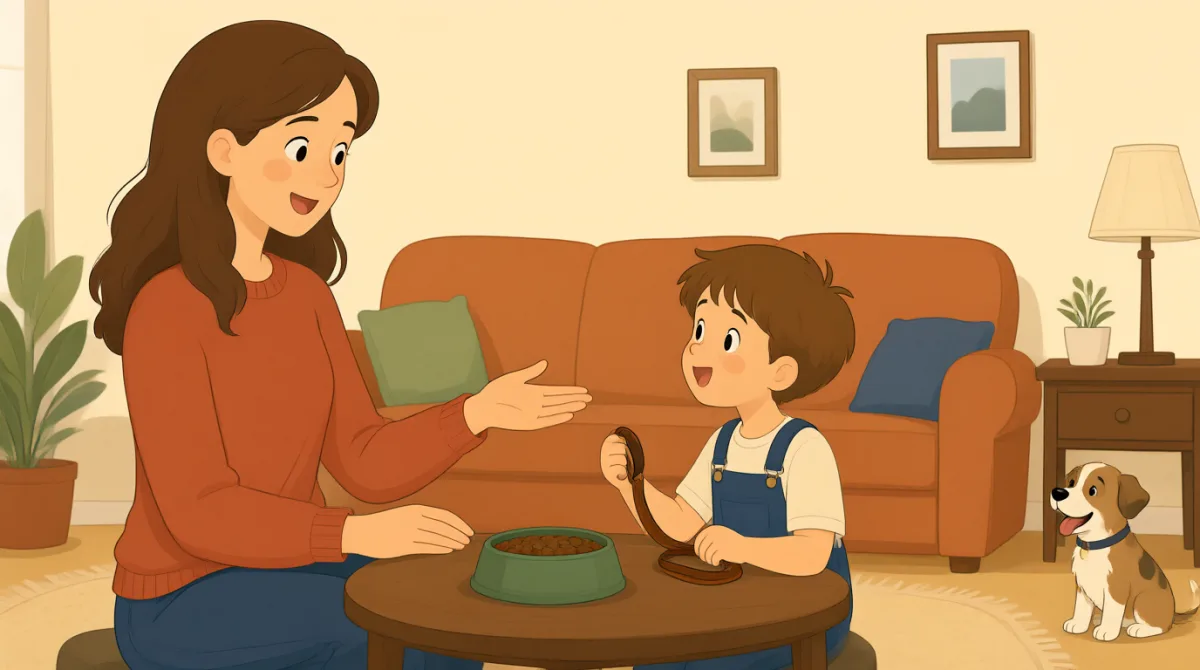

The dog food is in this bin. Buddy eats one cup in the morning and one at night.
طعام الكلب في هذا الصندوق. يأكل بَدي كوبًا صباحًا وكوبًا ليلًا.

Got it. Should I give him breakfast before or after his walk?
حسنًا. هل أقدّم له الإفطار قبل نزهته أم بعدها؟
After his morning walk, please. He likes to eat when he gets back.
بعد نزهته الصباحية، من فضلك. يحب أن يأكل عندما يعود.
Okay. Where do you keep his leash?
حسنًا. أين تحتفظين بمقوده؟
It’s hanging by the front door. Please take him out three times a day.
إنه معلّق قرب الباب الأمامي. أخرجيه من فضلك ثلاث مرات في اليوم.
How long should each walk be?
كم ينبغي أن تستغرق كل نزهة؟
About twenty minutes is good. Keep him on the leash, please.
نحو عشرين دقيقة مناسبة. أبقيه مربوطًا بالمقود، من فضلك.
Sure. I’ll take him out after breakfast, in the afternoon, and before dinner.
بالتأكيد. سأخرجه بعد الإفطار، وبعد الظهر، وقبل العشاء.
المفردات8
- dog foodطعام الكلاب
Food that is made for dogs. You can use this phrase when talking about what a dog eats.
طعام مُعدّ للكلاب. يمكنك استخدام هذه العبارة عند الحديث عما يأكله الكلب.
- one cupكوب واحد
A measurement for the amount of food Buddy should eat. You can use it to explain how much to give someone or something.
مقياس لكمية الطعام التي ينبغي أن يأكلها بَدي. يمكنك استخدامه لتوضيح مقدار ما ينبغي تقديمه لشخص أو حيوان.
- morning walkنزهة صباحية
A walk taken in the morning. You can use this phrase to talk about a regular daily activity.
نزهة تُقام في الصباح. يمكنك استخدام هذه العبارة للحديث عن نشاط يومي معتاد.
- gets backيعود
Returns to a place. Here, Buddy gets back home after his walk.
يرجع إلى مكان ما. هنا، يعود بَدي إلى المنزل بعد نزهته.
- leashمِقود
A strap used to keep a dog safely beside you while walking. You can ask where someone keeps a pet’s leash.
حزام يُستخدم لإبقاء الكلب إلى جانبك بأمان أثناء المشي. يمكنك أن تسأل أين يحتفظ شخص ما بمقود حيوانه الأليف.
- take him outيُخرجه
Take Buddy outside, usually for a walk. You can use this phrase when talking about caring for a dog.
يُخرج بَدي إلى الخارج، عادةً للتنزه. يمكنك استخدام هذه العبارة عند الحديث عن رعاية كلب.
- three times a dayثلاث مرات في اليوم
Three times during each day. You can use this phrase to explain how often an activity should happen.
ثلاث مرات خلال اليوم الواحد. يمكنك استخدام هذه العبارة لتوضيح عدد مرات القيام بنشاط ما.
- keep him on the leashيُبقيه مربوطًا بالمقود
Make sure Buddy stays attached to his leash. You can use this phrase to give a simple safety instruction.
يتأكد من بقاء بَدي موصولًا بمقوده. يمكنك استخدام هذه العبارة لإعطاء تعليمات بسيطة تتعلق بالسلامة.
الجمل الأساسية8
- 1
Buddy eats one cup in the morning and one at night.
يأكل بَدي كوبًا صباحًا وكوبًا ليلًا.
This sentence explains a daily feeding schedule. Reuse the pattern “one [amount] in the morning and one at night” to describe routines.
توضح هذه الجملة جدولًا يوميًا لإطعامه. أعد استخدام النمط “one [amount] in the morning and one at night” (مقدار واحد صباحًا وآخر ليلًا) لوصف الروتين.
- 2
Should I give him breakfast before or after his walk?
هل أقدّم له الإفطار قبل نزهته أم بعدها؟
This is a polite way to ask about the order of two activities. Replace “breakfast” and “his walk” with other tasks to ask about a routine.
هذه طريقة مهذبة للسؤال عن ترتيب نشاطين. استبدل “breakfast” و“his walk” بمهام أخرى لتسأل عن الروتين.
- 3
After his morning walk, please.
بعد نزهته الصباحية، من فضلك.
This gives a short, clear answer about when to do something. You can use “After [activity], please” to give a simple instruction.
هذه إجابة قصيرة وواضحة عن موعد القيام بشيء ما. يمكنك استخدام “After [activity], please” (بعد [النشاط]، من فضلك) لإعطاء تعليمات بسيطة.
- 4
It’s hanging by the front door.
إنه معلّق قرب الباب الأمامي.
This tells someone where an item is. Reuse “It’s hanging by…” to describe where something can be found.
تخبر هذه الجملة شخصًا بمكان غرض ما. أعد استخدام “It’s hanging by…” لوصف مكان العثور على شيء معلّق.
- 5
Please take him out three times a day.
أخرجه من فضلك ثلاث مرات في اليوم.
This politely explains how often Buddy needs to go outside. You can use “Please [action] [number] times a day” for regular instructions.
توضح هذه الجملة بأدب عدد المرات التي يحتاج فيها بَدي إلى الخروج. يمكنك استخدام “Please [action] [number] times a day” (من فضلك، [الفعل] [عددًا] من المرات في اليوم) لإعطاء تعليمات منتظمة.
- 6
About twenty minutes is good.
نحو عشرين دقيقة مناسبة.
This gives an approximate amount of time. Use “About [length of time] is good” to suggest how long an activity should last.
تحدد هذه الجملة مدة تقريبية. استخدم “About [length of time] is good” (نحو [مدة زمنية] مناسب) لاقتراح المدة التي ينبغي أن يستغرقها نشاط ما.
- 7
Keep him on the leash, please.
أبقه مربوطًا بالمقود، من فضلك.
This is a polite safety instruction. You can use “Keep [someone or something] on…” to explain what should stay attached or in place.
هذه تعليمات مهذبة تتعلق بالسلامة. يمكنك استخدام “Keep [someone or something] on…” لتوضيح ما ينبغي أن يبقى موصولًا بشيء أو ثابتًا في مكانه.
- 8
I’ll take him out after breakfast, in the afternoon, and before dinner.
سأخرجه بعد الإفطار، وبعد الظهر، وقبل العشاء.
This sentence lays out a plan for the day using clear time expressions. Reuse “I’ll [action] after…, in…, and before…” to describe a schedule.
توضح هذه الجملة خطة اليوم باستخدام تعبيرات زمنية واضحة. أعد استخدام “I’ll [action] after…, in…, and before…” لوصف جدول زمني.