Dancing at the Party
Bailando en la fiesta
At the reception, Emma and Jack enjoy the music and dance together as the wedding party continues.
En la recepción, Emma y Jack disfrutan de la música y bailan juntos mientras sigue la fiesta de la boda.
Diálogo8
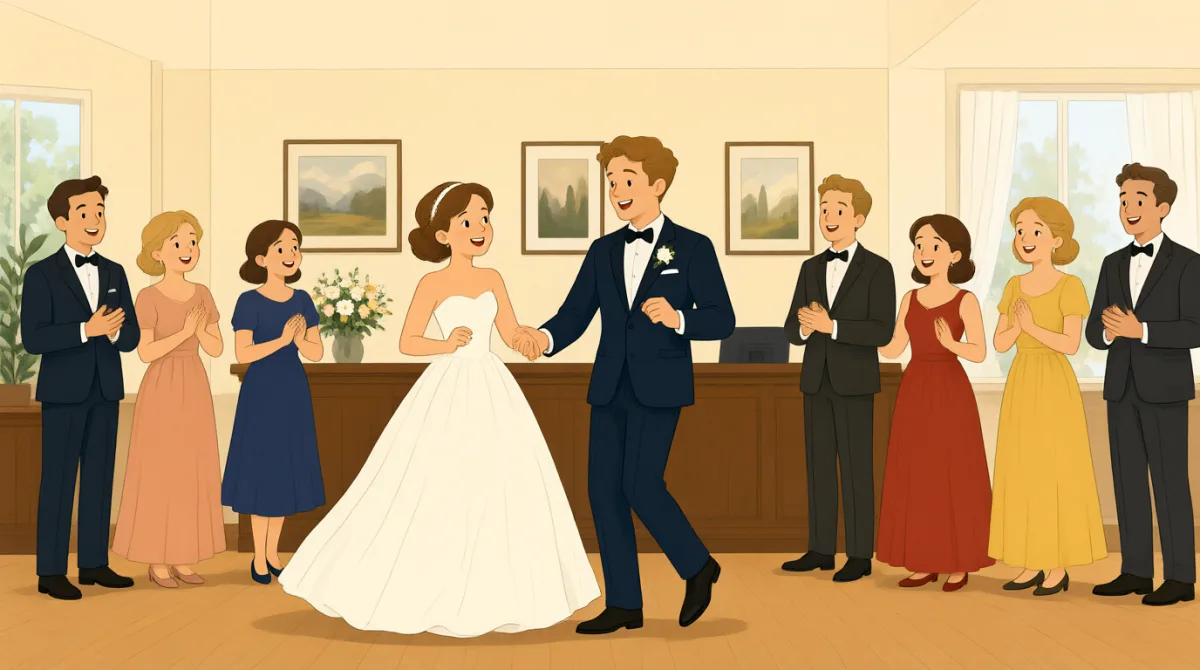

This song is great! Do you want to dance?
¡Qué buena canción! ¿Quieres bailar?

Sure! I’m not a great dancer, but I’ll give it a try.
¡Claro! No soy muy buen bailarín, pero lo voy a intentar.
Neither am I. Let’s just follow the music.
Yo tampoco. Sigamos el ritmo y ya.
Good plan. This party is much more fun than I expected.
Buena idea. Esta fiesta es mucho más divertida de lo que esperaba.
I know! The couple looks so happy, and everyone is celebrating.
¡Ya lo creo! Los novios se ven muy felices y todos están celebrando.
Watch your step! I almost bumped into that chair.
¡Fíjate por dónde pisas! Casi choco con esa silla.
Thanks! Let’s get some water after this song.
¡Gracias! Tomemos un poco de agua cuando termine esta canción.
Sounds good. Then we can come back for another dance.
Me parece bien. Después podemos volver a bailar.
Vocabulario8
- give it a tryintentarlo
To give something a try means to try doing it, even if you are not sure you will be good at it. Jack uses this phrase when he agrees to dance.
“Give something a try” significa intentar hacer algo, aunque no estés seguro de que se te dé bien. Jack usa esta expresión cuando acepta bailar.
- follow the musicseguir el ritmo
To follow the music means to move along with its rhythm. You can use this phrase when dancing or moving to a song.
“Follow the music” significa moverse al ritmo de la música. Puedes usar esta expresión para hablar de bailar o moverte al son de una canción.
- much more funmucho más divertido
This phrase compares two experiences and says one is a lot more enjoyable. You can say, “The game was much more fun than I expected.”
Esta expresión compara dos experiencias y dice que una es mucho más agradable que la otra. Puedes decir: “The game was much more fun than I expected” (El juego fue mucho más divertido de lo que esperaba).
- I expectedlo que esperaba
This means what you thought would happen or how something would be before it happened. Use “than I expected” to say something was different from your prediction.
“I expected” se refiere a lo que pensabas que iba a pasar o a cómo sería algo antes de que ocurriera. Usa “than I expected” para decir que algo fue diferente de lo que imaginabas.
- Watch your step!¡Fíjate por dónde pisas!
This is a warning to be careful where you walk. You can say it if someone might trip or bump into something.
Es una advertencia para que alguien tenga cuidado al caminar. Puedes decirlo si alguien corre el riesgo de tropezarse o chocar con algo.
- bumped intochocar contra
To bump into something means to hit it by accident. You can also bump into a person when you meet them unexpectedly.
“Bump into” algo significa golpearlo por accidente. También puedes usar “bump into” para decir que te encuentras con alguien inesperadamente.
- after this songcuando termine esta canción
This phrase means when the current song has finished. You can use “after this” to say you will do something once an activity is over.
“After this song” significa cuando haya terminado la canción que está sonando. Puedes usar “after this” para decir que harás algo cuando termine una actividad.
- come backvolver
To come back means to return to a place. Here, Jack means they can return to the dance floor after getting water.
“Come back” significa regresar a un lugar. Aquí, Jack quiere decir que pueden volver a la pista de baile después de tomar agua.
Frases clave8
- 1
Do you want to dance?
¿Quieres bailar?
This is a simple, friendly way to invite someone to dance. You can replace “dance” with another activity, such as “get some coffee.”
Es una forma sencilla y amable de invitar a alguien a bailar. Puedes cambiar “dance” por otra actividad, como “get some coffee” (tomar un café).
- 2
I’m not a great dancer, but I’ll give it a try.
No soy muy buen bailarín, pero lo voy a intentar.
This sentence shows that you are willing to try something, even if you do not feel confident. Use “I’m not a great [role], but I’ll give it a try” for other activities.
Esta oración muestra que estás dispuesto a probar algo, aunque no tengas mucha confianza. Puedes usar “I’m not a great [role], but I’ll give it a try” para hablar de otras actividades.
- 3
Let’s just follow the music.
Sigamos el ritmo y ya.
This is a relaxed way to suggest enjoying the rhythm without worrying about dancing perfectly. “Let’s just…” is useful for making a simple, low-pressure suggestion.
Es una forma relajada de proponer que disfruten del ritmo sin preocuparse por bailar a la perfección. “Let’s just…” sirve para hacer una sugerencia sencilla y sin presión.
- 4
This party is much more fun than I expected.
Esta fiesta es mucho más divertida de lo que esperaba.
Use this sentence to say that something is more enjoyable than you thought it would be. You can change “party” to another event or activity.
Usa esta oración para decir que algo es más divertido de lo que pensabas. Puedes cambiar “party” por otro evento o actividad.
- 5
The couple looks so happy, and everyone is celebrating.
Los novios se ven muy felices y todos están celebrando.
This sentence describes how people look and what they are doing at a celebration. You can use “everyone is celebrating” for weddings, birthdays, and other special events.
Esta oración describe cómo se ven las personas y qué están haciendo en una celebración. Puedes usar “everyone is celebrating” en bodas, cumpleaños y otros eventos especiales.
- 6
Watch your step!
¡Fíjate por dónde pisas!
This short warning helps someone avoid tripping or hitting something. Say it when there is an obstacle or uneven ground nearby.
Esta breve advertencia ayuda a alguien a evitar tropezarse o chocar con algo. Dila si hay un obstáculo o el suelo está irregular.
- 7
Let’s get some water after this song.
Tomemos un poco de agua cuando termine esta canción.
This is a clear way to suggest doing something once the current song is finished. You can replace “get some water” with another activity.
Es una forma clara de proponer hacer algo cuando termine la canción que está sonando. Puedes cambiar “get some water” por otra actividad.
- 8
Then we can come back for another dance.
Después podemos volver a bailar.
This sentence suggests returning to an activity after a short break. Use “come back for another…” when you plan to do something again.
Esta oración propone volver a una actividad después de un breve descanso. Usa “come back for another…” cuando tengas pensado repetir algo.