Asking About a Friend’s Family
Preguntar por la familia de un amigo
Leo asks David about his family. David answers simple questions about his wife, children, and grandchildren.
Leo le pregunta a David por su familia. David responde preguntas sencillas sobre su esposa, sus hijos y sus nietos.
Diálogo8
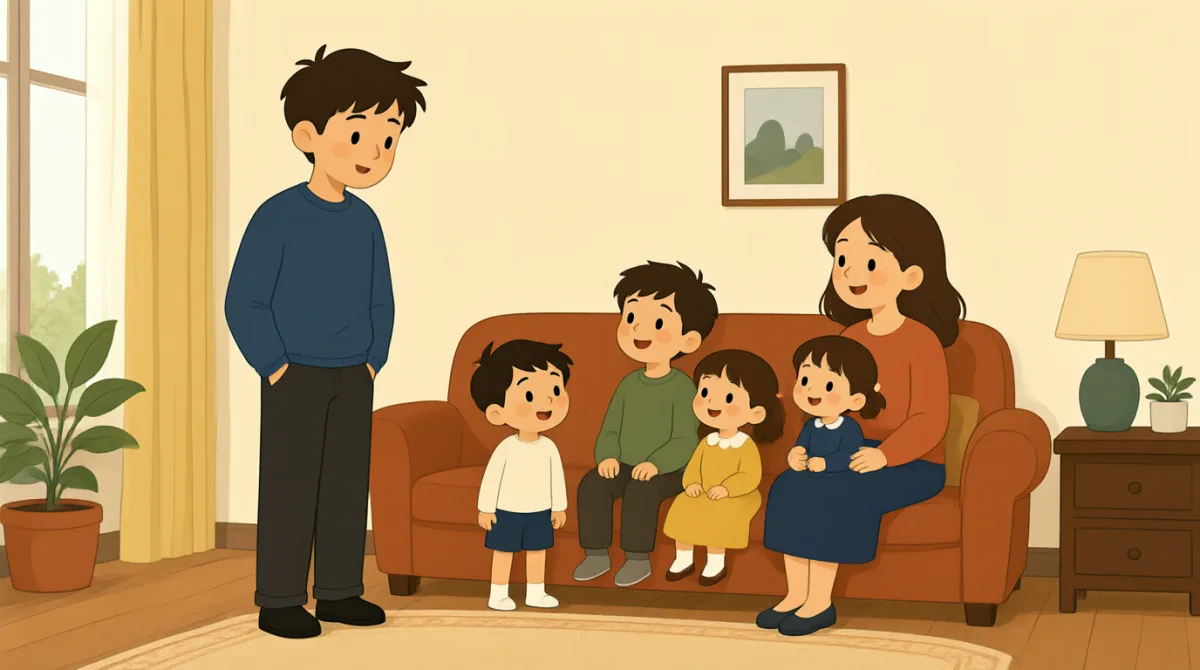

David, do you have a big family?
David, ¿tienes una familia grande?

Yes, I do. I have a wife and two children.
Sí. Tengo esposa y dos hijos.
How old are your children?
¿Cuántos años tienen tus hijos?
My son is ten, and my daughter is twelve.
Mi hijo tiene diez años y mi hija, doce.
Do you have grandchildren, too?
¿También tienes nietos?
Yes, I have two grandchildren. They are very sweet.
Sí, tengo dos nietos. Son muy cariñosos.
That sounds nice. Do they live near you?
Qué bien. ¿Viven cerca de ti?
Yes, they do. I see them every weekend.
Sí. Los veo todos los fines de semana.
Vocabulario7
- big familyfamilia grande
A big family has many people in it. You can use this phrase to ask about someone’s family.
Una familia grande tiene muchos miembros. Puedes usar esta expresión para preguntar por la familia de alguien.
- childrenhijos
Children are a person’s sons and daughters. Use this word to talk about sons and daughters together.
Los hijos son los hijos e hijas de una persona. Usa esta palabra para hablar de todos ellos en conjunto.
- How old are your children?¿Cuántos años tienen tus hijos?
This is a way to ask about the ages of someone’s children. You can also ask, “How old is your son?”
Esta es una forma de preguntar qué edad tienen los hijos de alguien. También puedes preguntar: “How old is your son?”
- grandchildrennietos
Grandchildren are the children of your son or daughter. Use this word to talk about them together.
Los nietos son los hijos de tu hijo o hija. Usa esta palabra para hablar de ellos en conjunto.
- very sweetmuy cariñosos
Here, “very sweet” means very kind or lovely. You can use it to say something nice about people.
Aquí, “very sweet” significa muy amables o encantadores. Puedes usar esta expresión para decir algo bonito sobre las personas.
- live near youvivir cerca de ti
This means to have a home close to your home. You can ask, “Do they live near you?” to ask where someone lives.
Significa tener una casa cerca de la tuya. Puedes preguntar “Do they live near you?” para saber dónde vive alguien.
- every weekendtodos los fines de semana
This means on all Saturdays and Sundays. Use it to say how often you do something.
Significa todos los sábados y domingos. Úsalo para decir con qué frecuencia haces algo.
Frases clave8
- 1
David, do you have a big family?
David, ¿tienes una familia grande?
This is a friendly way to ask about someone’s family. You can change “big family” to another simple question topic.
Esta es una forma amistosa de preguntar por la familia de alguien. Puedes cambiar “big family” por otro tema sencillo para hacer una pregunta.
- 2
I have a wife and two children.
Tengo esposa y dos hijos.
Use this sentence to say who is in your family. You can change the family members and number, for example, “I have a husband and one child.”
Usa esta oración para decir quiénes forman parte de tu familia. Puedes cambiar los miembros de la familia y el número; por ejemplo: “I have a husband and one child.”
- 3
How old are your children?
¿Cuántos años tienen tus hijos?
This is a simple way to ask about the ages of someone’s children. You can ask the same question about one person: “How old is your son?”
Esta es una forma sencilla de preguntar qué edad tienen los hijos de alguien. Puedes hacer la misma pregunta sobre una sola persona: “How old is your son?”
- 4
My son is ten, and my daughter is twelve.
Mi hijo tiene diez años y mi hija, doce.
Use this pattern to give the ages of two people. Change the family words and numbers to give your own answer.
Usa esta estructura para decir la edad de dos personas. Cambia las palabras sobre la familia y los números para dar tu propia respuesta.
- 5
Do you have grandchildren, too?
¿También tienes nietos?
This is a way to ask if someone has grandchildren. “Too” makes the question connect naturally to what you have just talked about.
Esta es una forma de preguntar si alguien tiene nietos. “Too” hace que la pregunta conecte de manera natural con lo que acaban de comentar.
- 6
That sounds nice.
Qué bien.
This is a friendly response when someone shares good news. You can use it to show that you are listening.
Esta es una respuesta amistosa cuando alguien comparte una buena noticia. Puedes usarla para demostrar que estás escuchando.
- 7
Do they live near you?
¿Viven cerca de ti?
Use this question to ask if people live close to someone. Change “they” to “he” or “she” when asking about one person.
Usa esta pregunta para saber si unas personas viven cerca de alguien. Cambia “they” por “he” o “she” cuando preguntes por una sola persona.
- 8
I see them every weekend.
Los veo todos los fines de semana.
Use this sentence to say how often you see people. You can replace “every weekend” with another time, such as “every day.”
Usa esta oración para decir con qué frecuencia ves a alguien. Puedes sustituir “every weekend” por otro momento, como “every day.”