Asking About a Friend’s Family
친구의 가족에 대해 묻기
Leo asks David about his family. David answers simple questions about his wife, children, and grandchildren.
레오가 데이비드에게 가족에 대해 물어봐. 데이비드는 아내와 자녀, 손주에 관한 간단한 질문에 답해.
대화8
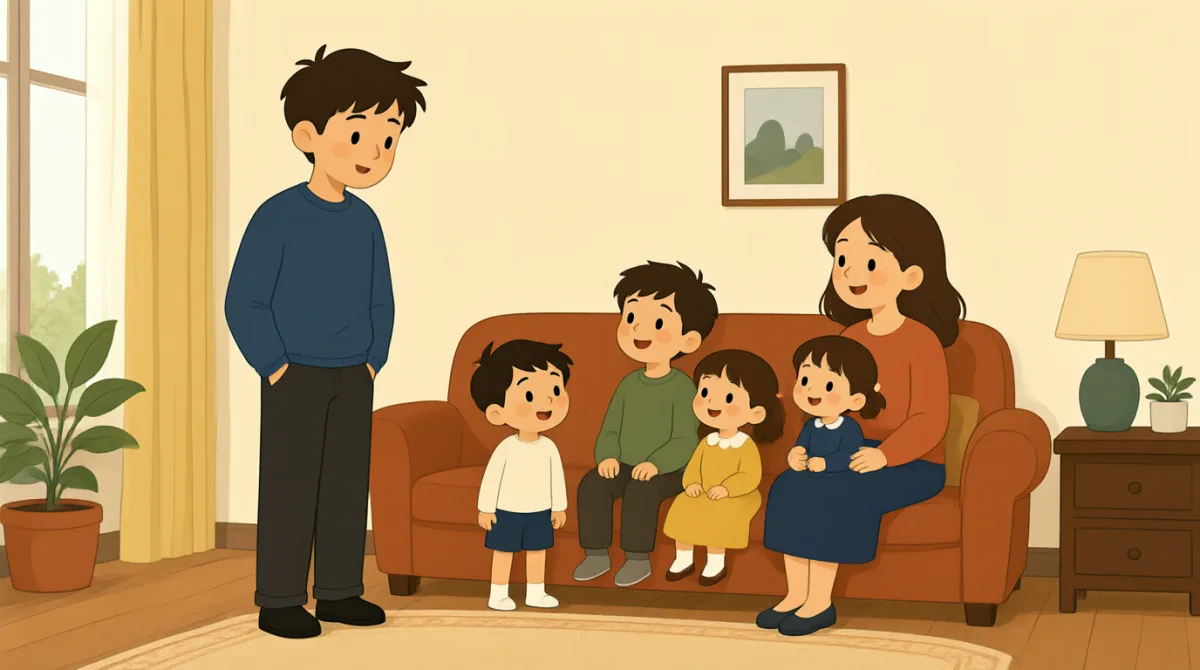

David, do you have a big family?
데이비드, 가족이 많아?

Yes, I do. I have a wife and two children.
응, 많아. 아내랑 아이가 둘 있어.
How old are your children?
아이들은 몇 살이야?
My son is ten, and my daughter is twelve.
아들은 열 살이고 딸은 열두 살이야.
Do you have grandchildren, too?
손주도 있어?
Yes, I have two grandchildren. They are very sweet.
응, 손주가 둘 있어. 정말 사랑스러워.
That sounds nice. Do they live near you?
좋겠다. 손주들이 네 가까이에 살아?
Yes, they do. I see them every weekend.
응, 가까이 살아. 주말마다 만나.
어휘7
- big family대가족
A big family has many people in it. You can use this phrase to ask about someone’s family.
big family는 식구가 많은 가족을 말해요. 누군가의 가족에 대해 물을 때 쓸 수 있는 표현이에요.
- children자녀
Children are a person’s sons and daughters. Use this word to talk about sons and daughters together.
children은 한 사람의 아들과 딸을 통틀어 말해요. 아들과 딸을 함께 이야기할 때 쓰는 단어예요.
- How old are your children?아이들은 몇 살이에요?
This is a way to ask about the ages of someone’s children. You can also ask, “How old is your son?”
누군가의 자녀가 몇 살인지 물을 때 쓰는 표현이에요. “How old is your son?”이라고 물을 수도 있어요.
- grandchildren손주
Grandchildren are the children of your son or daughter. Use this word to talk about them together.
grandchildren은 아들이나 딸의 자녀를 말해요. 손주들을 통틀어 이야기할 때 쓰는 단어예요.
- very sweet정말 사랑스러운
Here, “very sweet” means very kind or lovely. You can use it to say something nice about people.
여기서 “very sweet”은 아주 친절하거나 사랑스럽다는 뜻이에요. 사람을 좋게 말할 때 쓸 수 있어요.
- live near you가까이에 살다
This means to have a home close to your home. You can ask, “Do they live near you?” to ask where someone lives.
“live near you”는 자기 집에서 가까운 곳에 살다는 뜻이에요. 누군가 사는 곳을 물을 때 “Do they live near you?”라고 할 수 있어요.
- every weekend주말마다
This means on all Saturdays and Sundays. Use it to say how often you do something.
“every weekend”는 매주 토요일과 일요일을 말해요. 어떤 일을 얼마나 자주 하는지 말할 때 써요.
핵심 문장8
- 1
David, do you have a big family?
데이비드, 가족이 많아?
This is a friendly way to ask about someone’s family. You can change “big family” to another simple question topic.
누군가의 가족에 대해 친근하게 물어보는 표현이에요. “big family” 대신 다른 간단한 질문 주제를 넣어도 돼요.
- 2
I have a wife and two children.
아내랑 아이가 둘 있어.
Use this sentence to say who is in your family. You can change the family members and number, for example, “I have a husband and one child.”
가족 구성원을 말할 때 쓰는 문장이에요. 가족 구성원과 숫자를 바꿔서 “I have a husband and one child.”처럼 말할 수 있어요.
- 3
How old are your children?
아이들은 몇 살이야?
This is a simple way to ask about the ages of someone’s children. You can ask the same question about one person: “How old is your son?”
누군가의 자녀가 몇 살인지 간단히 물어보는 표현이에요. 한 사람에 대해 물을 때는 “How old is your son?”이라고 할 수 있어요.
- 4
My son is ten, and my daughter is twelve.
아들은 열 살이고 딸은 열두 살이야.
Use this pattern to give the ages of two people. Change the family words and numbers to give your own answer.
두 사람의 나이를 말할 때 쓰는 문장 패턴이에요. 가족을 나타내는 단어와 숫자를 바꿔서 직접 답해 보세요.
- 5
Do you have grandchildren, too?
손주도 있어?
This is a way to ask if someone has grandchildren. “Too” makes the question connect naturally to what you have just talked about.
누군가에게 손주가 있는지 물어보는 표현이에요. “Too”는 앞서 이야기한 내용과 질문을 자연스럽게 이어 줘요.
- 6
That sounds nice.
좋겠다.
This is a friendly response when someone shares good news. You can use it to show that you are listening.
누군가 좋은 소식을 전했을 때 친근하게 답하는 표현이에요. 상대의 이야기를 잘 듣고 있다는 걸 보여 줄 수 있어요.
- 7
Do they live near you?
손주들이 네 가까이에 살아?
Use this question to ask if people live close to someone. Change “they” to “he” or “she” when asking about one person.
사람들이 누군가와 가까운 곳에 사는지 물을 때 쓰는 질문이에요. 한 사람에 대해 물을 때는 “they” 대신 “he”나 “she”를 쓰세요.
- 8
I see them every weekend.
주말마다 만나.
Use this sentence to say how often you see people. You can replace “every weekend” with another time, such as “every day.”
사람들을 얼마나 자주 만나는지 말할 때 쓰는 문장이에요. “every weekend” 대신 “every day”처럼 다른 시간을 넣을 수 있어요.