Talking About Brothers and Sisters
Hablar de hermanos y hermanas
Emma and Mia talk about their brothers and sisters. They ask simple questions about family size.
Emma y Mia hablan de sus hermanos y hermanas. Se hacen preguntas sencillas sobre cuántas personas hay en sus familias.
Diálogo7
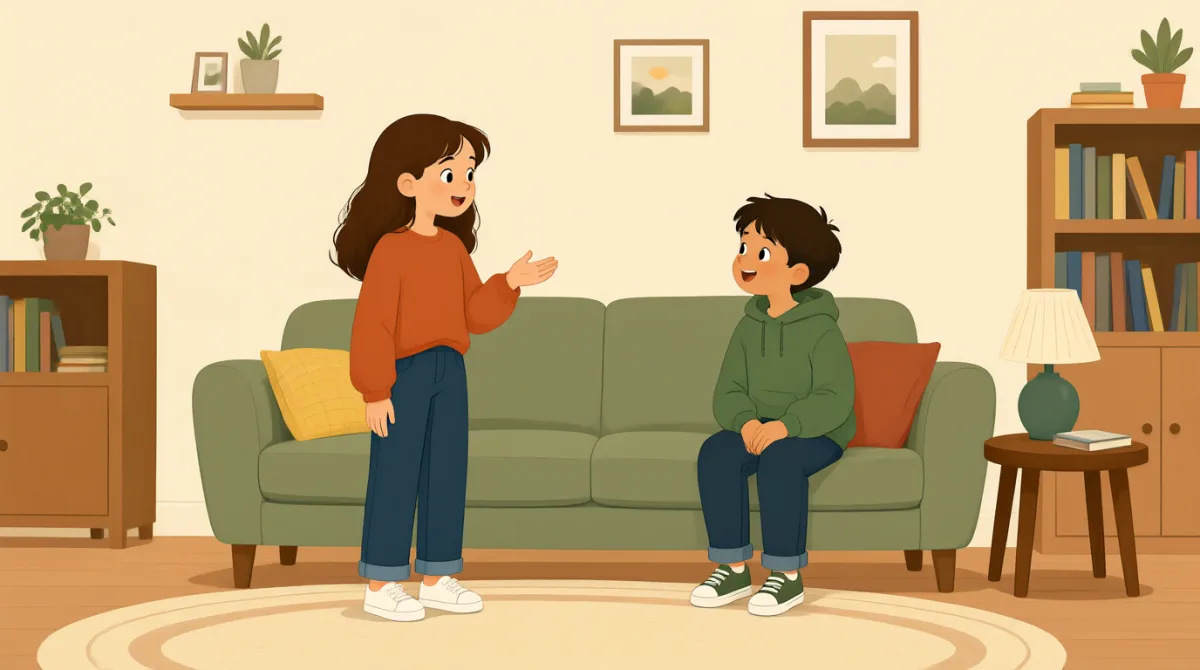

Mia, do you have any brothers or sisters?
Mia, ¿tienes hermanos?

Yes, I have one brother. How about you?
Sí, tengo un hermano. ¿Y tú?
I have two sisters. Are you the oldest?
Tengo dos hermanas. ¿Eres la mayor?
No, I’m the youngest. My brother is older.
No, soy la menor. Mi hermano es mayor.
That’s nice. Do you have a big family?
Qué bien. ¿Tienes una familia grande?
Not really. There are four of us. What about you?
No mucho. Somos cuatro. ¿Y tú?
There are five of us: my parents, my sisters, and me.
Somos cinco: mis padres, mis hermanas y yo.
Vocabulario8
- brothers or sistershermanos
This means siblings: brothers and sisters in your family. Use it to ask someone about their siblings.
Se refiere a los hermanos y las hermanas de tu familia. Usa esta expresión para preguntarle a alguien si tiene hermanos.
- one brotherun hermano
This means the person has a single brother. You can change “one” to say how many brothers you have.
Significa que la persona tiene un solo hermano. Puedes cambiar “one” para decir cuántos hermanos tienes.
- two sistersdos hermanas
This means the person has two female siblings. You can use a number with “sisters” to talk about your family.
Significa que la persona tiene dos hermanas. Puedes usar un número junto con “sisters” para hablar de tu familia.
- the oldestel mayor / la mayor
This means older than all the other children in the family. Use “Are you the oldest?” to ask about someone’s place in the family.
Significa que eres mayor que todos los demás hijos de la familia. Usa “Are you the oldest?” para preguntarle a alguien qué lugar ocupa entre sus hermanos.
- the youngestel menor / la menor
This means younger than all the other children in the family. You can say “I’m the youngest” to describe your place in the family.
Significa que eres menor que todos los demás hijos de la familia. Puedes decir “I’m the youngest” para explicar qué lugar ocupas entre tus hermanos.
- big familyfamilia grande
A big family has many people in it. Use “Do you have a big family?” to ask about someone’s family size.
Una familia grande tiene muchas personas. Usa “Do you have a big family?” para preguntarle a alguien cuántas personas hay en su familia.
- There are four of us.Somos cuatro.
This tells someone that a group has four people. You can change “four” to give a different number.
Esta frase le dice a alguien que un grupo está formado por cuatro personas. Puedes cambiar “four” por otro número.
- my parentsmis padres
This means your mother and father. Use it to say who is in your family.
Significa tu madre y tu padre. Usa esta expresión para decir quiénes forman parte de tu familia.
Frases clave8
- 1
Mia, do you have any brothers or sisters?
Mia, ¿tienes hermanos?
This is a simple way to ask if someone has siblings. You can replace “brothers or sisters” with another family member.
Es una manera sencilla de preguntar si alguien tiene hermanos. Puedes reemplazar “brothers or sisters” por otro familiar.
- 2
Yes, I have one brother.
Sí, tengo un hermano.
Use this to answer a question about siblings and say how many brothers you have. Change “one” and “brother” to match your family.
Usa esta frase para responder a una pregunta sobre tus hermanos y decir cuántos hermanos tienes. Cambia “one” y “brother” para que coincidan con tu familia.
- 3
How about you?
¿Y tú?
This is a short, friendly way to ask the other person the same question. Use it to keep a conversation going.
Es una manera breve y amistosa de hacerle a la otra persona la misma pregunta. Úsala para mantener la conversación.
- 4
Are you the oldest?
¿Eres la mayor?
Use this question to ask if someone is older than all their siblings. You can also ask, “Are you the youngest?”
Usa esta pregunta para saber si alguien es mayor que todos sus hermanos. También puedes preguntar “Are you the youngest?”.
- 5
No, I’m the youngest.
No, soy la menor.
This is a simple way to say you are younger than your siblings. You can replace “the youngest” with “the oldest” if that is true for you.
Es una manera sencilla de decir que eres menor que tus hermanos. Puedes reemplazar “the youngest” por “the oldest” si ese es tu caso.
- 6
Do you have a big family?
¿Tienes una familia grande?
Use this question to ask whether someone has many people in their family. You can answer with a number or say, “Not really.”
Usa esta pregunta para saber si alguien tiene muchas personas en su familia. Puedes responder con un número o decir “Not really.”.
- 7
There are four of us.
Somos cuatro.
This tells someone how many people are in your family or group. Change “four” to the correct number.
Esta frase le dice a alguien cuántas personas hay en tu familia o grupo. Cambia “four” por el número correcto.
- 8
There are five of us: my parents, my sisters, and me.
Somos cinco: mis padres, mis hermanas y yo.
Use this sentence to give the number of people in your family and say who they are. You can change the number and family members to fit your own family.
Usa esta frase para decir cuántas personas hay en tu familia y quiénes son. Puedes cambiar el número y los familiares para que describa a tu propia familia.