Talking About Your Children
Hablar de tus hijos
Grace talks with Jack about their children. They share their children’s ages and daily activities.
Grace habla con Jack sobre sus hijos. Comparten las edades de sus hijos y las actividades que hacen a diario.
Diálogo8
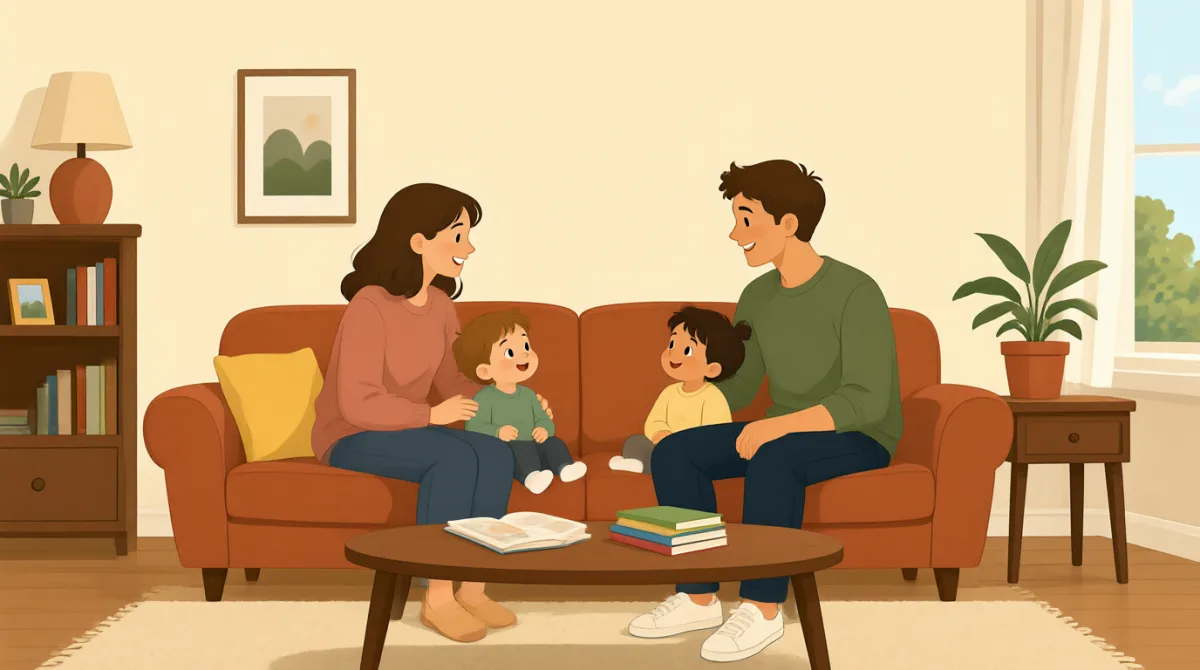

Jack, do you have children?
Jack, ¿tienes hijos?

Yes, I have two children. A boy and a girl.
Sí, tengo dos hijos: un niño y una niña.
How old are they?
¿Cuántos años tienen?
My son is eight. My daughter is five.
Mi hijo tiene ocho años. Mi hija tiene cinco.
That’s nice. What do they do after school?
Qué bien. ¿Qué hacen después de la escuela?
My son plays soccer. My daughter draws pictures.
Mi hijo juega al fútbol. Mi hija hace dibujos.
Do you have children, Grace?
¿Tienes hijos, Grace?
Yes, I have a son. He is twenty years old.
Sí, tengo un hijo. Tiene veinte años.
Vocabulario6
- have childrentener hijos
This means to be a parent. Ask “Do you have children?” to learn if someone is a parent.
Significa ser padre o madre. Pregunta “Do you have children?” (¿Tienes hijos?) para saber si alguien tiene hijos.
- How old are they?¿Cuántos años tienen?
Use this question to ask about people’s ages. You can also ask “How old is he?” or “How old is she?”
Usa esta pregunta para preguntar la edad de varias personas. También puedes preguntar “How old is he?” o “How old is she?”.
- after schooldespués de la escuela
This means the time when school is finished for the day. Use it to talk about activities children do later.
Se refiere al momento en que termina la jornada escolar. Úsalo para hablar de las actividades que hacen los niños después.
- plays soccerjuega al fútbol
This means takes part in the sport of soccer. Use “plays” to talk about what one person does regularly.
Significa practicar el deporte del fútbol. Usa “plays” para hablar de algo que una persona hace con regularidad.
- draws pictureshace dibujos
This means makes pictures with a pencil, pen, or crayons. Use “draws” to describe a regular activity.
Significa hacer dibujos con lápiz, bolígrafo o crayones. Usa “draws” para describir una actividad habitual.
- twenty years oldtener veinte años
This phrase tells someone’s age. For example, “He is twenty years old.”
Esta expresión indica la edad de alguien. Por ejemplo: “He is twenty years old.” (Tiene veinte años).
Frases clave8
- 1
Jack, do you have children?
Jack, ¿tienes hijos?
Use this simple question to ask if someone is a parent. Change “children” to “a pet” to ask about a pet.
Usa esta pregunta sencilla para saber si alguien es padre o madre. Cambia “children” por “a pet” para preguntar si alguien tiene una mascota.
- 2
Yes, I have two children.
Sí, tengo dos hijos.
Use this sentence to say you are a parent and give the number of your children. Change “two” to another number.
Usa esta frase para decir que tienes hijos y cuántos son. Cambia “two” por otro número.
- 3
How old are they?
¿Cuántos años tienen?
Use this question to ask the ages of two or more people. For one person, say “How old is he?” or “How old is she?”
Usa esta pregunta para preguntar la edad de dos personas o más. Si hablas de una sola persona, di “How old is he?” o “How old is she?”.
- 4
My son is eight.
Mi hijo tiene ocho años.
Use this sentence to share your son’s age. Replace “son” with “daughter” or another family word, and change the age.
Usa esta frase para decir la edad de tu hijo. Cambia “son” por “daughter” u otra palabra de parentesco, y modifica la edad.
- 5
What do they do after school?
¿Qué hacen después de la escuela?
Use this question to ask about children’s activities after school. You can replace “after school” with another time, such as “on weekends.”
Usa esta pregunta para preguntar qué actividades hacen los niños después de la escuela. Puedes sustituir “after school” por otro momento, como “on weekends”.
- 6
My son plays soccer.
Mi hijo juega al fútbol.
Use this sentence to describe a regular activity. Replace “soccer” with another activity, such as “basketball.”
Usa esta frase para describir una actividad habitual. Cambia “soccer” por otra actividad, como “basketball”.
- 7
My daughter draws pictures.
Mi hija hace dibujos.
Use this sentence to describe what your daughter does. Replace “draws pictures” with another activity.
Usa esta frase para describir lo que hace tu hija. Cambia “draws pictures” por otra actividad.
- 8
He is twenty years old.
Tiene veinte años.
Use this sentence to give a man or boy’s age. Replace “He” with “She” for a woman or girl, and change the age.
Usa esta frase para decir la edad de un hombre o un niño. Cambia “He” por “She” si hablas de una mujer o una niña, y modifica la edad.