Asking About a Friend’s Family
詢問朋友的家人
Leo asks David about his family. David answers simple questions about his wife, children, and grandchildren.
Leo 詢問 David 的家庭情況。David 回答關於妻子、孩子和孫輩的簡單問題。
對話8
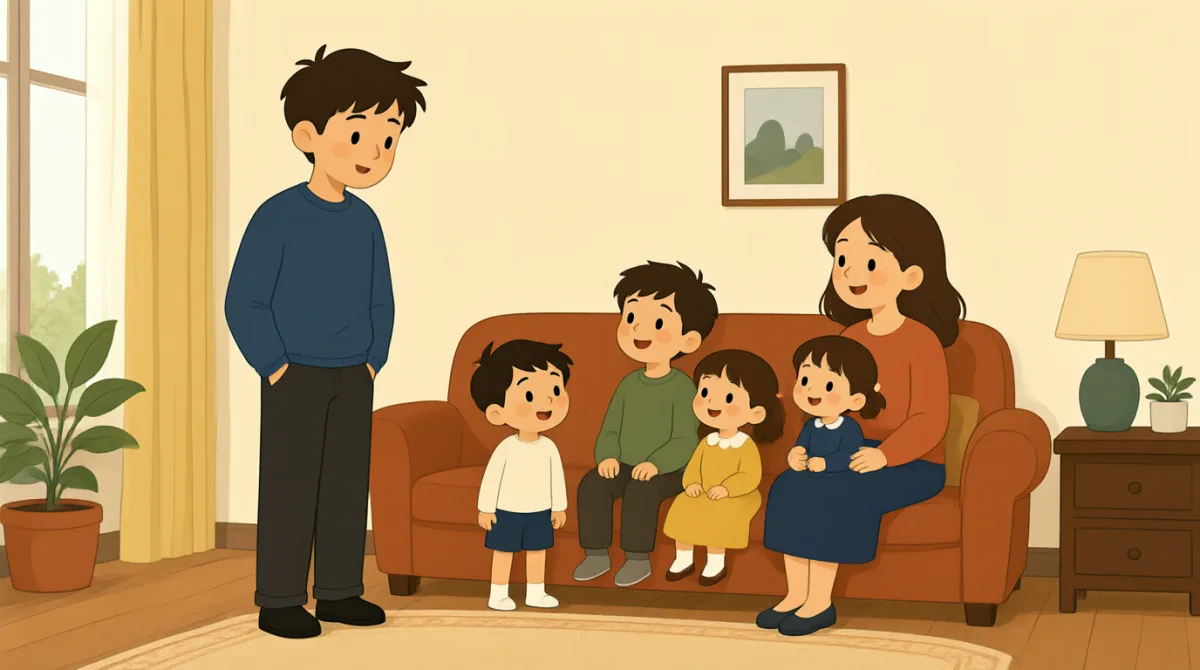

David, do you have a big family?
David,你家人多嗎?

Yes, I do. I have a wife and two children.
是的,我有一個妻子和兩個孩子。
How old are your children?
你的孩子多大了?
My son is ten, and my daughter is twelve.
我兒子十歲,女兒十二歲。
Do you have grandchildren, too?
你也有孫輩嗎?
Yes, I have two grandchildren. They are very sweet.
有,我有兩個孫輩。他們非常可愛。
That sounds nice. Do they live near you?
聽起來真不錯。他們住得離你近嗎?
Yes, they do. I see them every weekend.
是的。他們每個週末都會來看我。
詞彙7
- big family大家庭
A big family has many people in it. You can use this phrase to ask about someone’s family.
大家庭裡有很多人。你可以用這個短語來詢問別人的家庭情況。
- children孩子
Children are a person’s sons and daughters. Use this word to talk about sons and daughters together.
“孩子”指一個人的兒子和女兒。談到兒女時,可以用這個詞統稱他們。
- How old are your children?你的孩子多大了?
This is a way to ask about the ages of someone’s children. You can also ask, “How old is your son?”
這是詢問別人孩子年齡的一種說法。你也可以問:“How old is your son?”(你兒子多大了?)
- grandchildren孫輩
Grandchildren are the children of your son or daughter. Use this word to talk about them together.
孫輩是你兒子或女兒的孩子。談到他們時,可以用這個詞統稱。
- very sweet非常可愛
Here, “very sweet” means very kind or lovely. You can use it to say something nice about people.
這裡的“very sweet”意思是非常友善或可愛。你可以用它來誇別人。
- live near you住在你附近
This means to have a home close to your home. You can ask, “Do they live near you?” to ask where someone lives.
意思是住在離你家很近的地方。你可以問“Do they live near you?”(他們住得離你近嗎?)來了解別人住在哪裡。
- every weekend每個週末
This means on all Saturdays and Sundays. Use it to say how often you do something.
意思是每個星期六和星期天。你可以用它來說明做某件事的頻率。
關鍵句8
- 1
David, do you have a big family?
大衛,你家人多嗎?
This is a friendly way to ask about someone’s family. You can change “big family” to another simple question topic.
這是友好地詢問別人家庭情況的一種說法。你可以把“big family”換成其他簡單的話題來提問。
- 2
I have a wife and two children.
我有一個妻子和兩個孩子。
Use this sentence to say who is in your family. You can change the family members and number, for example, “I have a husband and one child.”
用這句話介紹自己的家庭成員。你可以換成其他家庭成員和人數,比如:“I have a husband and one child.”(我有一個丈夫和一個孩子。)
- 3
How old are your children?
你的孩子多大了?
This is a simple way to ask about the ages of someone’s children. You can ask the same question about one person: “How old is your son?”
這是簡單地詢問別人孩子年齡的一種說法。問一個孩子時,也可以說:“How old is your son?”
- 4
My son is ten, and my daughter is twelve.
我兒子十歲,女兒十二歲。
Use this pattern to give the ages of two people. Change the family words and numbers to give your own answer.
用這個句型告訴別人兩個人的年齡。你可以換成自己的家庭成員和年齡來回答。
- 5
Do you have grandchildren, too?
你也有孫輩嗎?
This is a way to ask if someone has grandchildren. “Too” makes the question connect naturally to what you have just talked about.
這句話用來詢問別人是否有孫輩。“Too”讓這個問題自然地接上剛才談到的話題。
- 6
That sounds nice.
聽起來真不錯。
This is a friendly response when someone shares good news. You can use it to show that you are listening.
別人分享好訊息時,可以用這句友好地回應,也能讓對方知道你在認真聽。
- 7
Do they live near you?
他們住得離你近嗎?
Use this question to ask if people live close to someone. Change “they” to “he” or “she” when asking about one person.
用這個問題詢問別人是否住得離某人近。問一個人時,可以把“they”換成“he”或“she”。
- 8
I see them every weekend.
我每個週末都會見到他們。
Use this sentence to say how often you see people. You can replace “every weekend” with another time, such as “every day.”
用這句話說明你多久見一次某些人。你可以把“every weekend”換成其他時間,比如“every day”。