Asking About a Friend’s Family
友達の家族について尋ねる
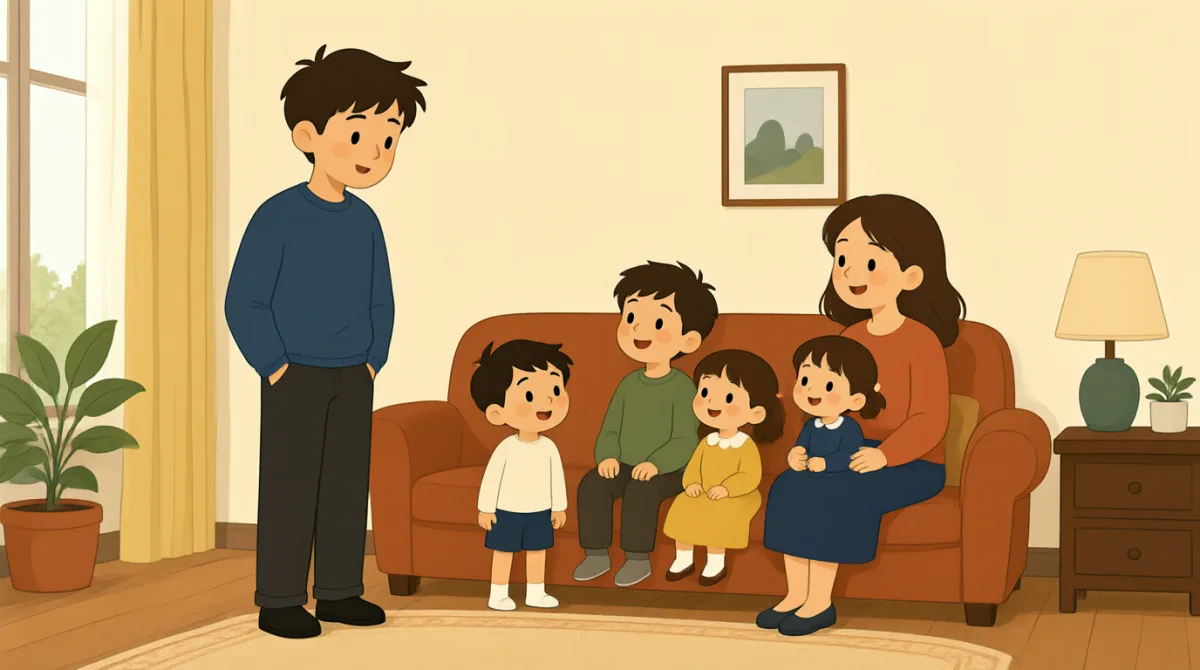
Leo asks David about his family. David answers simple questions about his wife, children, and grandchildren.
レオがデイビッドに家族について尋ねる。デイビッドは、妻や子ども、孫についての簡単な質問に答える。
会話8

David, do you have a big family?
デイビッド、家族は多いの?

Yes, I do. I have a wife and two children.
うん。妻と子どもが二人いるよ。
How old are your children?
子どもたちは何歳なの?
My son is ten, and my daughter is twelve.
息子は10歳で、娘は12歳だよ。
Do you have grandchildren, too?
孫もいるの?
Yes, I have two grandchildren. They are very sweet.
うん、孫が二人いるよ。とてもかわいいんだ。
That sounds nice. Do they live near you?
いいね。孫たちは近くに住んでるの?
Yes, they do. I see them every weekend.
うん。毎週末会ってるよ。
語彙7
- big family大家族
A big family has many people in it. You can use this phrase to ask about someone’s family.
「big family」は、家族の人数が多いという意味です。相手の家族について尋ねるときに使えます。
- children子どもたち
Children are a person’s sons and daughters. Use this word to talk about sons and daughters together.
「children」は、その人の息子や娘のことです。息子と娘をまとめて話すときに使います。
- How old are your children?あなたのお子さんは何歳ですか?
This is a way to ask about the ages of someone’s children. You can also ask, “How old is your son?”
相手の子どもの年齢を尋ねる言い方です。「How old is your son?」(息子さんは何歳ですか?)とも聞けます。
- grandchildren孫
Grandchildren are the children of your son or daughter. Use this word to talk about them together.
「grandchildren」は、息子や娘の子どもたち、つまり孫のことです。孫たちについて話すときに使います。
- very sweetとてもかわいい
Here, “very sweet” means very kind or lovely. You can use it to say something nice about people.
ここでの「very sweet」は、とても親切だったり、かわいらしかったりするという意味です。人をほめるときに使えます。
- live near you近くに住んでいる
This means to have a home close to your home. You can ask, “Do they live near you?” to ask where someone lives.
「live near you」は、あなたの家の近くに住んでいるという意味です。「Do they live near you?」(彼らはあなたの近くに住んでいますか?)と聞けば、相手の住んでいる場所について尋ねられます。
- every weekend毎週末
This means on all Saturdays and Sundays. Use it to say how often you do something.
「every weekend」は、毎週の土曜日と日曜日に、という意味です。何かをどのくらいの頻度でするか伝えるときに使います。
重要な文8
- 1
David, do you have a big family?
デイビッド、家族は多いの?
This is a friendly way to ask about someone’s family. You can change “big family” to another simple question topic.
相手の家族について尋ねる、親しみやすい言い方です。「big family」を別の簡単な質問の話題に変えて使うこともできます。
- 2
I have a wife and two children.
妻と子どもが二人いるよ。
Use this sentence to say who is in your family. You can change the family members and number, for example, “I have a husband and one child.”
自分の家族について伝えるときに使う文です。家族の人や人数を変えて、「I have a husband and one child.」(夫と子どもが一人います)のように言えます。
- 3
How old are your children?
子どもたちは何歳なの?
This is a simple way to ask about the ages of someone’s children. You can ask the same question about one person: “How old is your son?”
相手の子どもの年齢を尋ねる簡単な言い方です。一人について聞くなら、「How old is your son?」(息子さんは何歳ですか?)と言えます。
- 4
My son is ten, and my daughter is twelve.
息子は10歳で、娘は12歳だよ。
Use this pattern to give the ages of two people. Change the family words and numbers to give your own answer.
二人の年齢を伝えるときに使える形です。家族を表す言葉や数字を変えて、自分の答えに合わせてください。
- 5
Do you have grandchildren, too?
孫もいるの?
This is a way to ask if someone has grandchildren. “Too” makes the question connect naturally to what you have just talked about.
相手に孫がいるか尋ねる言い方です。「Too」を使うと、直前に話していたことにつながる自然な質問になります。
- 6
That sounds nice.
いいね。
This is a friendly response when someone shares good news. You can use it to show that you are listening.
相手がうれしい知らせを話してくれたときの、親しみやすい返事です。話を聞いていることを伝えるのに使えます。
- 7
Do they live near you?
彼らは近くに住んでるの?
Use this question to ask if people live close to someone. Change “they” to “he” or “she” when asking about one person.
その人たちが誰かの近くに住んでいるか尋ねる質問です。一人について聞くときは、「they」を「he」や「she」に変えます。
- 8
I see them every weekend.
毎週末会ってるよ。
Use this sentence to say how often you see people. You can replace “every weekend” with another time, such as “every day.”
人に会う頻度を伝えるときに使う文です。「every weekend」を「every day」(毎日)のような別の時間表現に置き換えられます。