A Friend Has a New Baby
Una amiga acaba de tener un bebé
Grace visits Mia, who has a new baby. Grace congratulates her and asks about the baby.
Grace visita a Mia, que acaba de tener un bebé. Grace la felicita y le pregunta por el bebé.
Diálogo8
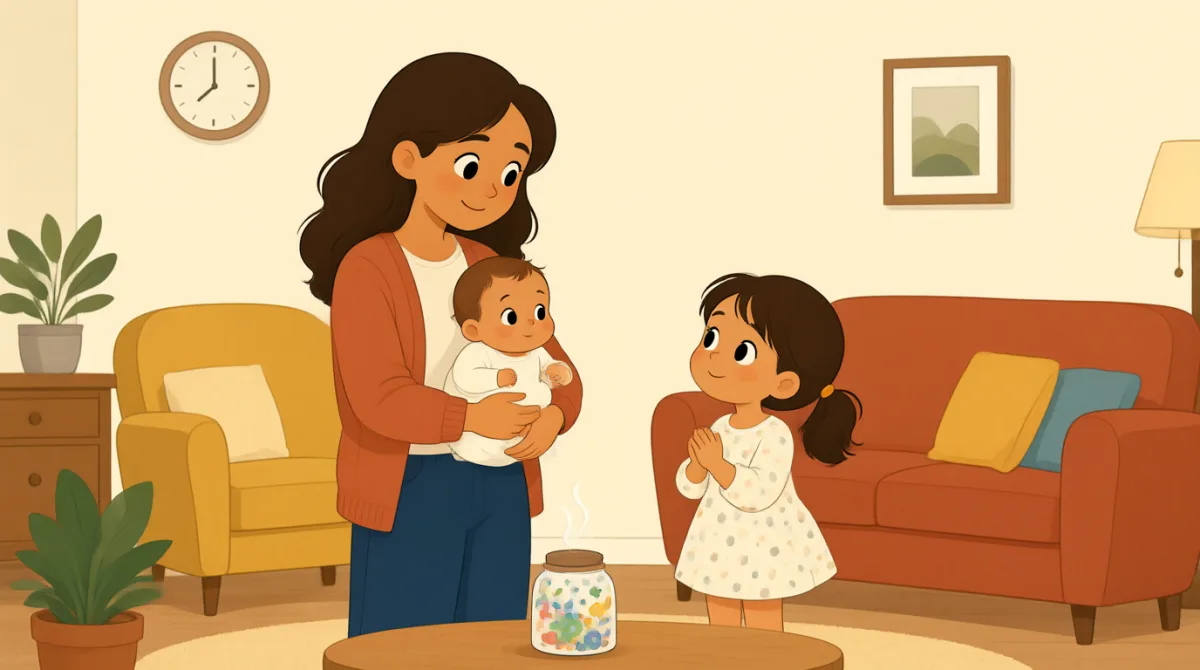

Hi, Mia! Congratulations on your new baby!
¡Hola, Mia! ¡Felicidades por tu bebé!

Thank you, Grace. Come in!
Gracias, Grace. ¡Pasa!
How is the baby?
¿Cómo está el bebé?
She is good. She sleeps a lot.
Está bien. Duerme mucho.
She is so sweet! What is her name?
¡Es tan linda! ¿Cómo se llama?
Her name is Lily. Would you like to hold her?
Se llama Lily. ¿Quieres tenerla en brazos?
Yes, please. She is so small!
Sí, por favor. ¡Es tan chiquitita!
Thank you for coming, Grace. I’m happy you’re here.
Gracias por venir, Grace. Me alegra que estés aquí.
Vocabulario7
- CongratulationsFelicidades
You say this to show that you are happy about someone's good news.
Dices esto para mostrar que te alegras por las buenas noticias de alguien.
- Come in!¡Pasa!
You say this to invite someone to enter your home or room.
Dices esto para invitar a alguien a entrar en tu casa o en una habitación.
- How is the baby?¿Cómo está el bebé?
Use this question to ask how someone or something is.
Usa esta pregunta para preguntar cómo está alguien o algo.
- a lotmucho
This means a large amount. Here, the baby sleeps often.
Significa una gran cantidad. Aquí, quiere decir que el bebé duerme a menudo.
- so sweettan linda
This is a kind way to say that someone is very lovely or cute.
Es una forma cariñosa de decir que alguien es muy encantador o lindo.
- hold hertenerla en brazos
This means to carry or support the baby in your arms.
Significa cargar o sostener al bebé en brazos.
- comingvenir
Here, it means visiting someone or going to see them.
Aquí significa visitar a alguien o ir a verlo.
Frases clave8
- 1
Congratulations on your new baby!
¡Felicidades por tu bebé!
Use this to show happiness when someone has a new baby. You can also say, “Congratulations on your new job!”
Usa esta frase para mostrar alegría cuando alguien acaba de tener un bebé. También puedes decir “Congratulations on your new job!” (¡Felicidades por tu nuevo trabajo!).
- 2
How is the baby?
¿Cómo está el bebé?
Use this to ask about a baby or another person. You can change “the baby” to a name, such as “How is Lily?”
Usa esta pregunta para preguntar por un bebé o por otra persona. Puedes cambiar “the baby” por un nombre, como en “How is Lily?” (¿Cómo está Lily?).
- 3
She sleeps a lot.
Duerme mucho.
Use this simple sentence to talk about how often someone sleeps. Change “sleeps” to another action, such as “She smiles a lot.”
Usa esta frase sencilla para hablar de la frecuencia con que alguien duerme. Puedes cambiar “sleeps” por otra acción, como en “She smiles a lot.” (Sonríe mucho).
- 4
What is her name?
¿Cómo se llama?
Use this question to ask for a girl's or woman's name. For a boy or man, say, “What is his name?”
Usa esta pregunta para preguntar el nombre de una niña o una mujer. Para un niño o un hombre, di “What is his name?” (¿Cómo se llama?).
- 5
Would you like to hold her?
¿Quieres tenerla en brazos?
Use this polite question to offer someone a chance to hold the baby. You can change “hold her” to another action, such as “hold the baby.”
Usa esta pregunta cortés para ofrecerle a alguien la oportunidad de tener al bebé en brazos. Puedes cambiar “hold her” por otra acción, como en “hold the baby” (tener al bebé en brazos).
- 6
Yes, please.
Sí, por favor.
Use this polite reply when you accept an offer. You can also say it when someone offers you food or help.
Usa esta respuesta cortés cuando aceptas una oferta. También puedes decirla cuando alguien te ofrece comida o ayuda.
- 7
Thank you for coming, Grace.
Gracias por venir, Grace.
Use this to thank someone for visiting you. Change “coming” to another action, such as “Thank you for helping.”
Usa esta frase para agradecerle a alguien que te haya visitado. Puedes cambiar “coming” por otra acción, como en “Thank you for helping.” (Gracias por ayudarme).
- 8
I’m happy you’re here.
Me alegra que estés aquí.
Use this to tell someone that you are glad they are with you. You can say it to welcome a friend or family member.
Usa esta frase para decirle a alguien que te alegra que esté contigo. Puedes decírsela para dar la bienvenida a una amiga, un amigo o un familiar.