Celebrating Together
Celebramos juntos
Friends meet to celebrate the new job, the test result, and the new baby. They share simple congratulations and make plans to meet again.
Unos amigos se reúnen para celebrar el nuevo trabajo, el resultado del examen y la llegada del bebé. Se felicitan y hacen planes para volver a verse.
Diálogo8
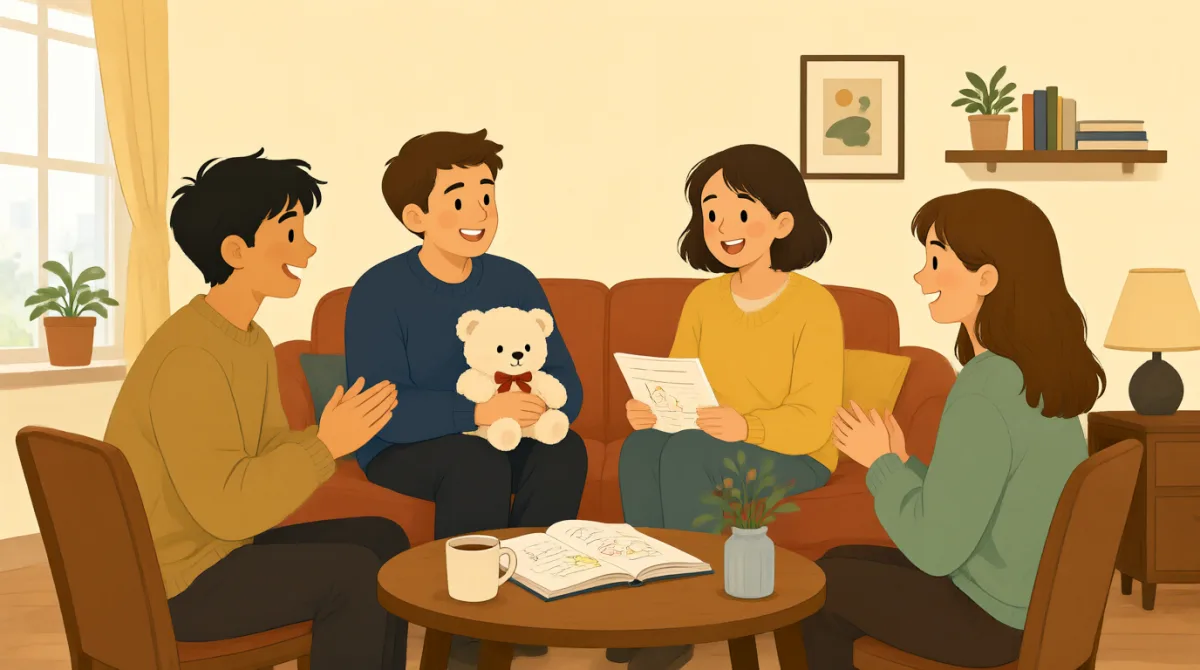

Thanks for coming, everyone! I love my new job.
¡Gracias por venir, chicos! Me encanta mi nuevo trabajo.

Congratulations, Emma! When do you start?
¡Felicidades, Emma! ¿Cuándo empiezas?
I start on Monday. Leo, congratulations on your test!
Empiezo el lunes. ¡Leo, felicidades por tu examen!

Thanks! I feel great. Jack, you passed too!
¡Gracias! Me siento genial. ¡Jack, tú también aprobaste!

Yes! And congratulations, Mia, on your new baby.
¡Sí! Y felicidades, Mia, por tu bebé.
Thank you! The baby is doing well.
¡Gracias! El bebé está muy bien.
Let’s meet again next week!
¡Volvamos a reunirnos la semana que viene!
Great idea! See you all then.
¡Qué buena idea! Nos vemos entonces.
Vocabulario8
- Thanks for comingGracias por venir
This is a friendly way to thank people for coming to an event or celebration.
Es una forma amable de agradecerles a las personas que hayan venido a un evento o una celebración.
- CongratulationsFelicidades
Say this to someone when they have good news or do something well.
Díselo a alguien cuando tenga una buena noticia o haga algo muy bien.
- When do you start?¿Cuándo empiezas?
Use this question to ask when someone will begin a new job or activity.
Usa esta pregunta para saber cuándo empezará alguien un nuevo trabajo o una actividad.
- I feel greatMe siento genial
This means you feel very happy or well. You can use it to share how you feel.
Significa que te sientes muy feliz o muy bien. Puedes decirlo para contar cómo te sientes.
- passedaprobaste
Here, this means Jack got a good result on a test. You can say “I passed” after you succeed on a test.
Aquí significa que Jack obtuvo un buen resultado en un examen. Puedes decir “I passed” después de aprobar un examen.
- doing wellestar muy bien
This means the baby is healthy and feels good. You can use it to ask or talk about how someone is.
Significa que el bebé está sano y se siente bien. Puedes usarlo para preguntar o hablar sobre cómo está alguien.
- Let’s meet again next weekVolvamos a reunirnos la semana que viene
Use this to suggest seeing someone again the following week.
Usa esta frase para proponer volver a ver a alguien la semana siguiente.
- See you all thenNos vemos entonces
This is a friendly way to say goodbye when you plan to meet again.
Es una forma amable de despedirse cuando tienen planes de volver a reunirse.
Frases clave8
- 1
Thanks for coming, everyone!
¡Gracias por venir, chicos!
Use this to thank a group for joining you. You can say it at a party or other gathering.
Usa esta frase para agradecerle a un grupo que se haya reunido contigo. Puedes decirla en una fiesta o en otro encuentro.
- 2
Congratulations, Emma!
¡Felicidades, Emma!
This is a simple way to celebrate someone’s good news. Say the person’s name after “Congratulations” to make it personal.
Es una forma sencilla de celebrar la buena noticia de alguien. Di el nombre de la persona después de “Congratulations” para que suene más personal.
- 3
When do you start?
¿Cuándo empiezas?
Use this to ask when someone will begin a new job or activity. You can change “start” to another simple verb, such as “finish.”
Usa esta frase para preguntar cuándo empezará alguien un nuevo trabajo o una actividad. Puedes cambiar “start” por otro verbo sencillo, como “finish”.
- 4
I start on Monday.
Empiezo el lunes.
Use this to say when you begin something. Replace “Monday” with a day or date.
Usa esta frase para decir cuándo empezarás algo. Cambia “Monday” por otro día o una fecha.
- 5
Jack, you passed too!
¡Jack, tú también aprobaste!
Use this to tell someone that they succeeded on a test. “Too” means that someone else also passed.
Usa esta frase para decirle a alguien que aprobó un examen. “Too” significa que otra persona también aprobó.
- 6
The baby is doing well.
El bebé está muy bien.
Use this to say that a baby is healthy. You can also ask, “Is the baby doing well?”
Usa esta frase para decir que un bebé está sano. También puedes preguntar: “Is the baby doing well?”
- 7
Let’s meet again next week!
¡Volvamos a reunirnos la semana que viene!
Use this to suggest meeting another time. Replace “next week” with a different time.
Usa esta frase para proponer reunirse en otro momento. Cambia “next week” por otro momento.
- 8
See you all then.
Nos vemos entonces.
Use this friendly goodbye when you have made a plan to meet again. “Then” means at the planned time.
Usa esta despedida amistosa cuando hayan quedado para volver a reunirse. “Then” significa en el momento acordado.