A Friend Has a New Baby
친구가 아기를 낳았어요
Grace visits Mia, who has a new baby. Grace congratulates her and asks about the baby.
그레이스가 아기를 낳은 미아를 찾아가요. 그레이스는 미아에게 축하 인사를 하고 아기에 대해 물어봐요.
대화8
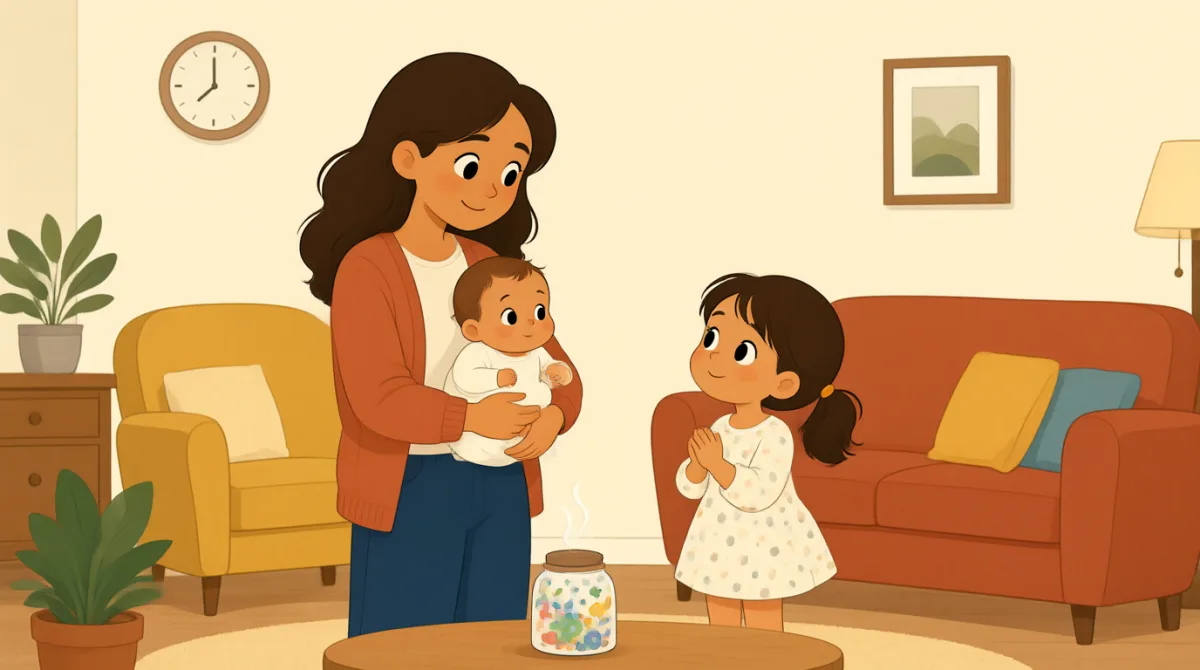

Hi, Mia! Congratulations on your new baby!
안녕, 미아! 아기 낳은 거 축하해!

Thank you, Grace. Come in!
고마워, 그레이스. 들어와!
How is the baby?
아기는 어때?
She is good. She sleeps a lot.
잘 지내. 잠을 많이 자.
She is so sweet! What is her name?
정말 사랑스럽다! 이름이 뭐야?
Her name is Lily. Would you like to hold her?
이름은 릴리야. 안아 볼래?
Yes, please. She is so small!
응, 좋아. 정말 작다!
Thank you for coming, Grace. I’m happy you’re here.
와 줘서 고마워, 그레이스. 네가 와서 기뻐.
어휘7
- Congratulations축하해
You say this to show that you are happy about someone's good news.
누군가 좋은 소식을 전했을 때 기쁜 마음을 나타내며 하는 말이에요.
- Come in!들어와!
You say this to invite someone to enter your home or room.
누군가를 집이나 방 안으로 들어오라고 할 때 하는 말이에요.
- How is the baby?아기는 어때?
Use this question to ask how someone or something is.
사람이나 사물의 상태가 어떤지 물어볼 때 쓰는 질문이에요.
- a lot많이
This means a large amount. Here, the baby sleeps often.
양이 많다는 뜻이에요. 여기서는 아기가 자주 잔다는 의미예요.
- so sweet정말 사랑스러운
This is a kind way to say that someone is very lovely or cute.
누군가가 아주 사랑스럽거나 귀엽다고 다정하게 말할 때 쓰는 표현이에요.
- hold her그녀를 안다
This means to carry or support the baby in your arms.
아기를 팔에 안아 들거나 받쳐 준다는 뜻이에요.
- coming와 줌
Here, it means visiting someone or going to see them.
여기서는 누군가를 방문하거나 만나러 가는 것을 뜻해요.
핵심 문장8
- 1
Congratulations on your new baby!
아기 낳은 거 축하해!
Use this to show happiness when someone has a new baby. You can also say, “Congratulations on your new job!”
누군가 아기를 낳았을 때 기쁜 마음을 전하는 말이에요. “Congratulations on your new job!”(새 직장에 취직한 거 축하해!)라고도 할 수 있어요.
- 2
How is the baby?
아기는 어때?
Use this to ask about a baby or another person. You can change “the baby” to a name, such as “How is Lily?”
아기나 다른 사람의 상태를 물어볼 때 쓰는 말이에요. “the baby” 대신 “How is Lily?”처럼 이름을 넣어 말할 수도 있어요.
- 3
She sleeps a lot.
잠을 많이 자.
Use this simple sentence to talk about how often someone sleeps. Change “sleeps” to another action, such as “She smiles a lot.”
누군가 얼마나 자주 자는지 말할 때 쓰는 간단한 문장이에요. “sleeps”를 “She smiles a lot.”처럼 다른 행동으로 바꿀 수 있어요.
- 4
What is her name?
이름이 뭐야?
Use this question to ask for a girl's or woman's name. For a boy or man, say, “What is his name?”
여자아이 또는 여성의 이름을 물어볼 때 쓰는 질문이에요. 남자아이 또는 남성에게는 “What is his name?”이라고 해요.
- 5
Would you like to hold her?
안아 볼래?
Use this polite question to offer someone a chance to hold the baby. You can change “hold her” to another action, such as “hold the baby.”
상대방에게 아기를 안아 볼지 정중하게 권할 때 쓰는 질문이에요. “hold her”를 “hold the baby”처럼 다른 표현으로 바꿀 수도 있어요.
- 6
Yes, please.
응, 좋아.
Use this polite reply when you accept an offer. You can also say it when someone offers you food or help.
제안을 받아들일 때 쓰는 정중한 대답이에요. 누군가 음식이나 도움을 권할 때도 쓸 수 있어요.
- 7
Thank you for coming, Grace.
와 줘서 고마워, 그레이스.
Use this to thank someone for visiting you. Change “coming” to another action, such as “Thank you for helping.”
누군가 찾아와 준 것에 고마움을 전하는 말이에요. “coming”을 “Thank you for helping.”처럼 다른 행동으로 바꿀 수 있어요.
- 8
I’m happy you’re here.
네가 와서 기뻐.
Use this to tell someone that you are glad they are with you. You can say it to welcome a friend or family member.
상대방과 함께 있어서 기쁘다고 말할 때 쓰는 표현이에요. 친구나 가족을 반갑게 맞이할 때 쓸 수 있어요.