Answering the Doctor's Questions
الإجابة عن أسئلة الطبيب
The doctor asks Leo when he started feeling sick and whether he has any allergies. Leo answers the questions about his health.
يسأل الطبيب ليو عن موعد بدء شعوره بالمرض وما إذا كان يعاني من أي حساسية. ويجيب ليو عن الأسئلة المتعلقة بصحته.
حوار8
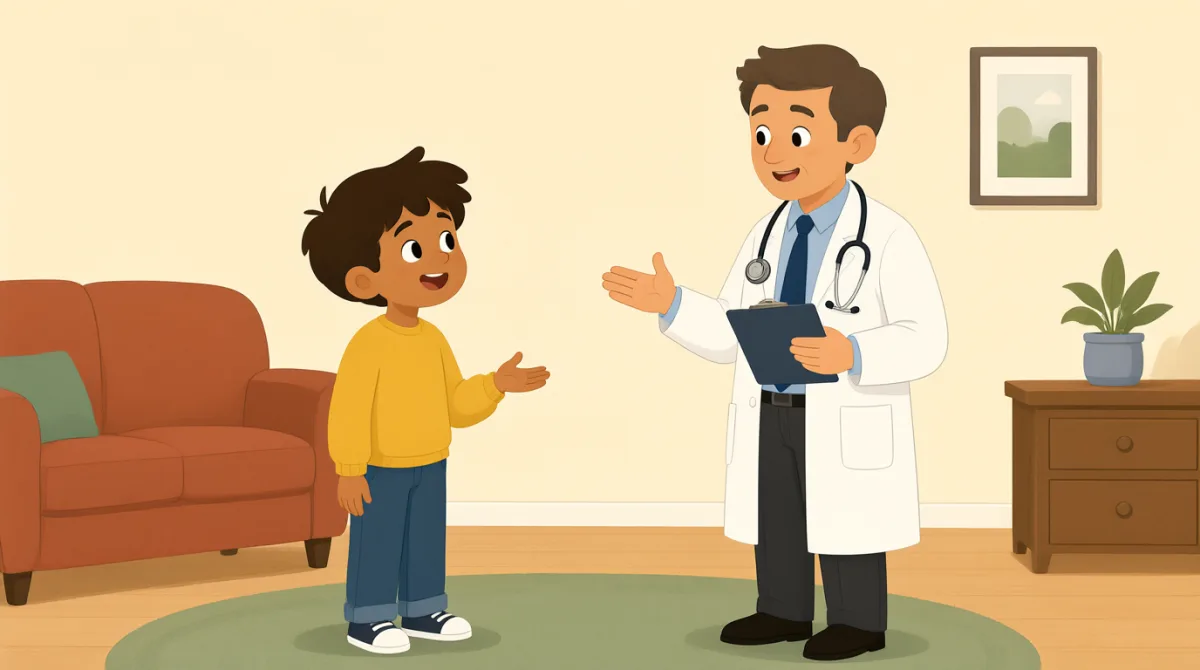

Hi, Leo. I’m Dr. Chen. What brings you in today?
مرحبًا يا ليو. أنا الدكتور تشين. ما الذي أتى بك اليوم؟

I have a cough and a sore throat, and my nose is runny.
أعاني من السعال والتهاب الحلق، وأنفي يسيل.
When did you start feeling sick?
متى بدأت تشعر بالمرض؟
I started feeling sick on Monday. It’s been about three days.
بدأت أشعر بالمرض يوم الاثنين. مرّ على ذلك نحو ثلاثة أيام.
Have you had a fever or any trouble breathing?
هل أُصبت بالحمّى أو واجهت أي صعوبة في التنفس؟
I had a small fever yesterday, but I can breathe fine.
أُصبت بحمّى خفيفة أمس، لكنني أتنفس بشكل طبيعي.
Do you have any allergies to medicine?
هل لديك أي حساسية من الأدوية؟
No, I don’t have any medicine allergies. I’m not taking anything now.
لا، ليست لديّ أي حساسية من الأدوية. ولا أتناول أي دواء الآن.
المفردات7
- What brings you in today?ما الذي أتى بك اليوم؟
The doctor asks why you came to the clinic. You can use this question to ask someone the reason for a visit.
يسأل الطبيب عن سبب مجيئك إلى العيادة. ويمكنك استخدام هذا السؤال لمعرفة سبب زيارة شخص ما.
- a sore throatالتهاب الحلق
A sore throat is pain or discomfort in your throat. You can say, “I have a sore throat,” when you are sick.
التهاب الحلق هو ألم أو انزعاج في حلقك. يمكنك أن تقول “I have a sore throat” عندما تكون مريضًا.
- feeling sickالشعور بالمرض
This means feeling unwell. You can say when you started feeling sick to explain how long you have been ill.
يعني هذا الشعور بالتوعك. ويمكنك أن تذكر متى بدأت تشعر بالمرض لتوضّح منذ متى وأنت مريض.
- trouble breathingصعوبة في التنفس
This means it is difficult to breathe. A doctor may ask about trouble breathing to check your health.
يعني هذا أن التنفس صعب. وقد يسألك الطبيب عن صعوبة التنفس للاطمئنان على صحتك.
- a small feverحمّى خفيفة
This means your body temperature was a little higher than normal. You can use “I had a small fever” to describe a mild fever.
يعني هذا أن درجة حرارة جسمك كانت أعلى قليلًا من المعتاد. ويمكنك استخدام “I had a small fever” لوصف حمّى خفيفة.
- medicine allergiesالحساسية من الأدوية
These are allergies to medicines. The doctor may ask about them before giving you medicine.
تعني هذه العبارة الحساسية تجاه الأدوية. وقد يسألك الطبيب عنها قبل أن يصف لك دواءً.
- taking anythingتناول أي دواء
In this conversation, this means using any medicine. You can tell a doctor, “I’m not taking anything now.”
في هذه المحادثة، تعني هذه العبارة استخدام أي دواء. ويمكنك أن تقول للطبيب: “I’m not taking anything now.”
الجمل الأساسية8
- 1
I have a cough and a sore throat, and my nose is runny.
أعاني من السعال والتهاب الحلق، وأنفي يسيل.
This is a useful way to describe several cold symptoms. You can replace these symptoms with your own.
هذه طريقة مفيدة لوصف عدة أعراض للزكام. ويمكنك استبدال هذه الأعراض بأعراضك.
- 2
When did you start feeling sick?
متى بدأت تشعر بالمرض؟
This question asks when an illness began. You can use “When did you start…” to ask when another problem began.
يسأل هذا السؤال عن موعد بدء المرض. ويمكنك استخدام “When did you start…” للسؤال عن موعد بدء مشكلة أخرى.
- 3
I started feeling sick on Monday.
بدأت أشعر بالمرض يوم الاثنين.
This gives the day an illness began. Replace “Monday” with the correct day.
تذكر هذه العبارة اليوم الذي بدأ فيه المرض. استبدل “Monday” باليوم الصحيح.
- 4
It’s been about three days.
مرّ على ذلك نحو ثلاثة أيام.
This tells someone how long something has continued. You can change “three days” to another length of time.
تخبر هذه العبارة شخصًا ما بالمدة التي استمر فيها شيء ما. ويمكنك استبدال “three days” بمدة أخرى.
- 5
Have you had a fever or any trouble breathing?
هل أُصبت بالحمّى أو واجهت أي صعوبة في التنفس؟
This question asks about two important symptoms. You can use “Have you had…” to ask about symptoms over a recent period.
يسأل هذا السؤال عن عرضين مهمين. ويمكنك استخدام “Have you had…” للسؤال عن الأعراض خلال فترة قريبة.
- 6
I had a small fever yesterday, but I can breathe fine.
أُصبت بحمّى خفيفة أمس، لكنني أتنفس بشكل طبيعي.
This sentence describes a past symptom and explains how you feel now. Use “but” to connect two different facts.
تصف هذه الجملة عرضًا حدث في الماضي، وتوضح كيف تشعر الآن. استخدم “but” للربط بين حقيقتين مختلفتين.
- 7
Do you have any allergies to medicine?
هل لديك أي حساسية من الأدوية؟
This is a useful question about medicine allergies. You can replace “medicine” with another thing, such as food.
هذا سؤال مفيد عن الحساسية من الأدوية. ويمكنك استبدال “medicine” بشيء آخر، مثل الطعام.
- 8
No, I don’t have any medicine allergies. I’m not taking anything now.
لا، ليست لديّ أي حساسية من الأدوية. ولا أتناول أي دواء الآن.
This gives the doctor information about allergies and current medicine. You can change the first sentence to state an allergy you do have.
تخبر هذه العبارة الطبيب عن الحساسية والأدوية التي تتناولها حاليًا. ويمكنك تغيير الجملة الأولى لتذكر حساسية تعاني منها بالفعل.