Asking for Help with Machine Settings
尋求器械設定幫助
A gym member approaches a trainer or another member to ask for assistance with adjusting machine settings or understanding how to operate a specific piece of equipment.
一位健身房會員走向教練或另一位會員,尋求調整器械設定或理解如何操作某臺器械的幫助。
對話6
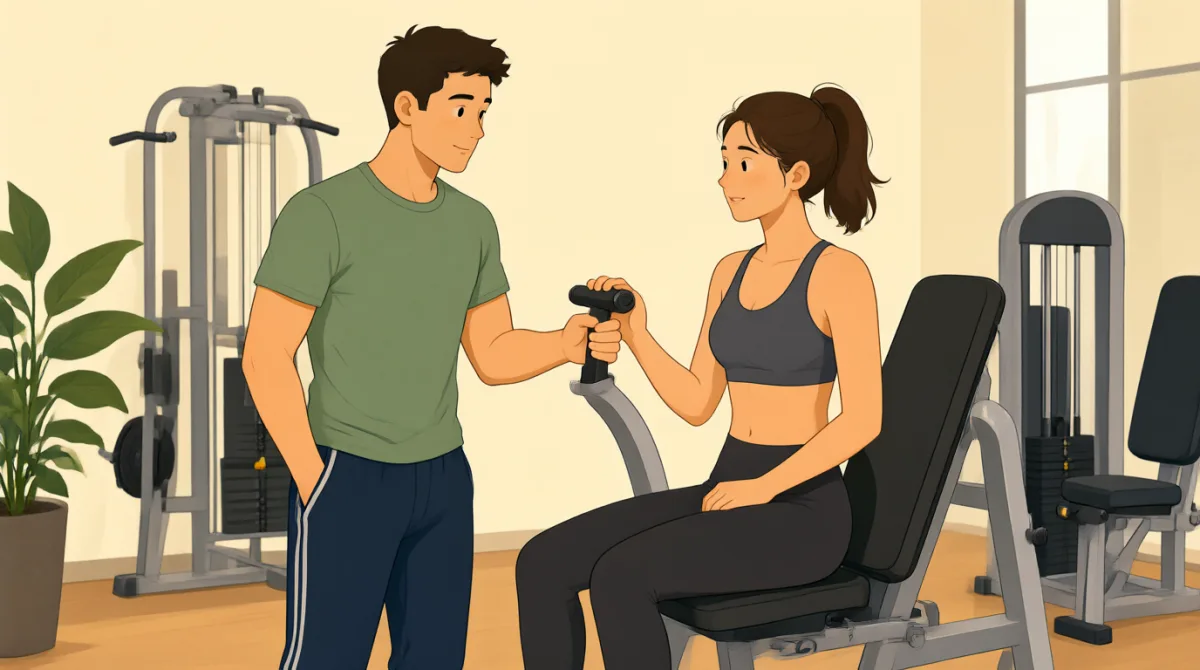

Excuse me, Mia. Do you happen to know how to adjust the seat on this leg press machine? I can't seem to get it right.
不好意思,米婭。你碰巧知道這臺腿部推舉機的座椅怎麼調整嗎?我似乎弄不好。

No problem, Jack! Let me take a look. Sometimes these machines can be a bit tricky. Are you trying to move it forward or back?
沒問題,傑克!我看看。有時候這些器械會有點難操作。你是想往前移還是往後移?
I need to move it back a bit further. My knees are a little too bent at the starting position.
我需要把它往後移一點。我的膝蓋在起始位置彎曲得有點厲害了。
Ah, I see. There's usually a lever or a pin on the side. Let's check... Yep, here it is! You just pull this handle out and slide the seat to your desired position. Make sure it clicks into place.
啊,我明白了。通常側面會有一個槓桿或銷子。我們看看……是的,在這裡!你只要把這個把手拉出來,然後把座椅滑到你想要的位置。確保它卡到位就行。
Got it! Wow, that's much better. Thanks so much for your help, Mia. I was really struggling with that.
懂了!哇,這好多了。太感謝你的幫助了,米婭。我剛才真的搞不定。
Anytime, Jack! Don't hesitate to ask if you have any other questions about the machines. We've all been there.
隨時都可以,傑克!如果對器械還有什麼其他問題,儘管問。我們都經歷過那種情況。
詞彙6
- adjust調整
To change the position or setting of something to make it suitable, like changing the height of a seat on a machine.
改變某物的位置或設定,使其適合使用,例如調整器械座椅的高度。
- lever槓桿
A bar or handle that you pull or push to move or adjust part of a machine, often used in gym equipment.
一種可以拉動或推動、用來移動或調整器械某個部件的杆或把手,健身器械上經常會用到。
- pin銷子
A small metal rod that locks parts of a machine in place; you remove it to adjust settings.
一種用來將器械部件鎖定在適當位置的小金屬桿;調整設定時需要將它取出。
- slide滑動
To move something smoothly along a surface, like sliding a seat forward or backward.
使某物沿著表面平穩移動,例如將座椅向前或向後滑動。
- tricky棘手的
Something difficult or not easy to do or understand, often used for machines that are hard to operate.
指某件事很難做或很難理解,常用來描述難以操作的器械。
- hesitate猶豫
To pause or be reluctant before doing something; in this context, it means don't be shy to ask for help.
在做某事之前停頓或不太願意去做;在這裡表示不要不好意思尋求幫助。
關鍵句6
- 1
Excuse me, Mia. Do you happen to know how to adjust the seat on this leg press machine?
不好意思,米婭。你碰巧知道這臺腿部推舉機的座椅怎麼調整嗎?
This is a polite way to ask for help by interrupting someone. 'Do you happen to know' is a soft, indirect question to check if they have the information. Useful for starting conversations in public places like gyms.
這是在打斷別人並尋求幫助時一種禮貌的說法。'Do you happen to know' 是一種委婉、間接的提問,用來確認對方是否知道相關資訊。在健身房等公共場所開始交談時,這種說法很有用。
- 2
No problem, Jack! Let me take a look.
沒問題,傑克!我看看。
A friendly response to offer help. 'No problem' means it's not a bother, and 'let me take a look' shows willingness to check. Use this to respond positively when someone asks for assistance.
這是一個主動提供幫助的友好回應。'No problem' 表示不會給自己添麻煩,而 'let me take a look' 表示願意幫忙檢視。別人尋求幫助時,你可以用這句話積極回應。
- 3
I need to move it back a bit further.
我需要把它再往後移一點。
This explains a specific need clearly. 'A bit further' means a little more. It's useful for describing adjustments in gym settings or everyday tasks involving positions.
這句話清楚地說明了具體需求。'A bit further' 表示再多一點。在健身房或日常生活中描述位置調整時,這種表達很有用。
- 4
You just pull this handle out and slide the seat to your desired position. Make sure it clicks into place.
你只要把這個把手拉出來,然後把座椅滑到你想要的位置。確保它卡到位就行。
This gives step-by-step instructions. 'Just' makes it sound simple, and 'make sure' emphasizes checking. Great for explaining how to use equipment; the imperative form (pull, slide) is direct for guidance.
這句話是在分步驟說明操作方法。'Just' 讓語氣聽起來更簡單,而 'make sure' 強調要進行確認。在解釋如何使用器械時,這種說法很實用;祈使句中的 pull 和 slide 讓指導更加直接。
- 5
Got it! Wow, that's much better.
懂了!哇,這好多了。
'Got it' means I understand, and 'wow' shows surprise or relief. Use this to acknowledge help and express satisfaction after solving a problem.
'Got it' 表示“我明白了”,而 'wow' 表示驚訝或鬆了一口氣。解決問題後,你可以用這句話回應他人的幫助,並表達滿意之情。
- 6
Anytime, Jack! Don't hesitate to ask if you have any other questions about the machines.
隨時都可以,傑克!如果對器械還有什麼其他問題,儘管問。
'Anytime' means you're welcome at any time, and 'don't hesitate' encourages asking more. This is a polite way to end help and invite future questions, common in service situations.
'Anytime' 表示“隨時都可以”,而 'don't hesitate' 鼓勵對方有問題就問。這是一種禮貌的結束幫忙的方式,同時邀請對方以後繼續提問,在服務場景中很常見。