Asking for Help with Machine Settings
मशीन की सेटिंग बदलने में मदद माँगना
A gym member approaches a trainer or another member to ask for assistance with adjusting machine settings or understanding how to operate a specific piece of equipment.
जिम का एक सदस्य किसी ट्रेनर या दूसरे सदस्य से मशीन की सेटिंग बदलने या किसी खास उपकरण को चलाने का तरीका समझने में मदद माँगता है।
संवाद6
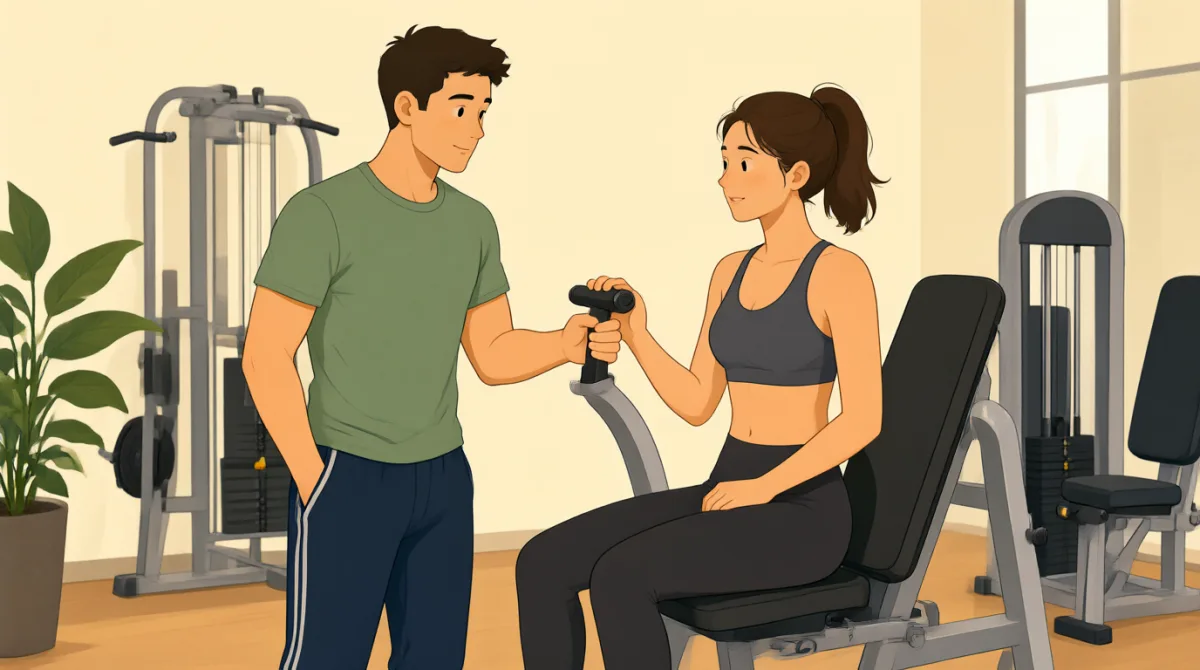

Excuse me, Mia. Do you happen to know how to adjust the seat on this leg press machine? I can't seem to get it right.
माफ़ कीजिए, Mia। क्या आपको पता है कि इस लेग प्रेस मशीन की सीट कैसे एडजस्ट करते हैं? मुझसे ठीक से हो नहीं रहा।

No problem, Jack! Let me take a look. Sometimes these machines can be a bit tricky. Are you trying to move it forward or back?
कोई बात नहीं, Jack! मुझे देखने दो। कभी-कभी इन मशीनों को चलाना थोड़ा मुश्किल हो सकता है। तुम इसे आगे करना चाहते हो या पीछे?
I need to move it back a bit further. My knees are a little too bent at the starting position.
मुझे इसे थोड़ा और पीछे करना है। शुरू की पोज़िशन में मेरे घुटने कुछ ज़्यादा मुड़े हुए हैं।
Ah, I see. There's usually a lever or a pin on the side. Let's check... Yep, here it is! You just pull this handle out and slide the seat to your desired position. Make sure it clicks into place.
अच्छा, समझ गई। आम तौर पर इसके किनारे पर लीवर या पिन होता है। देखती हूँ... हाँ, ये रहा! बस इस हैंडल को बाहर खींचो और सीट को अपनी पसंद की जगह तक सरकाओ। ध्यान रहे कि वह खट से अपनी जगह पर लॉक हो जाए।
Got it! Wow, that's much better. Thanks so much for your help, Mia. I was really struggling with that.
समझ गया! वाह, अब बहुत बेहतर है। मेरी मदद करने के लिए बहुत-बहुत शुक्रिया, Mia। मैं सच में इसे लेकर परेशान हो रहा था।
Anytime, Jack! Don't hesitate to ask if you have any other questions about the machines. We've all been there.
जब भी ज़रूरत हो, Jack! मशीनों के बारे में कोई और सवाल हो तो पूछने में झिझकना मत। हम सब कभी न कभी इस दौर से गुज़रे हैं।
शब्दावली6
- adjustएडजस्ट करना
To change the position or setting of something to make it suitable, like changing the height of a seat on a machine.
किसी चीज़ की जगह या सेटिंग बदलना, ताकि वह सही तरह से काम करे या आपके मुताबिक हो जाए—जैसे मशीन की सीट की ऊँचाई बदलना।
- leverलीवर
A bar or handle that you pull or push to move or adjust part of a machine, often used in gym equipment.
एक छड़ या हैंडल, जिसे खींचने या धकेलने से मशीन का कोई हिस्सा हिलता या एडजस्ट होता है। जिम के उपकरणों में इसका इस्तेमाल अक्सर होता है।
- pinपिन
A small metal rod that locks parts of a machine in place; you remove it to adjust settings.
धातु की एक छोटी छड़, जो मशीन के हिस्सों को अपनी जगह पर लॉक करती है। सेटिंग बदलने के लिए इसे निकालते हैं।
- slideसरकाना
To move something smoothly along a surface, like sliding a seat forward or backward.
किसी चीज़ को सतह पर आसानी से आगे-पीछे खिसकाना—जैसे सीट को आगे या पीछे सरकाना।
- trickyमुश्किल
Something difficult or not easy to do or understand, often used for machines that are hard to operate.
ऐसी चीज़ जिसे करना या समझना आसान न हो। यह शब्द अक्सर ऐसी मशीनों के लिए इस्तेमाल होता है जिन्हें चलाना कठिन हो।
- hesitateझिझकना
To pause or be reluctant before doing something; in this context, it means don't be shy to ask for help.
कुछ करने से पहले रुकना या संकोच करना। यहाँ इसका मतलब है कि मदद माँगने में शर्म या संकोच न करें।
मुख्य वाक्य6
- 1
Excuse me, Mia. Do you happen to know how to adjust the seat on this leg press machine?
माफ़ कीजिए, Mia। क्या आपको पता है कि इस लेग प्रेस मशीन की सीट कैसे एडजस्ट करते हैं?
This is a polite way to ask for help by interrupting someone. 'Do you happen to know' is a soft, indirect question to check if they have the information. Useful for starting conversations in public places like gyms.
किसी का ध्यान खींचकर मदद माँगने का यह एक विनम्र तरीका है। 'Do you happen to know' (क्या आपको पता है) एक नरम और अप्रत्यक्ष सवाल है, जिससे पता चलता है कि सामने वाले को यह जानकारी है या नहीं। जिम जैसी सार्वजनिक जगहों पर बातचीत शुरू करने के लिए यह उपयोगी है।
- 2
No problem, Jack! Let me take a look.
कोई बात नहीं, Jack! मुझे देखने दो।
A friendly response to offer help. 'No problem' means it's not a bother, and 'let me take a look' shows willingness to check. Use this to respond positively when someone asks for assistance.
मदद की पेशकश करने का यह एक दोस्ताना जवाब है। 'No problem' (कोई बात नहीं) का मतलब है कि मदद करने में कोई परेशानी नहीं है, और 'let me take a look' (मुझे देखने दो) से पता चलता है कि आप जाँचने के लिए तैयार हैं। जब कोई मदद माँगे, तो सकारात्मक जवाब देने के लिए इनका इस्तेमाल करें।
- 3
I need to move it back a bit further.
मुझे इसे थोड़ा और पीछे करना है।
This explains a specific need clearly. 'A bit further' means a little more. It's useful for describing adjustments in gym settings or everyday tasks involving positions.
यह वाक्य आपकी खास ज़रूरत साफ़-साफ़ बताता है। 'A bit further' (थोड़ा और) का मतलब है कुछ और आगे तक। जिम में मशीन एडजस्ट करने या रोज़मर्रा के कामों में किसी चीज़ की जगह बताने के लिए यह उपयोगी है।
- 4
You just pull this handle out and slide the seat to your desired position. Make sure it clicks into place.
बस इस हैंडल को बाहर खींचो और सीट को अपनी पसंद की जगह तक सरकाओ। ध्यान रहे कि वह खट से अपनी जगह पर लॉक हो जाए।
This gives step-by-step instructions. 'Just' makes it sound simple, and 'make sure' emphasizes checking. Great for explaining how to use equipment; the imperative form (pull, slide) is direct for guidance.
इस वाक्य में काम करने के चरण एक-एक करके बताए गए हैं। 'Just' (बस) से काम आसान लगता है, और 'make sure' (ध्यान रहे) जाँच करने पर ज़ोर देता है। उपकरण चलाने का तरीका समझाने में यह बहुत उपयोगी है। निर्देश देने के लिए इसमें सीधे आदेश वाले रूप—'pull' और 'slide'—का इस्तेमाल किया गया है।
- 5
Got it! Wow, that's much better.
समझ गया! वाह, अब बहुत बेहतर है।
'Got it' means I understand, and 'wow' shows surprise or relief. Use this to acknowledge help and express satisfaction after solving a problem.
'Got it' का मतलब है कि मैं समझ गया, और 'wow' से हैरानी या राहत ज़ाहिर होती है। किसी समस्या का हल मिलने के बाद मदद के लिए आभार जताने और संतुष्टि दिखाने के लिए इनका इस्तेमाल करें।
- 6
Anytime, Jack! Don't hesitate to ask if you have any other questions about the machines.
जब भी ज़रूरत हो, Jack! मशीनों के बारे में कोई और सवाल हो तो पूछने में झिझकना मत।
'Anytime' means you're welcome at any time, and 'don't hesitate' encourages asking more. This is a polite way to end help and invite future questions, common in service situations.
'Anytime' का मतलब है कि आपका स्वागत है, जब भी चाहें। 'Don't hesitate' कहकर सामने वाले को और सवाल पूछने के लिए प्रोत्साहित किया जाता है। मदद के बाद बातचीत को विनम्रता से समाप्त करने और आगे भी सवाल पूछने का न्योता देने का यह आम तरीका है।