Giving Tips and Troubleshooting
提供技巧和解決問題
The speaker offers helpful tips for successful cooking or addresses potential problems the listener might encounter, like 'don't overcook' or 'if it's too salty, add a little water.' This involves conditional sentences and advice-giving language.
說話者提供成功烹飪的有用技巧,或解決聽者可能遇到的潛在問題,例如“不要煮過頭”或“如果太鹹,加一點水”。這涉及到條件句和給予建議的語言。
對話10
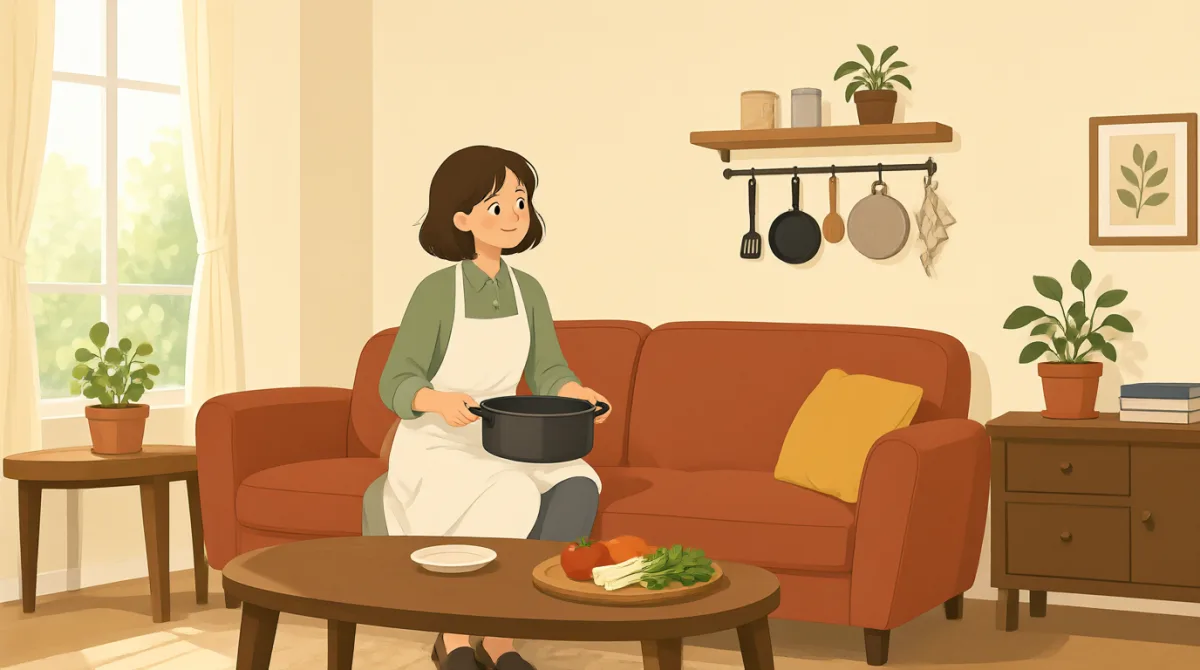

Hey Leo, I'm trying out that stir-fry recipe you gave me. What should I keep in mind when I'm cooking the vegetables?
嘿,利奧,我正在嘗試你給我的那個炒菜食譜。我在炒蔬菜的時候要注意什麼?

Good question, Emma! The main thing is not to overcook them. You want them to be crisp-tender, not mushy.
好問題,艾瑪!最主要的是不要把它們煮過頭。你希望它們是脆嫩的,而不是軟爛的。
Crisp-tender. Got it. So, how do I avoid that? High heat, quick stir?
脆嫩。明白了。那我怎麼避免煮過頭呢?大火快炒嗎?
Exactly! Make sure your wok or pan is really hot before adding the veggies. And if you have a lot of vegetables, it’s better to cook them in batches so you don't overcrowd the pan. That way they'll get a nice sear instead of steaming.
沒錯!在放蔬菜之前,確保你的炒鍋或平底鍋非常熱。如果你有很多蔬菜,最好分批烹飪,這樣就不會把鍋塞得太滿。那樣它們就會被煎得很漂亮,而不是蒸熟。
That's a great tip about cooking in batches, I usually just dump everything in. What if the sauce turns out too thin?
分批烹飪這個建議太棒了,我通常都是一股腦兒全倒進去。要是醬汁太稀了怎麼辦?
If it's too thin, you can make a cornstarch slurry – just a teaspoon of cornstarch mixed with a tablespoon of cold water – then slowly pour it into the simmering sauce while stirring until it thickens to your liking.
如果太稀了,你可以調製一份玉米澱粉水——只需一茶匙玉米澱粉和一湯匙冷水混合——然後慢慢地倒入沸騰的醬汁中,邊攪拌邊煮,直到它變濃稠到你喜歡的程度。
Oh, cornstarch slurry! I always forget that trick. And if it ends up too salty?
哦,玉米澱粉水!我總是忘記這個技巧。那如果最後太鹹了呢?
If it's a little too salty, you can add a squeeze of lime juice or a tiny bit of sugar to balance it out. Sometimes a spoonful of plain water helps too, but be careful not to dilute the flavor too much.
अगर有點太鹹了,你可以擠一點青檸汁或者加一點點糖來平衡味道。有時候一勺清水也有幫助,但要小心不要把味道沖淡太多。
Perfect! These tips are super helpful. Thanks, Leo!
太棒了!這些小竅門超級有用。謝謝你,利奧!
No problem, Emma! Let me know how it turns out. Enjoy your meal!
不客氣,艾瑪!告訴我做得怎麼樣。祝你用餐愉快!
詞彙8
- overcook煮過頭
To cook food for too long, making it soft or tough. In cooking tips, it's advice to avoid ruining vegetables by keeping cooking time short.
把食物煮得太久,導致它變軟或變硬。在烹飪建議中,這個詞常用來提醒人們縮短烹飪時間,避免蔬菜煮過頭。
- crisp-tender脆嫩
A texture for vegetables that are slightly crunchy but still soft inside. It's a common term in stir-fry recipes to describe the ideal doneness.
形容蔬菜稍微有些脆,但裡面仍然柔嫩。這是炒菜食譜中的常見說法,用來描述蔬菜恰到好處的熟度。
- mushy軟爛
Soft and watery, like overcooked food that falls apart. Use this to describe what not to do when cooking veggies to keep them fresh.
又軟又溼,像煮過頭、容易散開的食物。做蔬菜時可以用這個詞來描述應該避免的口感,讓蔬菜保持爽脆。
- sear煎至表面焦香
To quickly cook the surface of food at high heat for a brown crust. In stir-frying, it adds flavor without making food soggy.
用高溫快速烹煮食物表面,使其形成棕色的焦殼。炒菜時這樣做可以增加風味,又不會讓食物變得溼軟。
- slurry澱粉水
A mixture of cornstarch and water used to thicken sauces. It's a handy kitchen term for fixing thin sauces in recipes.
用來給醬汁增稠的玉米澱粉和水的混合物。這是個實用的廚房用語,可以用來補救太稀的醬汁。
- simmering小火慢煮
Cooking liquid at a low boil, with small bubbles. It's used when adding thickeners to sauces to avoid lumps.
讓液體保持微沸,表面冒出小氣泡。加入增稠劑時常用這種火候,可以避免結塊。
- thicken使變濃稠
To make a liquid more dense or viscous. In cooking, you thicken sauces to improve texture and coating on food.
讓液體變得更濃、更黏稠。烹飪時,可以給醬汁增稠,讓口感更好,也能更好地裹住食物。
- dilute稀釋
To make something weaker by adding water or liquid. In recipes, it's a warning not to add too much water to avoid losing flavor.
加入水或其他液體,讓某種東西的味道或濃度變淡。食譜中常提醒不要加太多水,以免味道變淡。
關鍵句7
- 1
The main thing is not to overcook them.
最主要的是不要把它們煮過頭。
This sentence gives key advice using 'the main thing is' to emphasize importance. It's useful for sharing tips in conversations, and 'not to overcook' is a negative infinitive for instructions.
這句話用 'the main thing is'(最主要的是)強調建議的重要性,很適合在對話中分享烹飪技巧。'not to overcook' 是否定不定式,用來說明應該避免做什麼。
- 2
You want them to be crisp-tender, not mushy.
你希望它們是脆嫩的,而不是軟爛的。
This contrasts desired and undesired results with 'to be' and 'not'. It's practical for describing food textures in recipes, helping learners express preferences clearly.
這句話用 'to be' 和 'not' 對比理想和不理想的結果。介紹食譜時,可以用這種說法描述食物的口感,清楚地表達自己的偏好。
- 3
Make sure your wok or pan is really hot before adding the veggies.
放蔬菜之前,確保炒鍋或平底鍋已經燒得很熱。
Uses 'make sure' for instructions and 'before' for sequence. This pattern is common in step-by-step guides, teaching how to prepare tools in cooking.
'make sure' 用來給出指示,'before' 用來說明先後順序。這種表達常見於一步步的操作說明中,可以教你如何準備烹飪工具。
- 4
If it's too thin, you can make a cornstarch slurry.
如果醬汁太稀了,你可以調一份玉米澱粉水。
A conditional sentence with 'if' for troubleshooting problems. It's useful for giving advice on fixes, showing how to use 'you can' for suggestions.
這是一個用 'if' 引導的條件句,用來說明遇到問題時該怎麼辦。給出補救建議時很實用;'you can' 可以用來委婉地提出建議。
- 5
Then slowly pour it into the simmering sauce while stirring until it thickens to your liking.
然後,慢慢地把它倒進微沸的醬汁裡,一邊攪拌,直到醬汁濃稠到你喜歡的程度。
This uses sequential words like 'then', 'while', and 'until' for steps. It's great for explaining processes, with 'to your liking' meaning according to preference.
這句話用 'then'、'while' 和 'until' 等詞語來說明步驟之間的順序。解釋操作過程時很實用;'to your liking' 的意思是“達到你喜歡的程度”。
- 6
If it's a little too salty, you can add a squeeze of lime juice or a tiny bit of sugar to balance it out.
如果醬汁有點太鹹了,你可以擠一點青檸汁,或者加一點點糖來平衡味道。
Another 'if' conditional for advice, with alternatives using 'or' and 'to balance it out' as an idiom for adjusting flavors. Useful for problem-solving in cooking talks.
這是另一個用 'if' 引導的條件句,用 'or' 提供不同的選擇。'to balance it out' 是一種習語,意思是調整味道使其更加均衡。在討論烹飪問題時,這種表達很實用。
- 7
Sometimes a spoonful of plain water helps too, but be careful not to dilute the flavor too much.
有時候加一勺清水也有幫助,不過要小心,別把味道沖淡太多。
Combines suggestion with warning using 'but' for contrast. 'Helps too' means additional aid; this teaches polite cautions in giving tips.
這句話用 'but' 表示轉折,既提出建議,也提醒對方注意。'helps too' 的意思是“也有幫助”。學會這種說法,可以讓你在給出烹飪建議時委婉地提醒對方。