Inviting Neighbors to a Get-Together
邀請鄰居參加聚會
You are hosting a small BBQ or informal gathering in your backyard and decide to invite a few neighbors to join.
你在後院舉辦一個小燒烤或非正式聚會,決定邀請幾位鄰居參加。
對話8
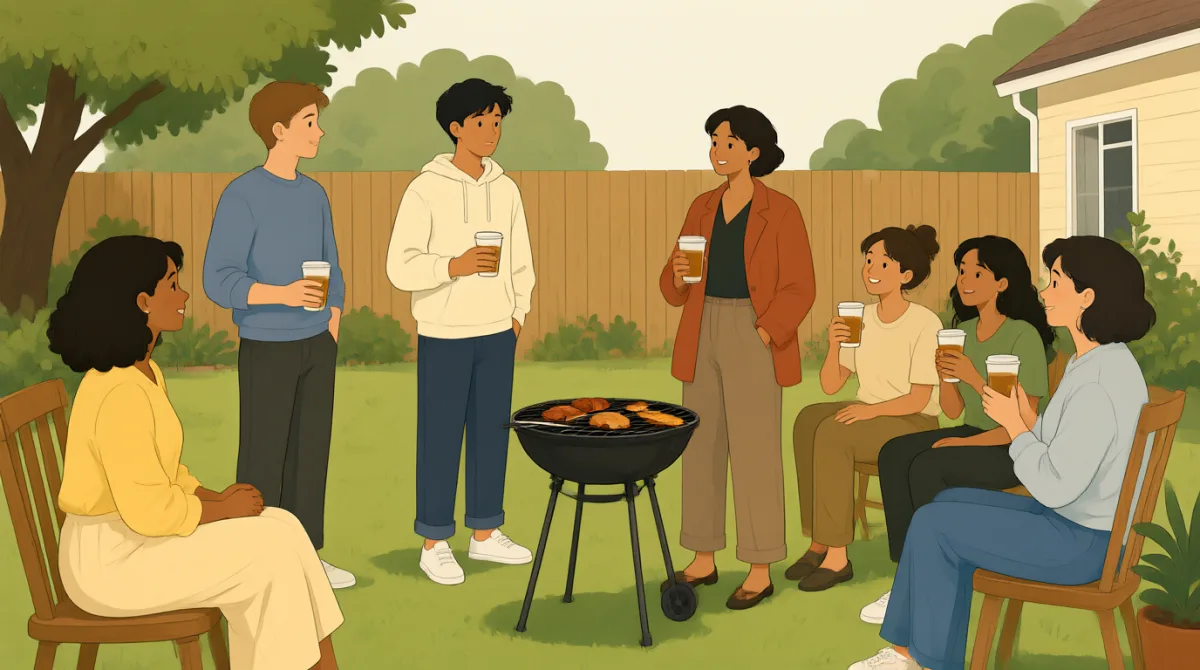

Hey Mia, I was wondering if you and Mike are free this Saturday afternoon?
嘿,米婭,我想問你和邁克這週六下午有空嗎?

Oh, hi Jack! I think we are. Why do you ask?
哦,你好傑克!我想我們有空。你為什麼這麼問?
We're actually having a small, informal BBQ in our backyard, just grilling some burgers and hanging out. We thought it would be great if you two could join us around 2 PM?
實際上,我們想在後院搞個小型的非正式燒烤,烤點漢堡什麼的,隨便聊聊。我們想如果你們倆能在下午2點左右過來就太好了。
That sounds lovely, Jack! A BBQ sounds perfect for Saturday. Mike loves a good burger. Is there anything we can bring?
聽起來不錯,傑克!燒烤真是週六的好選擇。邁克愛吃漢堡。我們需要帶些什麼嗎?
Oh, no need! We'll have plenty of food and drinks. Just bring yourselves! We're keeping it pretty casual. Maybe a dessert if you're feeling ambitious, but really, no pressure at all.
哦,不用了!我們會準備充足的食物和飲料。你們人來就行!我們搞得很隨意。如果你想的話,可以帶份甜點,但真的,完全沒有壓力。
Okay, that's very kind of you. Let me just confirm with Mike, but I'm pretty sure we'd love to come. It’d be nice to catch up.
好的,你真是太客氣了。我先和邁克確認一下,但我很確定我們很樂意來。能聚聚真是太好了。
Great! Just let me know when you've had a chance to chat with him. Looking forward to it!
太好了!你跟他聊完後告訴我一聲。期待你的到來!
Will do! Thanks so much for the invite, Jack. See you then, hopefully!
沒問題!非常感謝你的邀請,傑克。希望到時候能見到你!
詞彙7
- wondering想知道
This is the present participle of 'wonder,' used here in 'I was wondering' to politely ask a question or make a suggestion without being too direct. It's a common way to soften requests in English conversations.
這是動詞“wonder”的現在分詞。這裡用在“I was wondering”中,能委婉地提問或提出建議,不顯得太直接。在英語對話中,這是一種常見的緩和請求的說法。
- free有空的
Means available or not busy. In social contexts, like 'Are you free this Saturday?', it asks if someone has no plans and can join an event.
意思是有時間、沒在忙。在社交場合,比如“Are you free this Saturday?”,是在問對方有沒有安排,能不能參加活動。
- informal非正式的
Describes something relaxed and not formal, like casual clothes or events. Here, 'informal BBQ' means a friendly, easy-going gathering without strict rules.
形容輕鬆、不拘禮節的事物,比如休閒服裝或聚會。這裡的“informal BBQ”指的是一場輕鬆友好的聚會,沒有嚴格的規矩。
- BBQ燒烤
Short for barbecue, a popular outdoor cooking event where food like burgers is grilled. It's often casual and social, common in Western neighborhoods during good weather.
“barbecue”的簡稱,指在戶外烹飪食物的活動,通常會烤漢堡等食物。這類活動往往輕鬆又熱鬧,天氣好的時候在西方社群裡很常見。
- hanging out一起消磨時光
Means spending time together in a relaxed way, without a specific plan. It's used for casual social activities like chatting or relaxing with friends or neighbors.
意思是輕鬆地和別人待在一起,不特意安排什麼活動。這個說法常用於和朋友或鄰居聊天、放鬆等輕鬆的社交活動。
- casual輕鬆隨意的
Refers to something relaxed and not serious or formal. In invitations, 'keeping it casual' means no need for fancy clothes or preparations; just come as you are.
指輕鬆、不拘謹或不正式。在邀請中,“keeping it casual”表示不用穿得正式,也不用特別準備,隨意來就好。
- catch up敘敘舊
Means to talk and share updates with someone you haven't seen in a while. It's useful in social invitations to show interest in reconnecting with neighbors or friends.
意思是和有段時間沒見的人聊聊近況、互相分享最近的訊息。在邀請中,這個說法可以表達想和鄰居或朋友重新聯絡、聊聊近況。
關鍵句6
- 1
Hey Mia, I was wondering if you and Mike are free this Saturday afternoon?
嘿,米婭,我想問問你和邁克這週六下午有空嗎?
This is a polite way to start an invitation by asking about availability. 'I was wondering' softens the question, making it less direct. Use this pattern when checking if someone can join an event; it's common in friendly neighbor talks.
這是邀請別人時,一種禮貌地詢問對方是否有空的說法。“I was wondering”能讓問題聽起來沒那麼直接。詢問別人能不能參加活動時,可以用這個句型;鄰居之間友好地交談時很常見。
- 2
We're actually having a small, informal BBQ in our backyard, just grilling some burgers and hanging out.
其實,我們打算在後院辦個小型的非正式燒烤,烤點漢堡,隨便聊聊天。
This sentence describes the event clearly and casually. 'Actually' adds a sense of revealing information naturally. It's useful for explaining plans simply; the present continuous 'having' and 'hanging out' show ongoing, relaxed activities.
這句話清楚又輕鬆地介紹了活動。“Actually”讓你自然地帶出接下來要說的事。用這句話可以簡單地說明計劃;現在進行時“having”和“hanging out”描繪的是輕鬆、自在的活動。
- 3
Is there anything we can bring?
有什麼我們可以帶的嗎?
A polite offer to contribute to the event, showing good manners in social situations. This question uses 'can' for possibility and is great for hosts and guests to build positive relations; it's a common phrase in invitations.
這是禮貌地表示願意為聚會出一份力,在社交場合很得體。句子用“can”詢問是否可以做某事,有助於主人和客人建立良好關係,也是邀請場合常見的說法。
- 4
Oh, no need! We'll have plenty of food and drinks. Just bring yourselves!
哦,不用啦!我們會準備很多食物和飲料。你們人來就好!
This reassures the guest that nothing is required, keeping the event stress-free. 'No need' is idiomatic for 'not necessary,' and 'bring yourselves' is a friendly idiom meaning just come. Use it to make invitations welcoming and casual.
這句話讓客人放心,表示他們不用準備東西,讓聚會輕鬆無壓力。“No need”是“不必、沒必要”的慣用說法;“bring yourselves”是友好的表達,意思是人來就行。用它能讓邀請聽起來親切隨意。
- 5
Let me just confirm with Mike, but I'm pretty sure we'd love to come.
我先跟邁克確認一下,不過我很確定我們很樂意來。
This shows politeness by checking with others before committing. 'Confirm' means to verify, and 'pretty sure' expresses confidence softly. It's useful for group decisions in social plans; the conditional 'would' adds politeness.
這句話表示答應之前會先和別人確認,顯得很有禮貌。“Confirm”是“確認”的意思;“pretty sure”則委婉地表達很有把握。商量集體活動安排時很實用;用“would”也能讓表達更禮貌。
- 6
Looking forward to it!
我很期待!
A positive closing phrase meaning excited about the future event. It's short and enthusiastic, often used to end invitations. This expression builds rapport and is versatile for any upcoming social gathering.
這是一句積極的結束語,表示很期待接下來的活動。它簡短又熱情,常用來結束邀請,也能拉近彼此距離,適用於各種即將舉行的社交聚會。