Inviting Neighbors to a Get-Together
ชวนเพื่อนบ้านมาสังสรรค์
You are hosting a small BBQ or informal gathering in your backyard and decide to invite a few neighbors to join.
คุณกำลังจัดบาร์บีคิวเล็ก ๆ หรืองานสังสรรค์แบบเป็นกันเองที่สวนหลังบ้าน และตัดสินใจชวนเพื่อนบ้านสองสามคนมาร่วมด้วย
บทสนทนา8
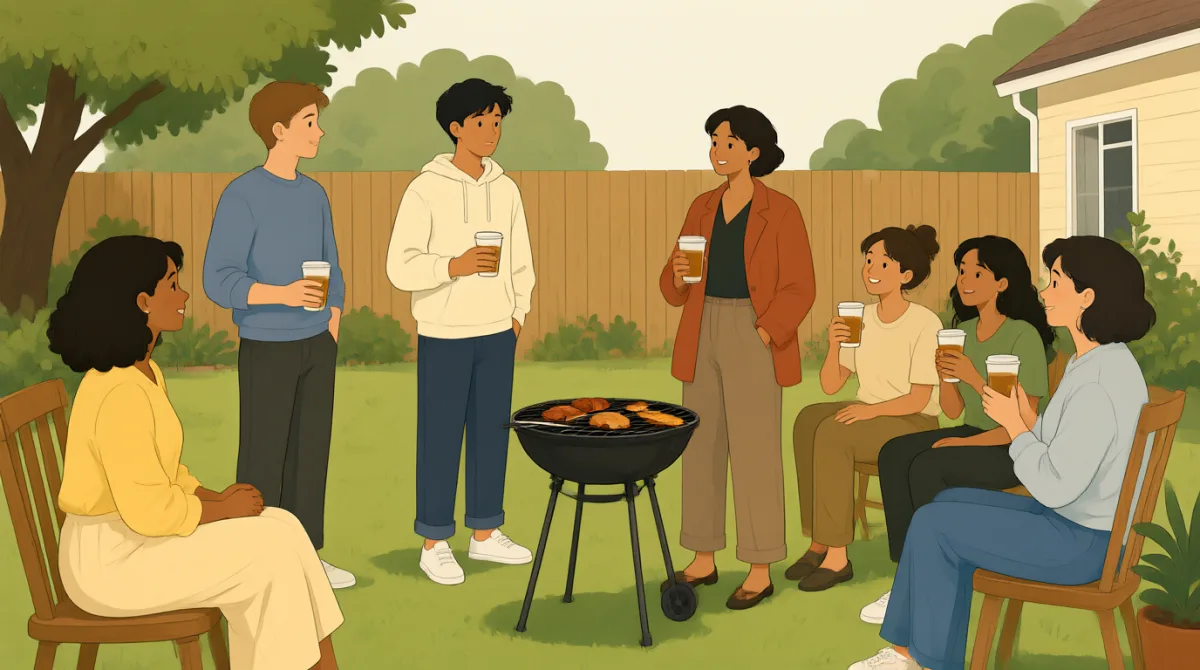

Hey Mia, I was wondering if you and Mike are free this Saturday afternoon?
เฮ้ มีอา เสาร์บ่ายนี้เธอกับไมค์ว่างไหม?

Oh, hi Jack! I think we are. Why do you ask?
อ๋อ หวัดดี แจ็ก! คิดว่าว่างนะ ถามทำไมเหรอ?
We're actually having a small, informal BBQ in our backyard, just grilling some burgers and hanging out. We thought it would be great if you two could join us around 2 PM?
จริง ๆ เราจะจัดบาร์บีคิวเล็ก ๆ สบาย ๆ ที่สวนหลังบ้านน่ะ แค่ย่างเบอร์เกอร์กินกันแล้วก็นั่งเล่น เราคิดว่าถ้าเธอสองคนมาร่วมด้วยตอนประมาณบ่ายสองก็คงดีนะ
That sounds lovely, Jack! A BBQ sounds perfect for Saturday. Mike loves a good burger. Is there anything we can bring?
ฟังดูดีจัง แจ็ก! บาร์บีคิวเหมาะกับวันเสาร์มาก ไมค์ชอบเบอร์เกอร์อร่อย ๆ ด้วย เราเอาอะไรไปได้บ้างไหม?
Oh, no need! We'll have plenty of food and drinks. Just bring yourselves! We're keeping it pretty casual. Maybe a dessert if you're feeling ambitious, but really, no pressure at all.
ไม่ต้องหรอก! เราเตรียมอาหารกับเครื่องดื่มไว้เยอะแล้ว แค่พาตัวมาเองก็พอ! เราจัดกันแบบสบาย ๆ น่ะ ถ้าอยากทำอะไรมาเพิ่ม จะเอาของหวานมาด้วยก็ได้นะ แต่ไม่ต้องเกรงใจเลยจริง ๆ
Okay, that's very kind of you. Let me just confirm with Mike, but I'm pretty sure we'd love to come. It’d be nice to catch up.
โอเค ใจดีจัง ขอเช็กกับไมค์ก่อนนะ แต่ฉันค่อนข้างแน่ใจว่าเราสองคนอยากไป คงดีถ้าได้คุยอัปเดตเรื่องต่าง ๆ กันบ้าง
Great! Just let me know when you've had a chance to chat with him. Looking forward to it!
เยี่ยมเลย! คุยกับเขาแล้วบอกฉันด้วยนะ รอเจออยู่!
Will do! Thanks so much for the invite, Jack. See you then, hopefully!
ได้เลย! ขอบคุณมากที่ชวนนะ แจ็ก แล้วเจอกันนะ ถ้าไม่มีอะไรเปลี่ยน!
คำศัพท์7
- wonderingกำลังสงสัย / อยากถาม
This is the present participle of 'wonder,' used here in 'I was wondering' to politely ask a question or make a suggestion without being too direct. It's a common way to soften requests in English conversations.
'wondering' เป็นรูป present participle ของ 'wonder' ในประโยค 'I was wondering' ใช้ถามหรือเสนออะไรอย่างสุภาพ โดยไม่พูดตรงเกินไป เป็นวิธีพูดให้นุ่มนวลที่ใช้กันบ่อยในการสนทนาภาษาอังกฤษ
- freeว่าง
Means available or not busy. In social contexts, like 'Are you free this Saturday?', it asks if someone has no plans and can join an event.
หมายถึงมีเวลาหรือไม่ได้ติดธุระ ในบริบททางสังคม เช่น 'Are you free this Saturday?' คือถามว่าอีกฝ่ายมีนัดหรือแผนอะไรไหม และไปร่วมงานได้หรือเปล่า
- informalไม่เป็นทางการ
Describes something relaxed and not formal, like casual clothes or events. Here, 'informal BBQ' means a friendly, easy-going gathering without strict rules.
ใช้อธิบายสิ่งที่ผ่อนคลายและไม่เป็นพิธีการ เช่น เสื้อผ้าหรืองานเลี้ยง ในที่นี้ 'informal BBQ' หมายถึงการสังสรรค์กับเพื่อนฝูงอย่างเป็นกันเอง ไม่มีกฎเกณฑ์เคร่งครัด
- BBQบาร์บีคิว
Short for barbecue, a popular outdoor cooking event where food like burgers is grilled. It's often casual and social, common in Western neighborhoods during good weather.
'BBQ' ย่อมาจาก barbecue หมายถึงกิจกรรมทำอาหารกลางแจ้งยอดนิยม โดยย่างอาหารอย่างเบอร์เกอร์ มักจัดกันแบบสบาย ๆ เพื่อพบปะสังสรรค์ และพบได้บ่อยในย่านที่อยู่อาศัยของชาติตะวันตกเมื่ออากาศดี
- hanging outใช้เวลาด้วยกันแบบสบาย ๆ
Means spending time together in a relaxed way, without a specific plan. It's used for casual social activities like chatting or relaxing with friends or neighbors.
'hanging out' หมายถึงใช้เวลาด้วยกันแบบผ่อนคลายโดยไม่มีแผนอะไรเป็นพิเศษ ใช้พูดถึงกิจกรรมสบาย ๆ เช่น คุยเล่นหรือพักผ่อนกับเพื่อนหรือเพื่อนบ้าน
- casualสบาย ๆ / ไม่เป็นทางการ
Refers to something relaxed and not serious or formal. In invitations, 'keeping it casual' means no need for fancy clothes or preparations; just come as you are.
'casual' หมายถึงผ่อนคลาย ไม่จริงจังหรือไม่เป็นทางการ ในคำเชิญ 'keeping it casual' หมายถึงไม่ต้องแต่งตัวหรูหรือเตรียมอะไรเป็นพิเศษ มาแบบสบาย ๆ ได้เลย
- catch upพูดคุยถามไถ่สารทุกข์สุกดิบ
Means to talk and share updates with someone you haven't seen in a while. It's useful in social invitations to show interest in reconnecting with neighbors or friends.
'catch up' หมายถึงพูดคุยแลกเปลี่ยนเรื่องราวและข่าวคราวกับคนที่ไม่ได้เจอกันมาสักพัก ใช้ในคำเชิญเพื่อแสดงว่าอยากกลับมาติดต่อและพูดคุยกับเพื่อนบ้านหรือเพื่อนอีกครั้ง
ประโยคสำคัญ6
- 1
Hey Mia, I was wondering if you and Mike are free this Saturday afternoon?
เฮ้ มีอา เสาร์บ่ายนี้เธอกับไมค์ว่างไหม?
This is a polite way to start an invitation by asking about availability. 'I was wondering' softens the question, making it less direct. Use this pattern when checking if someone can join an event; it's common in friendly neighbor talks.
ประโยคนี้เป็นวิธีเริ่มชวนอย่างสุภาพ ด้วยการถามว่าอีกฝ่ายว่างไหม 'I was wondering' ช่วยทำให้คำถามฟังไม่ตรงเกินไป ใช้รูปแบบนี้เมื่อต้องการเช็กว่าใครสักคนไปร่วมงานได้ไหม พบได้บ่อยในการพูดคุยเป็นกันเองระหว่างเพื่อนบ้าน
- 2
We're actually having a small, informal BBQ in our backyard, just grilling some burgers and hanging out.
จริง ๆ เราจะจัดบาร์บีคิวเล็ก ๆ แบบไม่เป็นทางการที่สวนหลังบ้าน แค่ย่างเบอร์เกอร์กินกันแล้วก็นั่งเล่น
This sentence describes the event clearly and casually. 'Actually' adds a sense of revealing information naturally. It's useful for explaining plans simply; the present continuous 'having' and 'hanging out' show ongoing, relaxed activities.
ประโยคนี้บอกลักษณะงานอย่างชัดเจนและเป็นกันเอง 'Actually' ช่วยเกริ่นข้อมูลให้ฟังเป็นธรรมชาติ ใช้ประโยคนี้เพื่ออธิบายแผนง่าย ๆ ส่วน present continuous ใน 'having' และ 'hanging out' สื่อถึงกิจกรรมที่กำลังจัดขึ้นอย่างผ่อนคลาย
- 3
Is there anything we can bring?
เราเอาอะไรไปได้บ้างไหม?
A polite offer to contribute to the event, showing good manners in social situations. This question uses 'can' for possibility and is great for hosts and guests to build positive relations; it's a common phrase in invitations.
เป็นการเสนอตัวช่วยงานอย่างสุภาพ แสดงมารยาทที่ดีในสถานการณ์ทางสังคม คำถามนี้ใช้ 'can' เพื่อพูดถึงสิ่งที่ทำได้ เหมาะสำหรับเจ้าภาพและแขกที่ต้องการสร้างความสัมพันธ์ที่ดี และเป็นสำนวนที่ใช้กันบ่อยเวลาได้รับคำเชิญ
- 4
Oh, no need! We'll have plenty of food and drinks. Just bring yourselves!
ไม่ต้องหรอก! เราเตรียมอาหารกับเครื่องดื่มไว้เยอะแล้ว แค่พาตัวมาเองก็พอ!
This reassures the guest that nothing is required, keeping the event stress-free. 'No need' is idiomatic for 'not necessary,' and 'bring yourselves' is a friendly idiom meaning just come. Use it to make invitations welcoming and casual.
ประโยคนี้ช่วยให้แขกสบายใจว่าไม่จำเป็นต้องเตรียมอะไร ทำให้งานไม่เคร่งเครียด 'No need' เป็นสำนวนที่หมายถึง 'ไม่จำเป็น' ส่วน 'bring yourselves' เป็นสำนวนเป็นกันเองที่หมายถึงแค่มาร่วมงาน ใช้เพื่อทำให้คำเชิญฟังอบอุ่นและสบาย ๆ
- 5
Let me just confirm with Mike, but I'm pretty sure we'd love to come.
ขอเช็กกับไมค์ก่อนนะ แต่ฉันค่อนข้างแน่ใจว่าเราสองคนอยากไป
This shows politeness by checking with others before committing. 'Confirm' means to verify, and 'pretty sure' expresses confidence softly. It's useful for group decisions in social plans; the conditional 'would' adds politeness.
ประโยคนี้แสดงความสุภาพด้วยการขอเช็กกับคนอื่นก่อนตอบตกลง 'Confirm' หมายถึงตรวจสอบให้แน่ใจ ส่วน 'pretty sure' ใช้บอกความมั่นใจแบบไม่หนักแน่นจนเกินไป เหมาะเมื่อต้องตัดสินใจร่วมกันเรื่องแผนสังสรรค์ และ 'would' ช่วยให้ฟังสุภาพขึ้น
- 6
Looking forward to it!
รอเจออยู่!
A positive closing phrase meaning excited about the future event. It's short and enthusiastic, often used to end invitations. This expression builds rapport and is versatile for any upcoming social gathering.
เป็นวลีปิดท้ายเชิงบวกที่หมายถึงรู้สึกตื่นเต้นกับงานที่จะเกิดขึ้น เป็นประโยคสั้น ๆ กระตือรือร้นที่มักใช้ปิดท้ายคำเชิญ ช่วยสร้างความรู้สึกสนิทสนม และใช้ได้กับงานสังสรรค์ที่กำลังจะมาถึงทุกรูปแบบ