Inviting Neighbors to a Get-Together
पड़ोसियों को मिलने-जुलने के लिए बुलाना
You are hosting a small BBQ or informal gathering in your backyard and decide to invite a few neighbors to join.
आप अपने पिछवाड़े में छोटी-सी बारबेक्यू पार्टी या अनौपचारिक मिलन समारोह रख रहे हैं और कुछ पड़ोसियों को उसमें शामिल होने के लिए बुलाने का फैसला करते हैं।
संवाद8
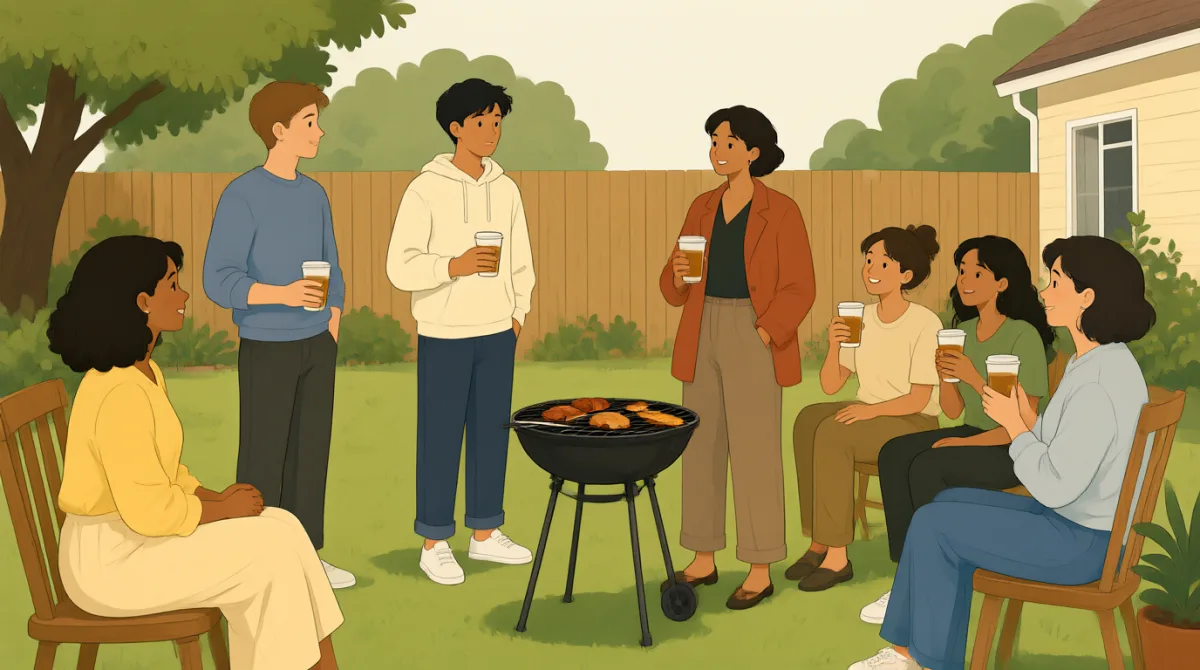

Hey Mia, I was wondering if you and Mike are free this Saturday afternoon?
अरे मिया, मैं सोच रहा था कि क्या तुम और माइक इस शनिवार दोपहर को खाली हो?

Oh, hi Jack! I think we are. Why do you ask?
ओह, हाय जैक! मुझे लगता है हम खाली हैं। तुम क्यों पूछ रहे हो?
We're actually having a small, informal BBQ in our backyard, just grilling some burgers and hanging out. We thought it would be great if you two could join us around 2 PM?
दरअसल, हम अपने पिछवाड़े में छोटी-सी, अनौपचारिक बारबेक्यू पार्टी रख रहे हैं—बस कुछ बर्गर सेंकेंगे और साथ में अच्छा वक्त बिताएँगे। हमने सोचा कि अगर तुम दोनों दोपहर करीब 2 बजे आ सको, तो बहुत अच्छा होगा।
That sounds lovely, Jack! A BBQ sounds perfect for Saturday. Mike loves a good burger. Is there anything we can bring?
यह तो बहुत अच्छा लग रहा है, जैक! शनिवार के लिए बारबेक्यू एकदम सही है। माइक को बढ़िया बर्गर बहुत पसंद हैं। क्या हम अपने साथ कुछ ला सकते हैं?
Oh, no need! We'll have plenty of food and drinks. Just bring yourselves! We're keeping it pretty casual. Maybe a dessert if you're feeling ambitious, but really, no pressure at all.
अरे, इसकी कोई ज़रूरत नहीं! हमारे पास खाने-पीने के लिए बहुत कुछ होगा। तुम दोनों बस आ जाना! हम इसे बिल्कुल अनौपचारिक रख रहे हैं। अगर तुम्हारा मन हो तो कोई मिठाई ले आना, लेकिन सच में, कोई दबाव नहीं है।
Okay, that's very kind of you. Let me just confirm with Mike, but I'm pretty sure we'd love to come. It’d be nice to catch up.
ठीक है, यह तुम्हारी बहुत मेहरबानी है। मैं बस माइक से पक्का कर लूँ, लेकिन मुझे पूरा यकीन है कि हम आना चाहेंगे। काफी समय से बात नहीं हुई, अच्छा लगेगा।
Great! Just let me know when you've had a chance to chat with him. Looking forward to it!
बहुत बढ़िया! माइक से बात कर लेने के बाद मुझे बता देना। मिलने का इंतज़ार रहेगा!
Will do! Thanks so much for the invite, Jack. See you then, hopefully!
ज़रूर! बुलाने के लिए बहुत-बहुत शुक्रिया, जैक। उम्मीद है, फिर वहीं मिलेंगे!
शब्दावली7
- wonderingसोच रहा था
This is the present participle of 'wonder,' used here in 'I was wondering' to politely ask a question or make a suggestion without being too direct. It's a common way to soften requests in English conversations.
'wonder' का यह वर्तमान कृदंत रूप है। यहाँ 'I was wondering' का इस्तेमाल सवाल पूछने या सुझाव देने के लिए विनम्र और कम सीधा तरीका अपनाने में होता है। अंग्रेज़ी बातचीत में अनुरोध को नरम बनाने का यह आम तरीका है।
- freeखाली
Means available or not busy. In social contexts, like 'Are you free this Saturday?', it asks if someone has no plans and can join an event.
इसका मतलब है कि कोई उपलब्ध हो या व्यस्त न हो। सामाजिक संदर्भ में, जैसे 'Are you free this Saturday?', यह पूछा जाता है कि क्या किसी के उस दिन कोई और कार्यक्रम नहीं है और वह किसी आयोजन में शामिल हो सकता है।
- informalअनौपचारिक
Describes something relaxed and not formal, like casual clothes or events. Here, 'informal BBQ' means a friendly, easy-going gathering without strict rules.
यह किसी ऐसी चीज़ का वर्णन करता है जो सहज हो और औपचारिक न हो, जैसे आरामदेह कपड़े या आयोजन। यहाँ 'informal BBQ' का मतलब है दोस्तों जैसा सहज मिलन, जिसमें सख्त नियम न हों।
- BBQबारबेक्यू
Short for barbecue, a popular outdoor cooking event where food like burgers is grilled. It's often casual and social, common in Western neighborhoods during good weather.
यह barbecue का संक्षिप्त रूप है—बाहर खाना पकाने का एक लोकप्रिय आयोजन, जिसमें बर्गर जैसी चीज़ें सेंकी जाती हैं। यह अक्सर अनौपचारिक और मिलनसार माहौल वाला होता है और अच्छे मौसम में पश्चिमी देशों के पड़ोसों में आम है।
- hanging outसाथ समय बिताना
Means spending time together in a relaxed way, without a specific plan. It's used for casual social activities like chatting or relaxing with friends or neighbors.
इसका मतलब है बिना किसी खास योजना के आराम से साथ वक्त बिताना। इसका इस्तेमाल दोस्तों या पड़ोसियों के साथ बातें करने या सुकून से समय बिताने जैसी अनौपचारिक सामाजिक गतिविधियों के लिए होता है।
- casualअनौपचारिक
Refers to something relaxed and not serious or formal. In invitations, 'keeping it casual' means no need for fancy clothes or preparations; just come as you are.
इसका मतलब है सहज, गंभीर या औपचारिक न होना। निमंत्रण में 'keeping it casual' का मतलब है कि खास कपड़े पहनने या तैयारी करने की ज़रूरत नहीं—जैसे हो, वैसे ही आ जाओ।
- catch upहालचाल जानना
Means to talk and share updates with someone you haven't seen in a while. It's useful in social invitations to show interest in reconnecting with neighbors or friends.
इसका मतलब है किसी ऐसे व्यक्ति से बात करना और हाल की बातें साझा करना, जिससे कुछ समय से मुलाकात न हुई हो। पड़ोसियों या दोस्तों से फिर से जुड़ने की इच्छा जताने के लिए सामाजिक निमंत्रणों में यह उपयोगी है।
मुख्य वाक्य6
- 1
Hey Mia, I was wondering if you and Mike are free this Saturday afternoon?
अरे मिया, मैं सोच रहा था कि क्या तुम और माइक इस शनिवार दोपहर को खाली हो?
This is a polite way to start an invitation by asking about availability. 'I was wondering' softens the question, making it less direct. Use this pattern when checking if someone can join an event; it's common in friendly neighbor talks.
यह उपलब्धता पूछकर निमंत्रण शुरू करने का एक विनम्र तरीका है। 'I was wondering' सवाल को नरम बनाता है, जिससे वह कम सीधा लगता है। किसी से यह पूछते समय इस पैटर्न का इस्तेमाल करें कि क्या वह किसी आयोजन में शामिल हो सकता है। पड़ोसियों की दोस्ताना बातचीत में यह आम है।
- 2
We're actually having a small, informal BBQ in our backyard, just grilling some burgers and hanging out.
दरअसल, हम अपने पिछवाड़े में छोटी-सी, अनौपचारिक बारबेक्यू पार्टी रख रहे हैं—बस कुछ बर्गर सेंकेंगे और साथ में अच्छा वक्त बिताएँगे।
This sentence describes the event clearly and casually. 'Actually' adds a sense of revealing information naturally. It's useful for explaining plans simply; the present continuous 'having' and 'hanging out' show ongoing, relaxed activities.
यह वाक्य आयोजन का साफ़-साफ़ और सहज ढंग से वर्णन करता है। 'Actually' जानकारी को बातचीत में स्वाभाविक रूप से बताने का भाव जोड़ता है। योजनाएँ सरलता से समझाने के लिए यह उपयोगी है; वर्तमान निरंतर काल के 'having' और 'hanging out' से जारी और आरामदेह गतिविधियों का पता चलता है।
- 3
Is there anything we can bring?
क्या हम अपने साथ कुछ ला सकते हैं?
A polite offer to contribute to the event, showing good manners in social situations. This question uses 'can' for possibility and is great for hosts and guests to build positive relations; it's a common phrase in invitations.
यह आयोजन में योगदान देने का विनम्र प्रस्ताव है और सामाजिक परिस्थितियों में अच्छे शिष्टाचार दिखाता है। इस सवाल में संभावना पूछने के लिए 'can' का इस्तेमाल हुआ है। मेज़बान और मेहमानों के बीच अच्छे संबंध बनाने के लिए यह बढ़िया और निमंत्रणों में आम तौर पर इस्तेमाल होने वाला वाक्यांश है।
- 4
Oh, no need! We'll have plenty of food and drinks. Just bring yourselves!
अरे, इसकी कोई ज़रूरत नहीं! हमारे पास खाने-पीने के लिए बहुत कुछ होगा। तुम दोनों बस आ जाना!
This reassures the guest that nothing is required, keeping the event stress-free. 'No need' is idiomatic for 'not necessary,' and 'bring yourselves' is a friendly idiom meaning just come. Use it to make invitations welcoming and casual.
इससे मेहमान को भरोसा दिलाया जाता है कि उसे कुछ लाने की ज़रूरत नहीं, ताकि आयोजन तनाव-मुक्त रहे। 'No need' का मुहावरेदार अर्थ है 'ज़रूरी नहीं', और 'bring yourselves' का दोस्ताना अर्थ है कि बस आ जाओ। निमंत्रण को अपनापन भरा और अनौपचारिक बनाने के लिए इसका इस्तेमाल करें।
- 5
Let me just confirm with Mike, but I'm pretty sure we'd love to come.
मैं बस माइक से पक्का कर लूँ, लेकिन मुझे पूरा यकीन है कि हम आना चाहेंगे।
This shows politeness by checking with others before committing. 'Confirm' means to verify, and 'pretty sure' expresses confidence softly. It's useful for group decisions in social plans; the conditional 'would' adds politeness.
यह वचन देने से पहले दूसरों से पूछकर विनम्रता दिखाता है। 'Confirm' का मतलब है पक्का करना, और 'pretty sure' नरम ढंग से भरोसा जताता है। सामाजिक योजनाओं में मिलकर फैसला लेते समय यह उपयोगी है; 'would' का सशर्त प्रयोग बात को विनम्र बनाता है।
- 6
Looking forward to it!
मिलने का इंतज़ार रहेगा!
A positive closing phrase meaning excited about the future event. It's short and enthusiastic, often used to end invitations. This expression builds rapport and is versatile for any upcoming social gathering.
यह भविष्य में होने वाले आयोजन को लेकर उत्साह जताने वाला एक सकारात्मक समापन वाक्यांश है। यह छोटा और जोशीला है और अक्सर निमंत्रण का अंत करने के लिए इस्तेमाल होता है। इससे आपसी तालमेल बढ़ता है और यह आने वाले किसी भी सामाजिक आयोजन के लिए उपयुक्त है।