Stretching After the Run
ยืดเหยียดหลังวิ่ง
After the run, Grace shows Emma a few easy stretches. They talk about how Emma feels and when the next run is.
หลังวิ่งเสร็จ เกรซสอนท่ายืดเหยียดง่าย ๆ สองสามท่าให้เอมมา ทั้งคู่คุยกันว่าเอมรู้สึกอย่างไรและจะวิ่งครั้งต่อไปเมื่อไหร่
บทสนทนา8
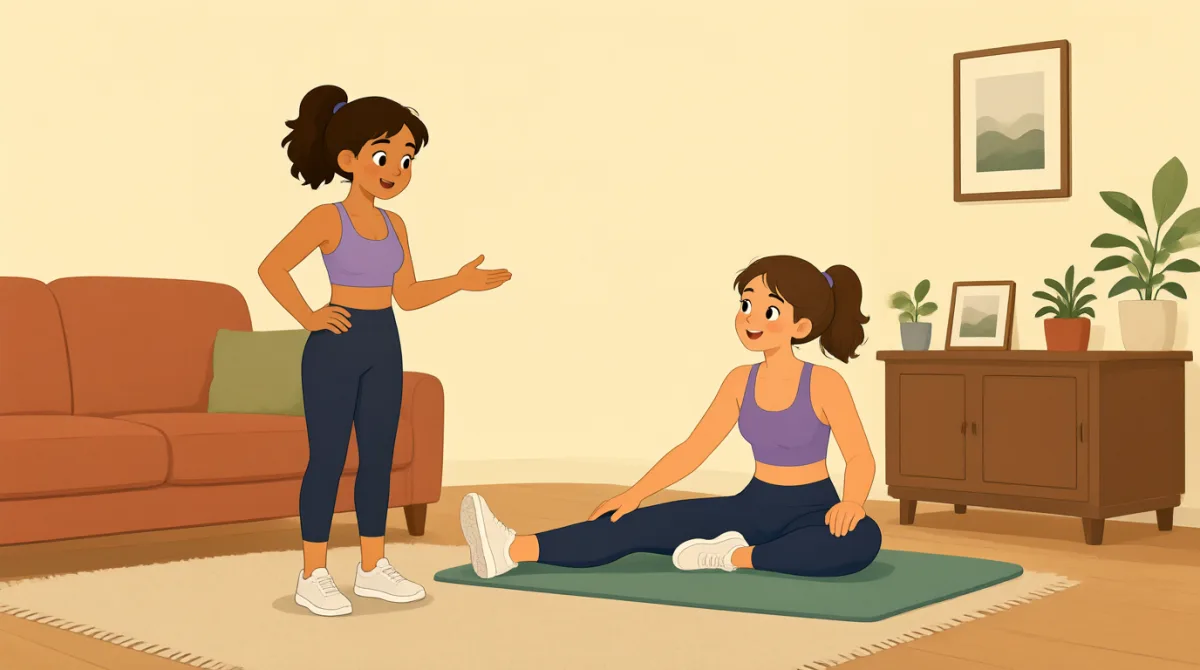

Thanks for the run, Grace. My legs feel a little tight.
ขอบใจที่ชวนมาวิ่งนะ เกรซ ขาฉันตึงนิดหน่อย

You’re welcome. Let’s do a few easy stretches before we go.
ยินดีจ้ะ มายืดเหยียดง่าย ๆ กันสักสองสามท่าก่อนกลับกันเถอะ
What should I stretch first?
ฉันควรยืดส่วนไหนก่อนดี
Try this stretch. Hold the wall, bend one knee, and pull your foot back.
ลองท่านี้นะ จับกำแพงไว้ งอเข่าข้างหนึ่ง แล้วดึงเท้าไปข้างหลัง
Like this? I can feel it in my leg.
แบบนี้เหรอ ฉันรู้สึกตึงที่ขาเลย
That’s right. Hold it for ten seconds, then change legs.
ใช่แล้ว ค้างไว้สิบวินาที แล้วสลับข้าง
That feels good. When is our next run?
รู้สึกดีจัง เราจะวิ่งกันอีกทีเมื่อไหร่เหรอ
Saturday morning at nine. Meet us here, and we’ll run three miles.
เช้าวันเสาร์เก้าโมง มาเจอกันที่นี่นะ แล้วเราจะวิ่งกันสามไมล์
คำศัพท์8
- tightตึง
Here, “tight” means the muscles in Emma’s legs feel stiff or uncomfortable. You can say, “My shoulders feel tight,” after exercise.
ในที่นี้ “tight” หมายถึงกล้ามเนื้อขาของเอมรู้สึกแข็งหรือตึงไม่สบาย หลังออกกำลังกายก็พูดได้ว่า “My shoulders feel tight” (ไหล่ฉันรู้สึกตึง)
- stretchesท่ายืดเหยียด
Stretches are movements that help loosen your muscles. You can say, “Let’s do a few stretches after the run.”
“Stretches” คือท่าทางที่ช่วยคลายกล้ามเนื้อ พูดได้ว่า “Let’s do a few stretches after the run.” (มายืดเหยียดกันสักสองสามท่าหลังวิ่งกันเถอะ)
- bend one kneeงอเข่าข้างหนึ่ง
This means to move one knee so your leg is not straight. It is a simple instruction for a stretch or exercise.
“Bend one knee” หมายถึงงอเข่าข้างหนึ่งเพื่อให้ขาไม่เหยียดตรง เป็นคำสั่งง่าย ๆ สำหรับท่ายืดเหยียดหรือการออกกำลังกาย
- pull your foot backดึงเท้าไปข้างหลัง
This means to move your foot backward toward your body. You can use this phrase when giving instructions for a leg stretch.
“Pull your foot back” หมายถึงขยับเท้าไปด้านหลังเข้าหาลำตัว ใช้วลีนี้เมื่อต้องบอกวิธียืดกล้ามเนื้อขาได้
- Hold it for ten secondsค้างไว้สิบวินาที
This tells someone to stay in the same position for ten seconds. You can change the time, such as, “Hold it for five seconds.”
“Hold it for ten seconds” เป็นการบอกให้ค้างอยู่ในท่าเดิมสิบวินาที เปลี่ยนระยะเวลาได้ เช่น “Hold it for five seconds.” (ค้างไว้ห้าวินาที)
- change legsสลับข้าง
This means to do the same stretch with the other leg. It is a useful instruction when an exercise works one side at a time.
“Change legs” หมายถึงทำท่ายืดเหยียดเดิมโดยใช้ขาอีกข้าง เป็นคำสั่งที่มีประโยชน์เมื่อท่าออกกำลังกายเน้นทีละข้าง
- next runการวิ่งครั้งต่อไป
The “next run” is the following time the group will go running. You can ask, “When is our next run?”
“Next run” คือครั้งต่อไปที่กลุ่มจะไปวิ่งด้วยกัน ถามได้ว่า “When is our next run?” (เราจะวิ่งกันครั้งต่อไปเมื่อไหร่)
- Saturday morning at nineเช้าวันเสาร์เก้าโมง
This phrase gives a day and time for a plan. You can use the same pattern to say when an event will happen.
“Saturday morning at nine” บอกวันและเวลาของแผนการนัดหมาย ใช้รูปแบบเดียวกันนี้บอกได้ว่ากิจกรรมจะเกิดขึ้นเมื่อไหร่
ประโยคสำคัญ7
- 1
My legs feel a little tight.
ขาฉันตึงนิดหน่อย
Use this sentence to describe how your body feels after exercise. Replace “legs” with another body part, such as “My shoulders feel a little tight.”
ใช้ประโยคนี้บอกว่าร่างกายรู้สึกอย่างไรหลังออกกำลังกาย เปลี่ยน “legs” เป็นส่วนอื่นของร่างกายได้ เช่น “My shoulders feel a little tight.” (ไหล่ฉันตึงนิดหน่อย)
- 2
Let’s do a few easy stretches before we go.
มายืดเหยียดง่าย ๆ กันสักสองสามท่าก่อนกลับกันเถอะ
This is a friendly way to suggest doing some stretches. You can reuse “Let’s do a few…” to suggest another activity, such as “Let’s do a few warm-ups.”
ประโยคนี้เป็นวิธีชวนกันยืดเหยียดอย่างเป็นกันเอง นำรูปแบบ “Let’s do a few…” ไปชวนทำกิจกรรมอื่นได้ เช่น “Let’s do a few warm-ups.” (มาอบอุ่นร่างกายกันสักสองสามท่าเถอะ)
- 3
What should I stretch first?
ฉันควรยืดส่วนไหนก่อนดี
Use this question when you want to know what to do first. Replace “stretch” with another activity, such as “What should I pack first?”
ใช้คำถามนี้เมื่อต้องการรู้ว่าควรทำอะไรก่อน เปลี่ยน “stretch” เป็นกิจกรรมอื่นได้ เช่น “What should I pack first?” (ฉันควรจัดกระเป๋าอะไรก่อนดี)
- 4
Hold the wall, bend one knee, and pull your foot back.
จับกำแพงไว้ งอเข่าข้างหนึ่ง แล้วดึงเท้าไปข้างหลัง
This sentence gives clear, simple instructions for a stretch. You can use the same pattern to explain steps in an activity.
ประโยคนี้บอกวิธียืดเหยียดอย่างชัดเจนและเข้าใจง่าย ใช้รูปแบบเดียวกันนี้อธิบายขั้นตอนของกิจกรรมอื่นได้
- 5
Hold it for ten seconds, then change legs.
ค้างไว้สิบวินาที แล้วสลับข้าง
This gives two steps in order: stay in the position, then switch sides. You can reuse “then” to explain what to do next.
ประโยคนี้บอกขั้นตอนสองอย่างตามลำดับ คือค้างท่าไว้ แล้วสลับข้าง นำ “then” ไปใช้บอกขั้นตอนถัดไปได้
- 6
When is our next run?
เราจะวิ่งกันครั้งต่อไปเมื่อไหร่
Use this question to ask when a planned activity will happen. Replace “run” with another event, such as “When is our next meeting?”
ใช้คำถามนี้ถามว่ากิจกรรมที่วางแผนไว้จะจัดขึ้นเมื่อไหร่ เปลี่ยน “run” เป็นกิจกรรมอื่นได้ เช่น “When is our next meeting?” (เราจะประชุมกันครั้งต่อไปเมื่อไหร่)
- 7
Meet us here, and we’ll run three miles.
มาเจอกันที่นี่นะ แล้วเราจะวิ่งกันสามไมล์
This sentence gives a meeting place and says what the group plans to do. You can use “we’ll” to talk about a future plan.
ประโยคนี้บอกสถานที่นัดพบและแผนของกลุ่ม ใช้ “we’ll” พูดถึงแผนในอนาคตได้