Stretching After the Run
Estiramientos después de correr
After the run, Grace shows Emma a few easy stretches. They talk about how Emma feels and when the next run is.
Después de correr, Grace le enseña a Emma unos estiramientos sencillos. Hablan de cómo se siente Emma y de cuándo será la próxima carrera.
Diálogo8
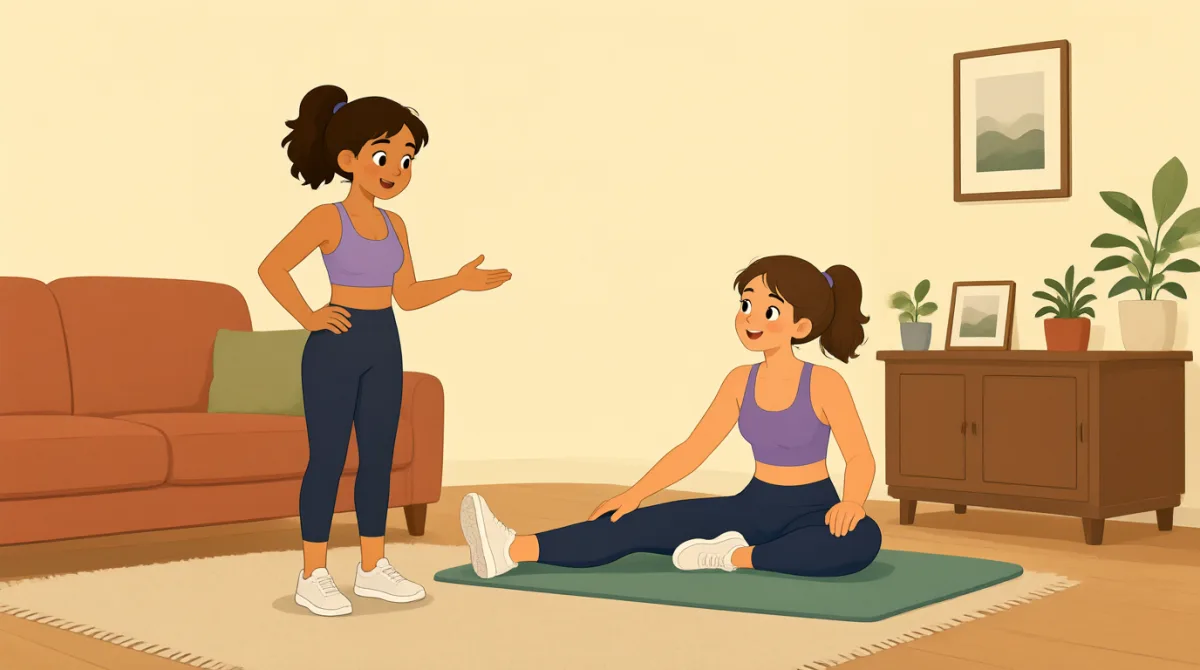

Thanks for the run, Grace. My legs feel a little tight.
Gracias por correr conmigo, Grace. Siento las piernas un poco tensas.

You’re welcome. Let’s do a few easy stretches before we go.
De nada. Hagamos unos estiramientos sencillos antes de irnos.
What should I stretch first?
¿Qué debería estirar primero?
Try this stretch. Hold the wall, bend one knee, and pull your foot back.
Prueba este estiramiento. Apóyate en la pared, dobla una rodilla y lleva el pie hacia atrás.
Like this? I can feel it in my leg.
¿Así? Lo siento en la pierna.
That’s right. Hold it for ten seconds, then change legs.
Así está bien. Mantén la postura diez segundos y luego cambia de pierna.
That feels good. When is our next run?
Se siente bien. ¿Cuándo es nuestra próxima carrera?
Saturday morning at nine. Meet us here, and we’ll run three miles.
El sábado a las nueve de la mañana. Nos vemos aquí y correremos cinco kilómetros.
Vocabulario8
- tighttenso
Here, “tight” means the muscles in Emma’s legs feel stiff or uncomfortable. You can say, “My shoulders feel tight,” after exercise.
Aquí, “tight” significa que los músculos de las piernas de Emma se sienten rígidos o incómodos. Después de hacer ejercicio, puedes decir: “My shoulders feel tight” (Siento los hombros tensos).
- stretchesestiramientos
Stretches are movements that help loosen your muscles. You can say, “Let’s do a few stretches after the run.”
Los estiramientos son movimientos que ayudan a relajar los músculos. Puedes decir: “Let’s do a few stretches after the run” (Hagamos unos estiramientos después de correr).
- bend one kneedoblar una rodilla
This means to move one knee so your leg is not straight. It is a simple instruction for a stretch or exercise.
“Bend one knee” significa mover una rodilla para que la pierna no quede recta. Es una instrucción sencilla para un estiramiento o ejercicio.
- pull your foot backllevar el pie hacia atrás
This means to move your foot backward toward your body. You can use this phrase when giving instructions for a leg stretch.
“Pull your foot back” significa mover el pie hacia atrás, en dirección al cuerpo. Puedes usar esta expresión para dar instrucciones sobre un estiramiento de piernas.
- Hold it for ten secondsMantén la postura diez segundos
This tells someone to stay in the same position for ten seconds. You can change the time, such as, “Hold it for five seconds.”
“Hold it for ten seconds” le indica a alguien que mantenga la misma postura durante diez segundos. Puedes cambiar el tiempo, por ejemplo: “Hold it for five seconds” (Mantén la postura cinco segundos).
- change legscambiar de pierna
This means to do the same stretch with the other leg. It is a useful instruction when an exercise works one side at a time.
“Change legs” significa hacer el mismo estiramiento con la otra pierna. Es una instrucción útil cuando un ejercicio trabaja un lado a la vez.
- next runpróxima carrera
The “next run” is the following time the group will go running. You can ask, “When is our next run?”
La “next run” es la próxima vez que el grupo saldrá a correr. Puedes preguntar: “When is our next run?” (¿Cuándo es nuestra próxima carrera?).
- Saturday morning at nineel sábado a las nueve de la mañana
This phrase gives a day and time for a plan. You can use the same pattern to say when an event will happen.
Esta expresión indica el día y la hora de un plan. Puedes usar la misma estructura para decir cuándo tendrá lugar un evento.
Frases clave7
- 1
My legs feel a little tight.
Siento las piernas un poco tensas.
Use this sentence to describe how your body feels after exercise. Replace “legs” with another body part, such as “My shoulders feel a little tight.”
Usa esta frase para describir cómo se siente tu cuerpo después de hacer ejercicio. Puedes cambiar “legs” por otra parte del cuerpo, como en “My shoulders feel a little tight” (Siento los hombros un poco tensos).
- 2
Let’s do a few easy stretches before we go.
Hagamos unos estiramientos sencillos antes de irnos.
This is a friendly way to suggest doing some stretches. You can reuse “Let’s do a few…” to suggest another activity, such as “Let’s do a few warm-ups.”
Esta es una forma amistosa de proponer hacer algunos estiramientos. Puedes reutilizar “Let’s do a few…” para proponer otra actividad, como “Let’s do a few warm-ups” (Hagamos unos ejercicios de calentamiento).
- 3
What should I stretch first?
¿Qué debería estirar primero?
Use this question when you want to know what to do first. Replace “stretch” with another activity, such as “What should I pack first?”
Usa esta pregunta cuando quieras saber qué hacer primero. Puedes sustituir “stretch” por otra actividad, como en “What should I pack first?” (¿Qué debería empacar primero?).
- 4
Hold the wall, bend one knee, and pull your foot back.
Apóyate en la pared, dobla una rodilla y lleva el pie hacia atrás.
This sentence gives clear, simple instructions for a stretch. You can use the same pattern to explain steps in an activity.
Esta frase da instrucciones claras y sencillas para hacer un estiramiento. Puedes usar la misma estructura para explicar los pasos de una actividad.
- 5
Hold it for ten seconds, then change legs.
Mantén la postura diez segundos y luego cambia de pierna.
This gives two steps in order: stay in the position, then switch sides. You can reuse “then” to explain what to do next.
Esta frase indica dos pasos en orden: mantener la postura y luego cambiar de lado. Puedes reutilizar “then” para explicar qué hacer después.
- 6
When is our next run?
¿Cuándo es nuestra próxima carrera?
Use this question to ask when a planned activity will happen. Replace “run” with another event, such as “When is our next meeting?”
Usa esta pregunta para preguntar cuándo tendrá lugar una actividad planeada. Puedes sustituir “run” por otro evento, como en “When is our next meeting?” (¿Cuándo es nuestra próxima reunión?).
- 7
Meet us here, and we’ll run three miles.
Nos vemos aquí y correremos cinco kilómetros.
This sentence gives a meeting place and says what the group plans to do. You can use “we’ll” to talk about a future plan.
Esta frase indica dónde reunirse y qué planea hacer el grupo. Puedes usar “we’ll” para hablar de un plan futuro.