Checking on an Elderly Relative
ถามไถ่ญาติผู้สูงอายุ
A family member calls or visits an elderly relative to check on their general well-being and health.
สมาชิกในครอบครัวโทรศัพท์หรือไปเยี่ยมญาติผู้สูงอายุ เพื่อถามไถ่สารทุกข์สุกดิบและสุขภาพโดยรวม
บทสนทนา8
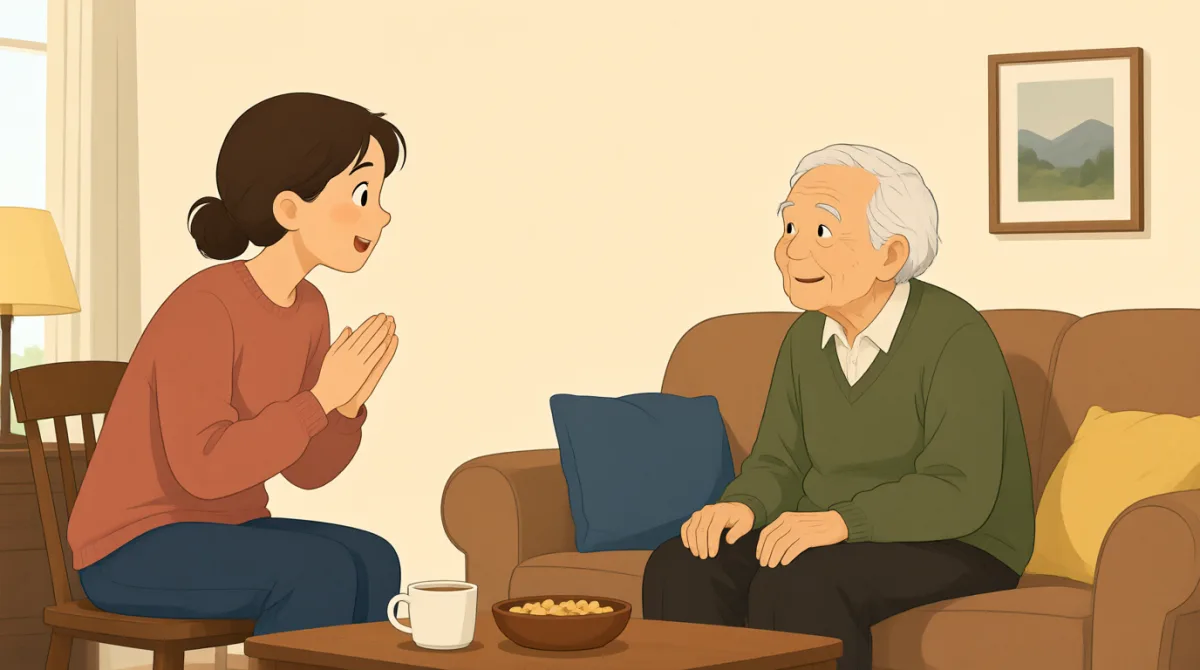

Hi Grandma! How are you feeling today?
สวัสดีจ้ะคุณย่า! วันนี้รู้สึกเป็นยังไงบ้างจ๊ะ

Oh, hello dear! I'm doing quite well, thank you. Just finished my morning tea.
อ้าว สวัสดีจ้ะลูกรัก! ย่าสบายดีพอสมควร ขอบใจนะ เพิ่งดื่มชาตอนเช้าเสร็จเอง
That's good to hear. Any aches or pains today? How's your knee?
ดีจังเลยจ้ะ วันนี้ปวดเมื่อยตรงไหนบ้างไหม เข่าเป็นยังไงบ้างจ๊ะ
My knee is a bit stiff, but much better than yesterday. No major complaints, thankfully.
เข่ายังตึง ๆ อยู่นิดหน่อย แต่ดีขึ้นกว่าเมื่อวานเยอะเลย ไม่มีอะไรน่าห่วง โชคดีไปจ้ะ
That's a relief! Did you get enough rest last night?
โล่งอกไปที! เมื่อคืนได้นอนพักผ่อนพอไหมจ๊ะ
Yes, I slept like a log. Woke up feeling quite refreshed.
พอจ้ะ ย่าหลับสนิทเลย ตื่นมาก็รู้สึกสดชื่นดี
Excellent! Remember to take it easy today. I'll pop by later this afternoon.
เยี่ยมเลยจ้ะ! วันนี้อย่าหักโหมนะ เดี๋ยวบ่ายนี้หนูแวะไปหาจ้ะ
Sounds lovely, dear. See you then!
ดีเลยจ้ะลูกรัก แล้วเจอกันนะ
คำศัพท์7
- feelingความรู้สึก; รู้สึก
As a noun or verb, 'feeling' means the way someone experiences their physical or emotional state, like 'How are you feeling?' to ask about health.
'feeling' ใช้เป็นคำนามหรือคำกริยา หมายถึงสภาพทางร่างกายหรืออารมณ์ที่คนเรารู้สึก เช่น 'How are you feeling?' ใช้ถามไถ่สุขภาพ
- achesอาการปวดเมื่อย
Minor, dull pains in the body, often used in plural like 'aches and pains' to describe small discomforts from age or activity.
อาการปวดตื้อ ๆ เล็กน้อยตามร่างกาย มักใช้เป็นพหูพจน์ในวลี 'aches and pains' เพื่อพูดถึงความเจ็บปวดเล็ก ๆ น้อย ๆ จากอายุหรือกิจกรรมต่าง ๆ
- stiffตึง; แข็ง
Describes joints or muscles that feel rigid and hard to move, common for elderly people, like a stiff knee after sitting.
ใช้บรรยายข้อต่อหรือกล้ามเนื้อที่รู้สึกแข็งและขยับลำบาก เช่น เข่าตึงหลังจากนั่งนาน ๆ ซึ่งพบได้บ่อยในผู้สูงอายุ
- reliefความโล่งอก
A feeling of comfort or reassurance when something worrying is resolved, as in 'That's a relief!' to express happiness about good news.
ความรู้สึกสบายใจหรือคลายกังวลเมื่อเรื่องที่น่าเป็นห่วงผ่านไปแล้ว เช่น 'That's a relief!' ใช้แสดงความดีใจเมื่อได้ยินข่าวดี
- refreshedสดชื่น
Feeling energetic and renewed after rest or sleep, often used to describe waking up feeling good and ready for the day.
รู้สึกกระปรี้กระเปร่าหรือมีเรี่ยวแรงขึ้นหลังจากพักผ่อนหรือนอนหลับ มักใช้บรรยายความรู้สึกดีเมื่อตื่นนอนและพร้อมเริ่มวันใหม่
- pop byแวะไปหา
An informal phrase meaning to visit someone briefly and casually, like stopping by a friend's house for a short time.
'pop by' เป็นสำนวนไม่เป็นทางการ หมายถึงแวะไปหาใครสักคนสั้น ๆ แบบสบาย ๆ เช่น แวะไปบ้านเพื่อนสักพัก
- slept like a logหลับสนิท
An idiom meaning to sleep very deeply and soundly without waking up, like a heavy log that doesn't move.
'slept like a log' เป็นสำนวนหมายถึงหลับลึกและสนิทโดยไม่ตื่น เปรียบเหมือนท่อนไม้หนัก ๆ ที่ไม่ขยับ
ประโยคสำคัญ7
- 1
How are you feeling today?
วันนี้รู้สึกเป็นยังไงบ้างจ๊ะ
This is a polite way to ask about someone's health or mood today. Use it in greetings with family or friends. The present continuous 'are you feeling' shows current state.
'How are you feeling today?' เป็นวิธีสุภาพในการถามถึงสุขภาพหรืออารมณ์ของใครสักคนในวันนี้ ใช้ทักทายคนในครอบครัวหรือเพื่อนได้ รูป present continuous 'are you feeling' ใช้บอกสภาพในขณะนี้
- 2
I'm doing quite well, thank you.
ฉันสบายดีพอสมควร ขอบคุณนะ
A common response to health questions, meaning 'I'm in good health.' 'Quite well' softens it to 'fairly good,' and always add 'thank you' for politeness.
'I'm doing quite well, thank you.' เป็นคำตอบที่ใช้กันทั่วไปเมื่อมีคนถามเรื่องสุขภาพ หมายถึง 'ฉันสุขภาพดี' คำว่า 'Quite well' ทำให้ความหมายอ่อนลงเป็น 'ค่อนข้างดี' และเติม 'thank you' เพื่อแสดงความสุภาพ
- 3
Any aches or pains today?
วันนี้ปวดเมื่อยตรงไหนบ้างไหม
This checks for minor health issues. 'Any' asks if there are some; it's useful for caring conversations. The phrase 'aches or pains' is a fixed expression for small discomforts.
'Any aches or pains today?' ใช้ถามถึงปัญหาสุขภาพเล็ก ๆ น้อย ๆ คำว่า 'Any' ใช้ถามว่ามีอะไรบ้างไหม เหมาะกับบทสนทนาที่แสดงความห่วงใย ส่วน 'aches or pains' เป็นวลีที่ใช้เรียกอาการปวดเมื่อยเล็ก ๆ น้อย ๆ
- 4
That's a relief!
โล่งอกไปที!
Expresses happiness that something is okay, like after hearing good health news. It's an exclamation using 'that is' contracted, common in casual talks to show reassurance.
'That's a relief!' ใช้แสดงความดีใจที่ทุกอย่างเรียบร้อยดี เช่น หลังได้ยินข่าวสุขภาพที่ดี เป็นประโยคอุทานที่ย่อมาจาก 'that is' และมักใช้ในการพูดคุยสบาย ๆ เพื่อแสดงความโล่งใจ
- 5
Did you get enough rest last night?
เมื่อคืนได้นอนพักผ่อนพอไหม
A question about sleep quality using past simple 'did...get' for completed actions. Useful when checking on elderly; 'enough rest' means sufficient sleep.
'Did you get enough rest last night?' เป็นคำถามเกี่ยวกับการนอนหลับ ใช้ past simple 'did...get' กับเหตุการณ์ที่จบไปแล้ว เหมาะสำหรับถามไถ่ผู้สูงอายุ โดย 'enough rest' หมายถึงการนอนพักผ่อนอย่างเพียงพอ
- 6
I slept like a log.
ฉันหลับสนิทเลย
Means sleeping very deeply. This idiom is informal and vivid; use it to describe good, uninterrupted sleep in everyday conversations.
'I slept like a log.' หมายถึงหลับสนิทมาก สำนวนนี้เป็นภาษาพูดที่ให้ภาพชัดเจน ใช้บรรยายการนอนหลับดี ๆ โดยไม่ตื่นระหว่างคืนในการสนทนาทั่วไป
- 7
I'll pop by later this afternoon.
เดี๋ยวบ่ายนี้ฉันจะแวะไปหานะ
Promises a short visit using future 'will' for plans. 'Pop by' is casual; specify time like 'later this afternoon' to be clear and polite.
'I'll pop by later this afternoon.' เป็นการบอกว่าจะไปเยี่ยมสั้น ๆ โดยใช้ 'will' พูดถึงแผนในอนาคต 'Pop by' เป็นภาษาพูดสบาย ๆ และการระบุเวลาอย่าง 'later this afternoon' ช่วยให้ชัดเจนและสุภาพ