Requesting Temperature Change in a Public Space
ขอปรับอุณหภูมิในพื้นที่สาธารณะ
Someone in a public space like a library, waiting room, or communal area finds the temperature uncomfortable and approaches a staff member to request an adjustment.
มีคนรู้สึกว่าอุณหภูมิในพื้นที่สาธารณะ เช่น ห้องสมุด ห้องรับรอง หรือพื้นที่ส่วนกลางไม่สบายตัว จึงเข้าไปขอให้เจ้าหน้าที่ช่วยปรับอุณหภูมิ
บทสนทนา8
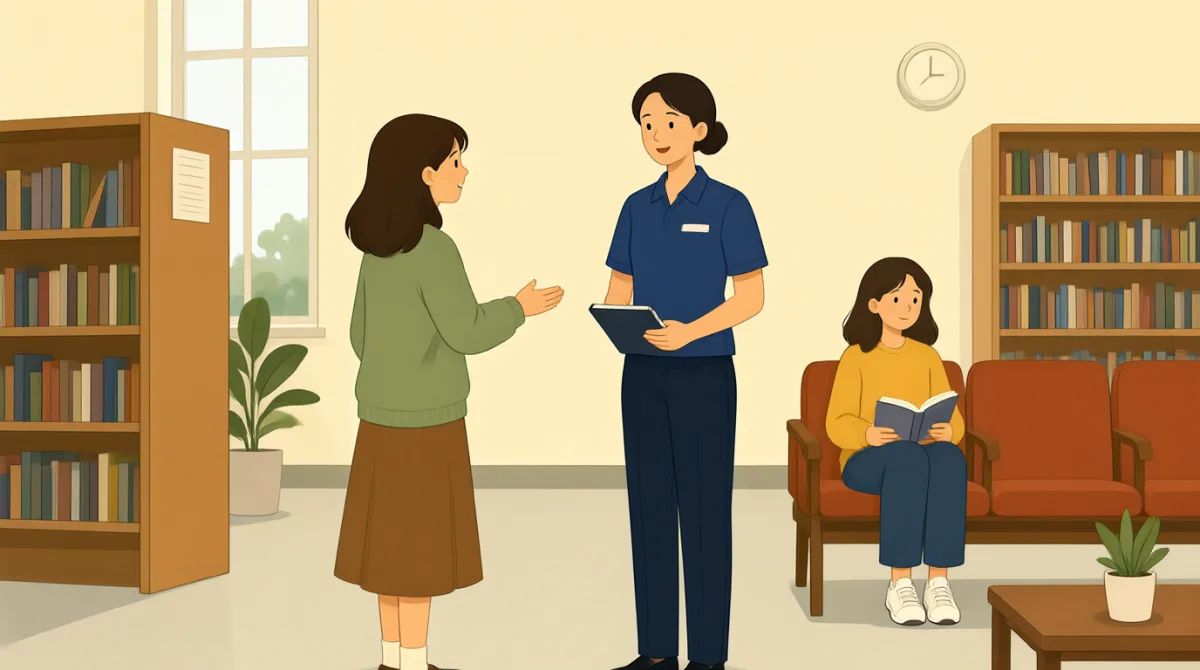

Excuse me, I was wondering if it's possible to adjust the temperature in here? It's a bit cold.
ขอโทษนะคะ พอจะปรับอุณหภูมิที่นี่ได้ไหมคะ? หนาวไปนิดค่ะ

Certainly. I can look into that for you. Where exactly are you feeling the cold?
ได้เลยครับ ผมจะลองตรวจสอบให้ครับ รู้สึกหนาวตรงไหนเป็นพิเศษครับ?
Over in the reading area, near the windows. It feels like the air conditioning is on quite high.
ตรงมุมอ่านหนังสือใกล้หน้าต่างค่ะ รู้สึกเหมือนเปิดแอร์แรงไปหน่อยค่ะ
Alright, I understand. I'll go check the thermostat now. We usually try to keep it around 72 degrees Fahrenheit, but sometimes it can fluctuate.
เข้าใจแล้วครับ เดี๋ยวผมไปตรวจดูเทอร์โมสแตตตอนนี้เลย ปกติเราพยายามตั้งไว้ที่ประมาณ 72 องศาฟาเรนไฮต์ แต่บางครั้งอุณหภูมิก็อาจเปลี่ยนแปลงได้ครับ
Thank you, I appreciate it. It would make a big difference.
ขอบคุณมากค่ะ ซาบซึ้งจริง ๆ ค่ะ ถ้าปรับได้คงช่วยได้มากเลย
No problem at all. I've adjusted it slightly. It should warm up a bit in the next 10-15 minutes. Please let me know if it's still uncomfortable after that.
ยินดีครับ ผมปรับให้เล็กน้อยแล้ว อีก 10-15 นาทีน่าจะอุ่นขึ้นนะครับ ถ้าถึงตอนนั้นแล้วยังรู้สึกไม่สบายอยู่ รบกวนแจ้งผมได้เลยครับ
I will, thank you so much for your help!
ได้เลยค่ะ ขอบคุณมาก ๆ ที่ช่วยนะคะ!
You're welcome. Enjoy your time here.
ยินดีครับ ขอให้ใช้เวลาอยู่ที่นี่อย่างมีความสุขนะครับ
คำศัพท์7
- adjustปรับ
To change something slightly to make it better, like changing the temperature on a device. Use it when asking to modify settings in a room.
เปลี่ยนบางอย่างเล็กน้อยให้เหมาะสมขึ้น เช่น ปรับอุณหภูมิบนอุปกรณ์ ใช้เมื่อต้องการขอให้เปลี่ยนการตั้งค่าภายในห้อง
- temperatureอุณหภูมิ
The level of hotness or coldness in a place, often measured in degrees. Common in conversations about comfort in buildings.
ระดับความร้อนหรือความเย็นของสถานที่ มักวัดเป็นองศา คำนี้ใช้บ่อยเวลาพูดถึงความสบายภายในอาคาร
- coldหนาว
Feeling too chilly or low in temperature. Use it to describe when a room is uncomfortably cool.
รู้สึกเย็นมากเกินไป หรือมีอุณหภูมิต่ำ ใช้บอกว่าห้องเย็นจนรู้สึกไม่สบาย
- air conditioningเครื่องปรับอากาศ
A system that cools the air in a room. Often shortened to 'AC'. Useful for talking about hot weather discomfort.
ระบบที่ช่วยทำให้อากาศในห้องเย็นลง มักเรียกสั้น ๆ ว่า 'AC' มีประโยชน์เมื่อต้องพูดถึงความไม่สบายตัวจากอากาศร้อน
- thermostatเทอร์โมสแตต
A device that controls the temperature in a room by turning heating or cooling on and off. Mention it when discussing room settings.
อุปกรณ์ควบคุมอุณหภูมิในห้อง โดยสั่งเปิดหรือปิดระบบทำความร้อนหรือความเย็น ใช้พูดถึงการตั้งค่าอุณหภูมิในห้อง
- fluctuateเปลี่ยนแปลง
To change often, going up and down. Use it to explain why temperature might vary in a space.
เปลี่ยนไปมา โดยอาจสูงขึ้นหรือลดลง ใช้อธิบายว่าทำไมอุณหภูมิในพื้นที่หนึ่งจึงอาจไม่คงที่
- appreciateซาบซึ้ง
To feel grateful for someone's help. A polite way to say thank you in formal situations.
รู้สึกขอบคุณในความช่วยเหลือของใครบางคน เป็นวิธีสุภาพในการกล่าวขอบคุณในสถานการณ์ที่เป็นทางการ
ประโยคสำคัญ7
- 1
Excuse me, I was wondering if it's possible to adjust the temperature in here? It's a bit cold.
ขอโทษนะคะ พอจะปรับอุณหภูมิที่นี่ได้ไหมคะ? หนาวไปนิดค่ะ
This is a polite way to start a request. 'I was wondering if' softens the question to be indirect and courteous. Use it in public places to ask for changes without being demanding. The grammar uses present continuous for ongoing feelings like 'it's a bit cold'.
นี่เป็นวิธีเริ่มต้นขอร้องอย่างสุภาพ 'I was wondering if' (ไม่ทราบว่าจะ...) ช่วยทำให้คำถามฟังดูอ้อมค้อมและนุ่มนวลขึ้น ใช้ในที่สาธารณะเมื่อต้องการขอให้ปรับเปลี่ยนบางอย่างโดยไม่ฟังดูเรียกร้อง โครงสร้างยังใช้รูป present continuous เพื่อบอกความรู้สึกที่กำลังเกิดขึ้น เช่น 'it's a bit cold' (หนาวไปนิด)
- 2
Certainly. I can look into that for you.
ได้เลยครับ ผมจะลองตรวจสอบให้ครับ
A helpful response offering assistance. 'Look into' means to investigate or check something. Useful for service workers to show willingness to help. It's formal and reassuring for intermediate learners in customer service scenarios.
เป็นคำตอบที่แสดงความเต็มใจช่วยเหลือ 'Look into' หมายถึงตรวจสอบหรือเช็กบางอย่าง พนักงานบริการใช้สำนวนนี้เพื่อแสดงว่าพร้อมช่วยเหลือ ฟังดูสุภาพและทำให้อุ่นใจ เหมาะกับผู้เรียนระดับกลางในสถานการณ์บริการลูกค้า
- 3
It feels like the air conditioning is on quite high.
รู้สึกเหมือนเปิดแอร์แรงไปหน่อยค่ะ
Describes a personal sensation of too much cooling. 'Feels like' expresses opinion based on feeling, and 'quite high' means very strong. Use this to explain discomfort in a specific area, helping to pinpoint the problem.
ใช้บอกความรู้สึกส่วนตัวว่าความเย็นมากเกินไป 'Feels like' ใช้แสดงความเห็นจากความรู้สึก ส่วน 'quite high' หมายถึงแรงหรือสูงมาก ใช้บอกความไม่สบายตัวในบริเวณใดบริเวณหนึ่ง เพื่อช่วยระบุปัญหาให้ชัดเจน
- 4
I'll go check the thermostat now.
เดี๋ยวผมไปตรวจดูเทอร์โมสแตตตอนนี้เลยครับ
Promises immediate action. 'I'll go check' uses future tense for a planned action. Practical for responding to requests, showing efficiency. Good for learners to practice offering help in real-time situations.
เป็นการรับปากว่าจะลงมือทำทันที 'I'll go check' ใช้รูปอนาคตเพื่อบอกแผนที่จะทำ ใช้ตอบรับคำขอเพื่อแสดงว่าพร้อมช่วยเหลือและทำงานอย่างรวดเร็ว ผู้เรียนสามารถฝึกใช้เมื่อต้องเสนอความช่วยเหลือในสถานการณ์จริง
- 5
Thank you, I appreciate it. It would make a big difference.
ขอบคุณค่ะ ซาบซึ้งจริง ๆ ค่ะ ถ้าปรับได้คงช่วยได้มากเลย
Expresses gratitude and explains the impact. 'Appreciate it' is idiomatic for thanks, and 'would make a big difference' is conditional for potential benefits. Use after requests to be polite and emphasize importance.
แสดงความขอบคุณพร้อมอธิบายว่าความช่วยเหลือนั้นส่งผลอย่างไร 'Appreciate it' เป็นสำนวนที่ใช้กล่าวขอบคุณ และ 'would make a big difference' ใช้รูปเงื่อนไขเพื่อพูดถึงประโยชน์ที่อาจเกิดขึ้น ใช้หลังจากขอความช่วยเหลือเพื่อแสดงความสุภาพและเน้นว่าการช่วยเหลือนั้นสำคัญ
- 6
No problem at all. I've adjusted it slightly.
ยินดีครับ ผมปรับให้เล็กน้อยแล้วครับ
Downplays the effort while confirming the action. 'No problem at all' is a casual way to say you're welcome, and present perfect 'I've adjusted' shows recent completion. Ideal for service replies to make customers feel valued.
ลดทอนความยุ่งยากของสิ่งที่ทำ พร้อมยืนยันว่าได้ลงมือทำแล้ว 'No problem at all' เป็นวิธีสบาย ๆ ในการตอบรับคำขอบคุณ ส่วน present perfect ใน 'I've adjusted' แสดงว่าการปรับเพิ่งเสร็จสิ้น เหมาะกับการตอบลูกค้าเพื่อให้รู้สึกว่าได้รับการดูแลเป็นอย่างดี
- 7
You're welcome. Enjoy your time here.
ยินดีครับ ขอให้ใช้เวลาอยู่ที่นี่อย่างมีความสุขนะครับ
A standard polite closing. 'You're welcome' responds to thanks, and 'enjoy your time' wishes well. Use it to end interactions positively, common in hospitality settings for intermediate learners.
เป็นคำพูดสุภาพที่ใช้ปิดท้ายบทสนทนา 'You're welcome' ใช้ตอบรับคำขอบคุณ ส่วน 'enjoy your time' เป็นการอวยพรให้มีความสุข ใช้จบการพูดคุยในแง่ดี มักพบในงานบริการและการต้อนรับ เหมาะสำหรับผู้เรียนระดับกลาง