Requesting Temperature Change in a Public Space
सार्वजनिक स्थान पर तापमान बदलने का अनुरोध
Someone in a public space like a library, waiting room, or communal area finds the temperature uncomfortable and approaches a staff member to request an adjustment.
पुस्तकालय, प्रतीक्षालय या साझा जगह जैसी किसी सार्वजनिक जगह पर किसी व्यक्ति को तापमान असहज लगता है और वह उसमें बदलाव का अनुरोध करने के लिए किसी कर्मचारी से बात करता है।
संवाद8
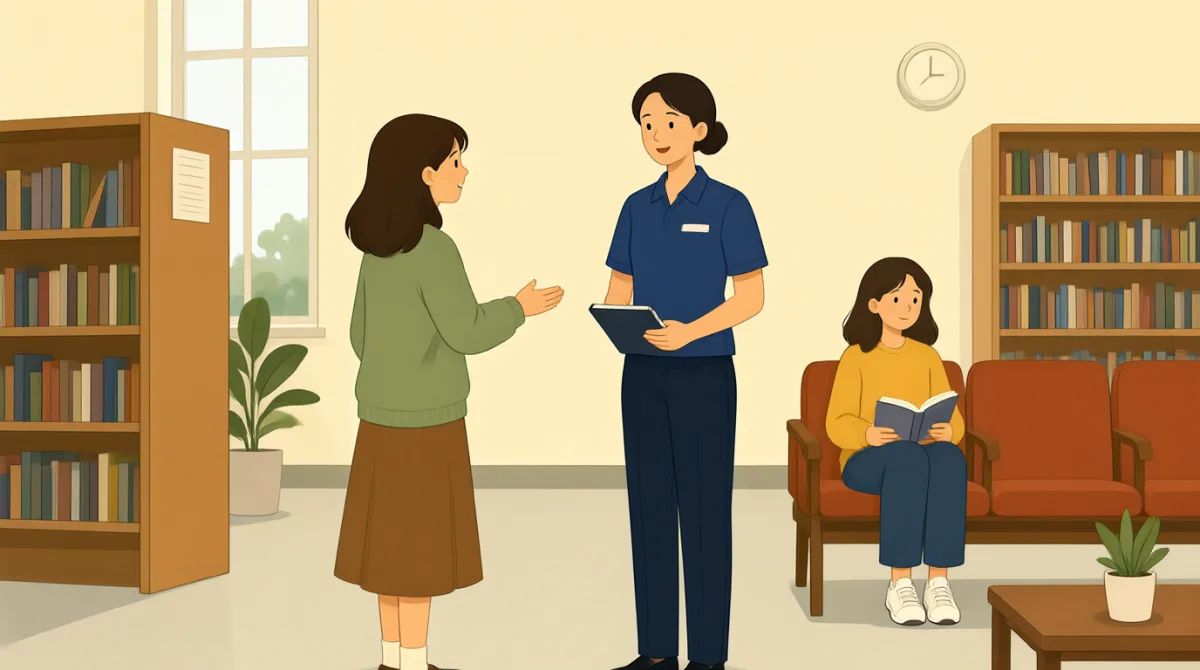

Excuse me, I was wondering if it's possible to adjust the temperature in here? It's a bit cold.
माफ़ कीजिए, क्या यहाँ का तापमान थोड़ा कम या ज़्यादा करना मुमकिन होगा? मुझे थोड़ी ठंड लग रही है।

Certainly. I can look into that for you. Where exactly are you feeling the cold?
ज़रूर। मैं आपके लिए इस बारे में पता करता हूँ। आपको ठीक कहाँ ठंड लग रही है?
Over in the reading area, near the windows. It feels like the air conditioning is on quite high.
वहाँ पढ़ने वाले हिस्से में, खिड़कियों के पास। ऐसा लग रहा है कि एयर कंडीशनिंग बहुत तेज़ चल रही है।
Alright, I understand. I'll go check the thermostat now. We usually try to keep it around 72 degrees Fahrenheit, but sometimes it can fluctuate.
ठीक है, समझ गया। मैं अभी थर्मोस्टैट देखकर आता हूँ। हम आम तौर पर तापमान 72 डिग्री फ़ारेनहाइट के आसपास रखने की कोशिश करते हैं, लेकिन कभी-कभी इसमें उतार-चढ़ाव हो सकता है।
Thank you, I appreciate it. It would make a big difference.
धन्यवाद, मैं आपका आभारी हूँ। इससे बहुत फ़र्क पड़ेगा।
No problem at all. I've adjusted it slightly. It should warm up a bit in the next 10-15 minutes. Please let me know if it's still uncomfortable after that.
कोई बात नहीं। मैंने इसे थोड़ा-सा ठीक कर दिया है। अगले 10-15 मिनट में यहाँ थोड़ी गर्मी हो जानी चाहिए। उसके बाद भी अगर आपको असहज लगे, तो कृपया मुझे बताइएगा।
I will, thank you so much for your help!
ज़रूर, आपकी मदद के लिए बहुत-बहुत धन्यवाद!
You're welcome. Enjoy your time here.
आपका स्वागत है। यहाँ अपना समय अच्छा बिताइए।
शब्दावली7
- adjustसमायोजित करना
To change something slightly to make it better, like changing the temperature on a device. Use it when asking to modify settings in a room.
किसी चीज़ को थोड़ा बदलना ताकि वह बेहतर हो जाए—जैसे किसी उपकरण पर तापमान बदलना। कमरे की सेटिंग में बदलाव का अनुरोध करते समय इस शब्द का इस्तेमाल करें।
- temperatureतापमान
The level of hotness or coldness in a place, often measured in degrees. Common in conversations about comfort in buildings.
किसी जगह कितनी गर्मी या ठंडक है, जिसे अक्सर डिग्री में मापा जाता है। इमारतों में आरामदायक माहौल के बारे में बात करते समय यह शब्द आम है।
- coldठंडा
Feeling too chilly or low in temperature. Use it to describe when a room is uncomfortably cool.
ठिठुरन महसूस होना या तापमान का कम होना। जब कमरा असहज रूप से ठंडा हो, तो उसका हाल बताने के लिए इस शब्द का इस्तेमाल करें।
- air conditioningएयर कंडीशनिंग
A system that cools the air in a room. Often shortened to 'AC'. Useful for talking about hot weather discomfort.
कमरे की हवा को ठंडा करने वाली प्रणाली। इसे अक्सर 'AC' भी कहते हैं। गर्मी में होने वाली असुविधा के बारे में बात करते समय यह काम आता है।
- thermostatथर्मोस्टैट
A device that controls the temperature in a room by turning heating or cooling on and off. Mention it when discussing room settings.
ऐसा उपकरण जो हीटिंग या कूलिंग को चालू-बंद करके कमरे का तापमान नियंत्रित करता है। कमरे की सेटिंग पर बात करते समय इसका ज़िक्र करें।
- fluctuateउतार-चढ़ाव होना
To change often, going up and down. Use it to explain why temperature might vary in a space.
बार-बार बदलना, यानी कभी बढ़ना और कभी घटना। किसी जगह के तापमान में बदलाव की वजह बताने के लिए इस शब्द का इस्तेमाल करें।
- appreciateआभारी होना
To feel grateful for someone's help. A polite way to say thank you in formal situations.
किसी की मदद के लिए कृतज्ञ महसूस करना। औपचारिक परिस्थितियों में धन्यवाद कहने का यह एक विनम्र तरीका है।
मुख्य वाक्य7
- 1
Excuse me, I was wondering if it's possible to adjust the temperature in here? It's a bit cold.
माफ़ कीजिए, क्या यहाँ का तापमान थोड़ा कम या ज़्यादा करना मुमकिन होगा? मुझे थोड़ी ठंड लग रही है।
This is a polite way to start a request. 'I was wondering if' softens the question to be indirect and courteous. Use it in public places to ask for changes without being demanding. The grammar uses present continuous for ongoing feelings like 'it's a bit cold'.
अनुरोध शुरू करने का यह एक विनम्र तरीका है। 'I was wondering if' सवाल को सीधे पूछने के बजाय नरम और शिष्ट बनाता है। सार्वजनिक जगहों पर बिना ज़ोर डाले बदलाव का अनुरोध करने के लिए इसका इस्तेमाल करें। 'it's a bit cold' जैसी अभी महसूस हो रही स्थिति बताने में अंग्रेज़ी का वर्तमान निरंतर काल इस्तेमाल होता है।
- 2
Certainly. I can look into that for you.
ज़रूर। मैं आपके लिए इस बारे में पता करता हूँ।
A helpful response offering assistance. 'Look into' means to investigate or check something. Useful for service workers to show willingness to help. It's formal and reassuring for intermediate learners in customer service scenarios.
यह मदद की पेशकश करते हुए दिया गया एक सहायक जवाब है। 'Look into' का मतलब है किसी बात की जाँच करना या उसके बारे में पता करना। सेवा-कर्मचारी अपनी मदद करने की तत्परता दिखाने के लिए इसका इस्तेमाल कर सकते हैं। ग्राहक सेवा की स्थितियों में यह औपचारिक और आश्वस्त करने वाला जवाब है।
- 3
It feels like the air conditioning is on quite high.
ऐसा लग रहा है कि एयर कंडीशनिंग बहुत तेज़ चल रही है।
Describes a personal sensation of too much cooling. 'Feels like' expresses opinion based on feeling, and 'quite high' means very strong. Use this to explain discomfort in a specific area, helping to pinpoint the problem.
इस वाक्य में बहुत ज़्यादा ठंडक महसूस होने की बात कही गई है। 'Feels like' से महसूस किए गए अनुभव पर आधारित राय व्यक्त होती है, और 'quite high' का मतलब है बहुत तेज़। किसी खास जगह पर हो रही असुविधा बताने और समस्या की सही जगह समझाने के लिए इसका इस्तेमाल करें।
- 4
I'll go check the thermostat now.
मैं अभी थर्मोस्टैट देखकर आता हूँ।
Promises immediate action. 'I'll go check' uses future tense for a planned action. Practical for responding to requests, showing efficiency. Good for learners to practice offering help in real-time situations.
इस वाक्य में तुरंत कुछ करने का आश्वासन दिया गया है। 'I'll go check' भविष्य में की जाने वाली कार्रवाई बताता है। अनुरोध का जवाब देते समय अपनी तत्परता दिखाने के लिए यह उपयोगी है। रोज़मर्रा की स्थितियों में तुरंत मदद की पेशकश करने का अभ्यास करने के लिए यह वाक्य अच्छा है।
- 5
Thank you, I appreciate it. It would make a big difference.
धन्यवाद, मैं आपका आभारी हूँ। इससे बहुत फ़र्क पड़ेगा।
Expresses gratitude and explains the impact. 'Appreciate it' is idiomatic for thanks, and 'would make a big difference' is conditional for potential benefits. Use after requests to be polite and emphasize importance.
इस वाक्य में आभार जताने के साथ यह भी बताया जाता है कि मदद से कितना फ़र्क पड़ेगा। 'Appreciate it' धन्यवाद कहने का मुहावरेदार तरीका है, और 'would make a big difference' से संभावित फ़ायदे की बात कही जाती है। अनुरोध के बाद विनम्रता दिखाने और यह बताने के लिए इसका इस्तेमाल करें कि मदद आपके लिए कितनी अहम है।
- 6
No problem at all. I've adjusted it slightly.
कोई बात नहीं। मैंने इसे थोड़ा-सा ठीक कर दिया है।
Downplays the effort while confirming the action. 'No problem at all' is a casual way to say you're welcome, and present perfect 'I've adjusted' shows recent completion. Ideal for service replies to make customers feel valued.
इस जवाब में काम की पुष्टि करते हुए यह जताया जाता है कि उसे करना कोई बड़ी बात नहीं थी। 'No problem at all' स्वागत या धन्यवाद के जवाब में कहने का सहज तरीका है, और वर्तमान पूर्ण काल का 'I've adjusted' बताता है कि काम अभी-अभी पूरा हुआ है। सेवा से जुड़े जवाबों में ग्राहकों को अहमियत देने का एहसास कराने के लिए यह अच्छा वाक्य है।
- 7
You're welcome. Enjoy your time here.
आपका स्वागत है। यहाँ अपना समय अच्छा बिताइए।
A standard polite closing. 'You're welcome' responds to thanks, and 'enjoy your time' wishes well. Use it to end interactions positively, common in hospitality settings for intermediate learners.
बातचीत को विनम्रता से समाप्त करने का यह एक आम तरीका है। 'You're welcome' धन्यवाद के जवाब में कहा जाता है, और 'enjoy your time' किसी के अच्छे समय की कामना करता है। बातचीत को अच्छे ढंग से खत्म करने के लिए इसका इस्तेमाल करें। आतिथ्य से जुड़ी स्थितियों में यह वाक्य आम है।