Brief Farewells Upon Exiting
คำอำลาสั้น ๆ ตอนออกจากลิฟต์
As one or both individuals exit the elevator, they exchange quick, polite farewells like 'Have a good one!' or 'See you around!'
เมื่อคนใดคนหนึ่งหรือทั้งคู่ออกจากลิฟต์ พวกเขาก็กล่าวคำอำลากันสั้น ๆ อย่างสุภาพ เช่น 'Have a good one!' หรือ 'See you around!'
บทสนทนา5
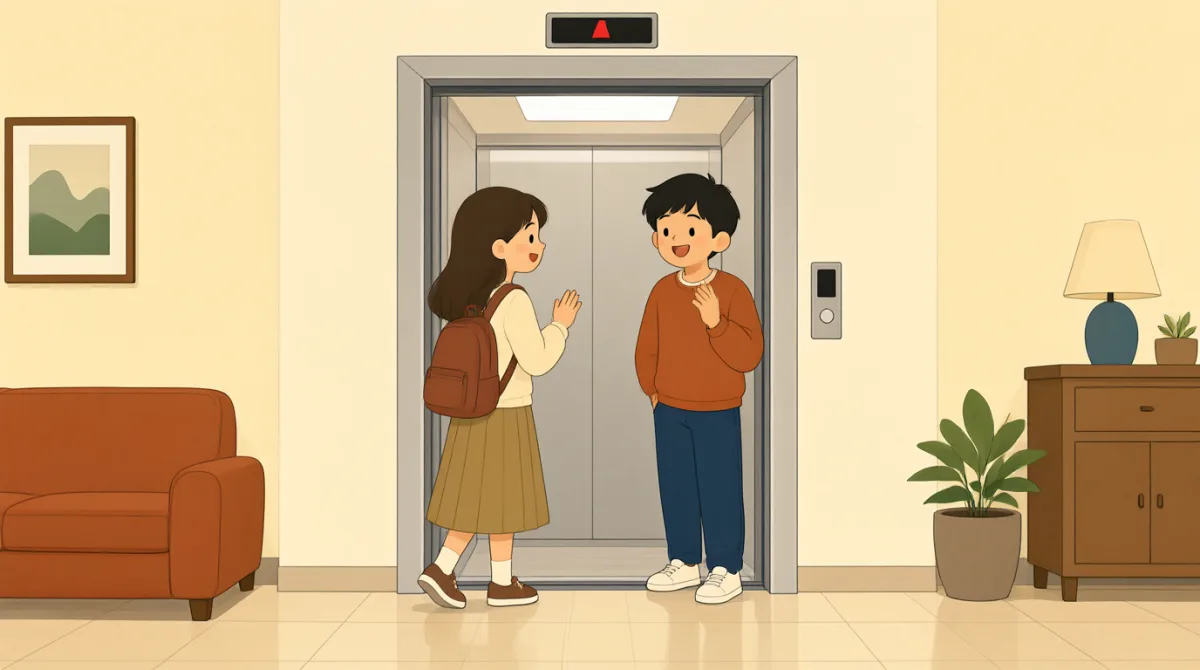

Going down, right?
ลงใช่ไหมครับ

Yes, please. Thanks!
ใช่ค่ะ ขอบคุณนะคะ!
No problem.
ไม่เป็นไรครับ
Oh, this is my floor. Have a good one!
อ๋อ ถึงชั้นที่ฉันจะลงแล้วค่ะ ขอให้วันนี้เป็นวันที่ดีนะคะ!
You too! See you around!
เช่นกันครับ! แล้วเจอกันใหม่นะครับ!
คำศัพท์7
- downลง
In this context, 'down' means going to a lower floor in a building, like in an elevator. It's a common direction word used in everyday situations.
ในบริบทนี้ 'down' หมายถึงการไปยังชั้นที่อยู่ต่ำกว่าในอาคาร เช่น การลงลิฟต์ เป็นคำบอกทิศทางที่ใช้กันทั่วไปในชีวิตประจำวัน
- right?ใช่ไหม
This is a tag question added to the end of a sentence to check if something is correct. It makes the speaker sound polite and seeking confirmation, like '对吧?' in Chinese.
'right?' เป็นคำถามสั้น ๆ ที่เติมท้ายประโยคเพื่อเช็กว่าข้อมูลนั้นถูกต้องไหม ทำให้ผู้พูดฟังดูสุภาพและเหมือนกำลังขอคำยืนยัน
- pleaseกรุณา; ได้เลย
Used to make a request more polite. For example, 'Yes, please' means agreeing to something kindly. It's a basic politeness word in English conversations.
'please' ใช้เพื่อทำให้คำขอฟังดูสุภาพขึ้น ตัวอย่างเช่น 'Yes, please' คือการตอบตกลงอย่างสุภาพ เป็นคำแสดงมารยาทพื้นฐานที่ใช้กันในบทสนทนาภาษาอังกฤษ
- no problemไม่เป็นไร
A casual way to say 'you're welcome' or 'it's okay' after someone thanks you. It's very common in informal English to respond to thanks.
'no problem' เป็นคำพูดสบาย ๆ ที่ใช้ตอบคำขอบคุณในความหมายว่า “ยินดี” หรือ “ไม่เป็นไร” เป็นคำตอบรับคำขอบคุณที่ใช้กันบ่อยในภาษาอังกฤษแบบไม่เป็นทางการ
- floorชั้น
Refers to a level in a building, like the first floor or fifth floor. In elevators, people say 'my floor' to mean the level they need to get off at.
'floor' หมายถึงชั้นหนึ่งของอาคาร เช่น ชั้นหนึ่งหรือชั้นห้า เวลาอยู่ในลิฟต์ คนพูดว่า 'my floor' เพื่อหมายถึงชั้นที่ตัวเองจะลง
- have a good oneขอให้เป็นวันที่ดีนะ
A friendly, informal farewell meaning 'have a good day' or 'enjoy the rest of your time.' It's short and used in quick goodbyes with strangers.
'have a good one' เป็นคำอำลาแบบเป็นกันเอง หมายถึง “ขอให้เป็นวันที่ดี” หรือ “ขอให้เวลาที่เหลือของคุณผ่านไปด้วยดี” เป็นคำพูดสั้น ๆ ที่ใช้บอกลาอย่างรวดเร็ว แม้กับคนที่ไม่รู้จักกัน
- see you aroundแล้วเจอกันใหม่นะ
An casual way to say goodbye, implying you might meet again by chance. It's common in informal settings like with neighbors, not for close friends.
'see you around' เป็นคำอำลาแบบไม่เป็นทางการที่สื่อว่าอาจได้พบกันอีกโดยบังเอิญ มักใช้ในสถานการณ์สบาย ๆ เช่น กับเพื่อนบ้าน ไม่ได้จำกัดเฉพาะเพื่อนสนิท
ประโยคสำคัญ5
- 1
Going down, right?
ลงใช่ไหมครับ
This is a polite question to confirm direction in an elevator. It uses a statement plus 'right?' as a tag question for confirmation. Useful for starting small talk with strangers in shared spaces.
นี่เป็นคำถามสุภาพเพื่อยืนยันว่ากำลังจะลงไปชั้นล่างในลิฟต์หรือเปล่า ประโยคบอกเล่าตามด้วย 'right?' เพื่อขอคำยืนยัน เหมาะสำหรับเริ่มคุยสั้น ๆ กับคนที่ไม่รู้จักในพื้นที่ส่วนกลาง
- 2
Yes, please. Thanks!
ใช่ค่ะ ขอบคุณนะคะ!
A simple, polite response to a question or offer. 'Please' adds courtesy, and 'Thanks!' shows gratitude. It's a common pattern for agreeing and thanking quickly in daily interactions.
เป็นคำตอบสั้น ๆ สุภาพ สำหรับตอบคำถามหรือรับข้อเสนอ 'please' ช่วยเพิ่มความสุภาพ ส่วน 'Thanks!' ใช้แสดงความขอบคุณ เป็นรูปแบบที่ใช้บ่อยเมื่อตอบตกลงและกล่าวขอบคุณอย่างรวดเร็วในชีวิตประจำวัน
- 3
No problem.
ไม่เป็นไรครับ
This is a casual reply to 'thank you,' meaning it's not a bother. It's very useful in informal English to acknowledge thanks without formality. No complex grammar, just idiomatic usage.
นี่เป็นคำตอบสบาย ๆ เมื่อมีคนพูดว่า 'thank you' หมายถึงไม่เป็นการรบกวน ใช้ตอบรับคำขอบคุณในภาษาอังกฤษแบบไม่เป็นทางการได้ดี ไม่ต้องใช้ไวยากรณ์ซับซ้อน เป็นสำนวนที่ใช้กันทั่วไป
- 4
Oh, this is my floor. Have a good one!
อ๋อ ถึงชั้นที่ฉันจะลงแล้วค่ะ ขอให้วันนี้เป็นวันที่ดีนะคะ!
Announces arriving at your stop and says goodbye. 'Oh' shows mild surprise, and 'Have a good one' is a friendly idiom for 'have a nice day.' Perfect for brief farewells when leaving a conversation.
ประโยคนี้บอกว่าถึงชั้นที่จะลงแล้ว พร้อมกล่าวลา 'Oh' แสดงความประหลาดใจเล็กน้อย ส่วน 'Have a good one' เป็นสำนวนเป็นกันเองที่หมายถึง “ขอให้เป็นวันที่ดี” เหมาะกับการกล่าวลาสั้น ๆ เมื่อจบบทสนทนา
- 5
You too! See you around!
เช่นกันครับ! แล้วเจอกันใหม่นะครับ!
Returns a wish like 'have a good one' with 'You too!' and adds a casual goodbye. It's reciprocal and informal, ideal for ending short talks with acquaintances. Shows how to mirror politeness.
ตอบกลับคำอวยพรอย่าง 'have a good one' ด้วย 'You too!' แล้วเสริมคำอำลาแบบเป็นกันเอง เป็นการตอบกลับอย่างเหมาะสมและไม่เป็นทางการ เหมาะสำหรับจบบทสนทนาสั้น ๆ กับคนรู้จัก และแสดงให้เห็นวิธีตอบรับความสุภาพของอีกฝ่าย