Asking or Offering Floor Assistance
ถามหรือเสนอช่วยกดปุ่มชั้น
One person asks another if they are going to the same floor, or offers to press a button for them, especially if their hands are full.
คนหนึ่งถามอีกคนว่าจะไปชั้นเดียวกันไหม หรือเสนอช่วยกดปุ่มให้ โดยเฉพาะเมื่ออีกฝ่ายถือของเต็มมือ
บทสนทนา8
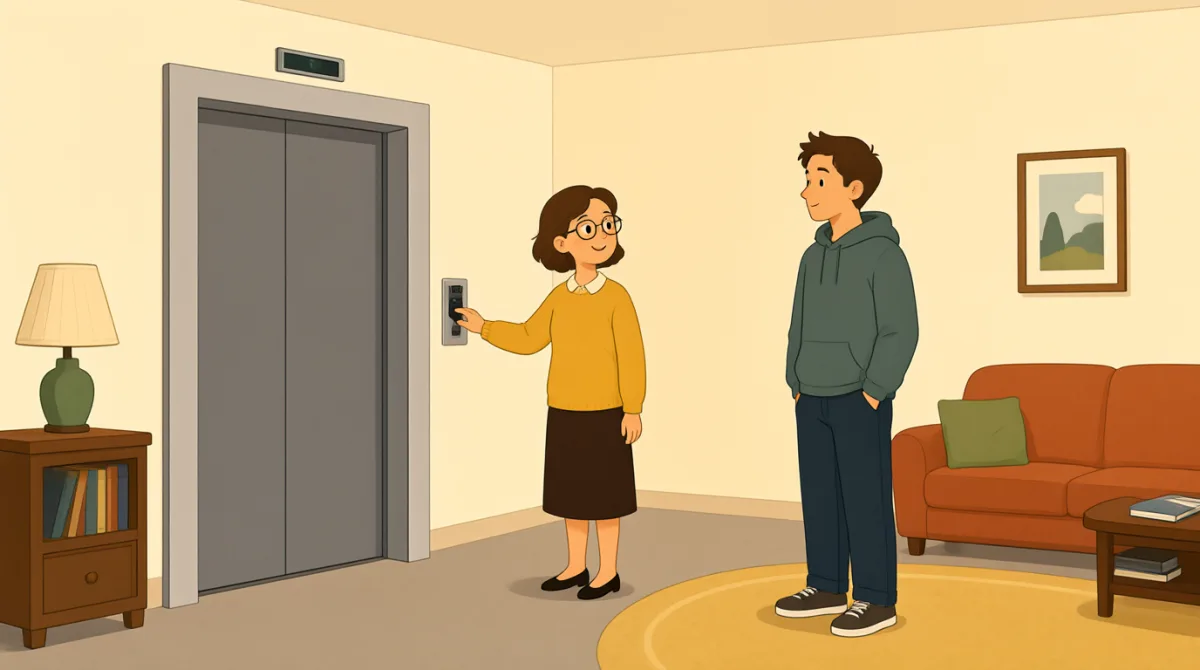

Going up?
ขึ้นไปข้างบนไหมครับ

Yes, please. Uh, what floor are you going to?
ค่ะ รบกวนด้วยนะคะ เอ่อ คุณจะไปชั้นไหนคะ
I'm going to the fifth. Can I get that for you? Looks like your hands are full.
ผมไปชั้นห้าครับ ให้ผมกดให้ไหมครับ ดูเหมือนคุณถือของเต็มมือเลย
Oh, that's so kind of you! I'm going to the third floor. Thank you!
โอ้ ใจดีจังเลยค่ะ ฉันไปชั้นสามค่ะ ขอบคุณนะคะ
No problem at all. Third floor, got it.
ยินดีครับ ชั้นสามนะครับ
Thanks again! It's difficult with all these groceries.
ขอบคุณอีกครั้งนะคะ ถือของจากร้านเต็มมือแบบนี้ลำบากจริง ๆ ค่ะ
I understand. Enjoy your evening!
เข้าใจครับ ขอให้มีความสุขกับช่วงเย็นนะครับ
You too!
เช่นกันค่ะ
คำศัพท์8
- floorชั้น
A level or story of a building, like the ground floor or fifth floor. In elevators, people ask 'what floor' to know which button to press.
ระดับหรือชั้นของอาคาร เช่น ชั้นล่างหรือชั้นห้า ในลิฟต์คนมักถามว่า 'what floor' เพื่อจะได้รู้ว่าต้องกดปุ่มไหน
- fifthที่ห้า
The ordinal number for 5, used to specify the fifth level of a building. Say 'fifth floor' when telling someone your destination in an elevator.
คำบอกลำดับของเลข 5 ใช้ระบุชั้นที่ห้าของอาคาร เวลาบอกจุดหมายในลิฟต์ ให้พูดว่า 'fifth floor'
- thirdที่สาม
The ordinal number for 3, meaning the third level. It's common in polite small talk to share your floor number quickly.
คำบอกลำดับของเลข 3 หมายถึงระดับที่สาม การบอกเลขชั้นสั้น ๆ เป็นเรื่องปกติในการพูดคุยสุภาพทั่วไป
- fullเต็ม
Containing as much as possible, like 'hands are full' when carrying many bags. This helps explain why you need help in everyday situations.
มีของอยู่มากจนแทบไม่มีที่ว่าง เช่น 'hands are full' หมายถึงมีของหลายถุงเต็มมือ สำนวนนี้ช่วยบอกว่าทำไมคุณถึงต้องการความช่วยเหลือในสถานการณ์ทั่วไป
- kindใจดี
Nice and helpful, showing consideration for others. Use 'that's kind of you' to thank someone politely for their offer.
มีน้ำใจและเต็มใจช่วยเหลือ แสดงถึงความใส่ใจผู้อื่น ใช้ 'that's kind of you' เพื่อขอบคุณอย่างสุภาพเมื่อมีคนเสนอความช่วยเหลือ
- groceriesของกินของใช้
Food and household items bought from a store. People often carry groceries in bags, making it hard to press elevator buttons.
อาหารและของใช้ในบ้านที่ซื้อจากร้านค้า คนมักถือของกินของใช้ใส่ถุง ซึ่งทำให้กดปุ่มลิฟต์ได้ลำบาก
- understandเข้าใจ
To know or realize a situation. Say 'I understand' to show empathy when someone explains a problem, like carrying heavy items.
รู้หรือมองออกว่าเกิดอะไรขึ้น พูดว่า 'I understand' เพื่อแสดงความเห็นอกเห็นใจเมื่อมีคนเล่าปัญหาให้ฟัง เช่น ต้องถือของหนัก
- eveningช่วงเย็น
The time from late afternoon until night. Use 'enjoy your evening' as a friendly goodbye in casual conversations.
ช่วงเวลาตั้งแต่บ่ายแก่ ๆ จนถึงกลางคืน ใช้ 'enjoy your evening' กล่าวลาอย่างเป็นมิตรในการสนทนาทั่วไปได้
ประโยคสำคัญ8
- 1
Going up?
ขึ้นไปข้างบนไหมครับ/คะ
A short, casual question to start small talk in an elevator, asking if someone is going to a higher floor. It's useful for polite interactions with strangers and uses a question mark for yes/no answers.
คำถามสั้น ๆ แบบสบาย ๆ เพื่อเริ่มคุยกันในลิฟต์ โดยถามว่าอีกฝ่ายกำลังจะขึ้นไปชั้นที่สูงกว่าหรือไม่ เหมาะกับการพูดคุยอย่างสุภาพกับคนที่ไม่รู้จัก และเป็นคำถามที่ตอบได้ว่าใช่หรือไม่ใช่
- 2
What floor are you going to?
คุณจะไปชั้นไหน
A polite way to ask someone's destination in a building. This sentence uses 'what' for questions about specifics and 'going to' for future direction; great for offering help.
วิธีสุภาพในการถามจุดหมายของใครสักคนในอาคาร ประโยคนี้ใช้ 'what' เพื่อถามข้อมูลเฉพาะ และใช้ 'going to' เพื่อพูดถึงทิศทางที่จะไป เหมาะมากเมื่อจะเสนอความช่วยเหลือ
- 3
Can I get that for you?
ให้ผม/ฉันกดให้ไหม
An offer to help by pressing an elevator button. 'Can I' is a polite request form, and 'get that for you' means to do something instead of the other person; use when you see someone struggling.
เป็นการเสนอช่วยกดปุ่มลิฟต์ 'Can I' เป็นรูปประโยคสุภาพสำหรับเสนอหรือขออนุญาต ส่วน 'get that for you' หมายถึงทำบางอย่างแทนอีกฝ่าย ใช้เมื่อเห็นว่าใครสักคนกำลังลำบาก
- 4
That's so kind of you!
คุณใจดีจังเลย
Expresses thanks for someone's nice action. 'That's so' adds emphasis for politeness, and 'kind of you' highlights the helpfulness; ideal for responding to offers in daily life.
ใช้กล่าวขอบคุณเมื่อมีคนทำสิ่งดี ๆ ให้ 'That's so' ช่วยเน้นความรู้สึกให้สุภาพยิ่งขึ้น ส่วน 'kind of you' เน้นความมีน้ำใจ เหมาะสำหรับตอบรับเมื่อมีคนเสนอความช่วยเหลือในชีวิตประจำวัน
- 5
No problem at all.
ไม่เป็นไรเลย
A friendly way to say helping is easy and no thanks needed. 'No problem' is casual reassurance, and 'at all' strengthens it; use this to downplay your effort after helping.
วิธีเป็นมิตรในการบอกว่าการช่วยเหลือไม่ได้ลำบาก และไม่จำเป็นต้องขอบคุณ 'No problem' เป็นคำปลอบใจแบบสบาย ๆ ส่วน 'at all' ช่วยเน้นความหมาย ใช้พูดเพื่อลดความสำคัญของความลำบากหลังจากช่วยใครสักคน
- 6
Thanks again!
ขอบคุณอีกครั้งนะ
Repeats gratitude to show appreciation. 'Again' means you're thanking a second time; short and useful in quick conversations like elevators to end positively.
กล่าวขอบคุณซ้ำเพื่อแสดงความซาบซึ้ง 'Again' หมายถึงกำลังขอบคุณเป็นครั้งที่สอง เป็นประโยคสั้น ๆ ที่ใช้ได้ดีในการสนทนาสั้น ๆ เช่น ในลิฟต์ เพื่อจบการพูดคุยด้วยความรู้สึกดี
- 7
Enjoy your evening!
ขอให้มีความสุขกับช่วงเย็นนะ
A warm goodbye wishing someone a good time later. It's a common polite closing in small talk; use in the evening to leave a positive impression on strangers or neighbors.
คำกล่าวลาอย่างอบอุ่นที่อวยพรให้อีกฝ่ายมีช่วงเวลาที่ดี เป็นคำลงท้ายสุภาพที่พบได้บ่อยในการพูดคุยทั่วไป ใช้ในช่วงเย็นเพื่อสร้างความประทับใจที่ดีให้กับคนแปลกหน้าหรือเพื่อนบ้าน
- 8
You too!
เช่นกัน
A simple way to return a wish, like after 'enjoy your evening.' It's reciprocal and very casual; perfect for ending brief interactions without much effort.
วิธีง่าย ๆ ในการตอบกลับคำอวยพร เช่น หลังจากได้ยิน 'enjoy your evening.' เป็นการอวยพรกลับแบบสบาย ๆ เหมาะสำหรับจบการพูดคุยสั้น ๆ โดยไม่ต้องพูดอะไรมาก