Brief Farewells Upon Exiting
離開時的簡短告別
As one or both individuals exit the elevator, they exchange quick, polite farewells like 'Have a good one!' or 'See you around!'
當一個人或兩個人離開電梯時,他們會互相道別,例如 '祝你有個愉快的一天!' 或 '回頭見!'
對話5
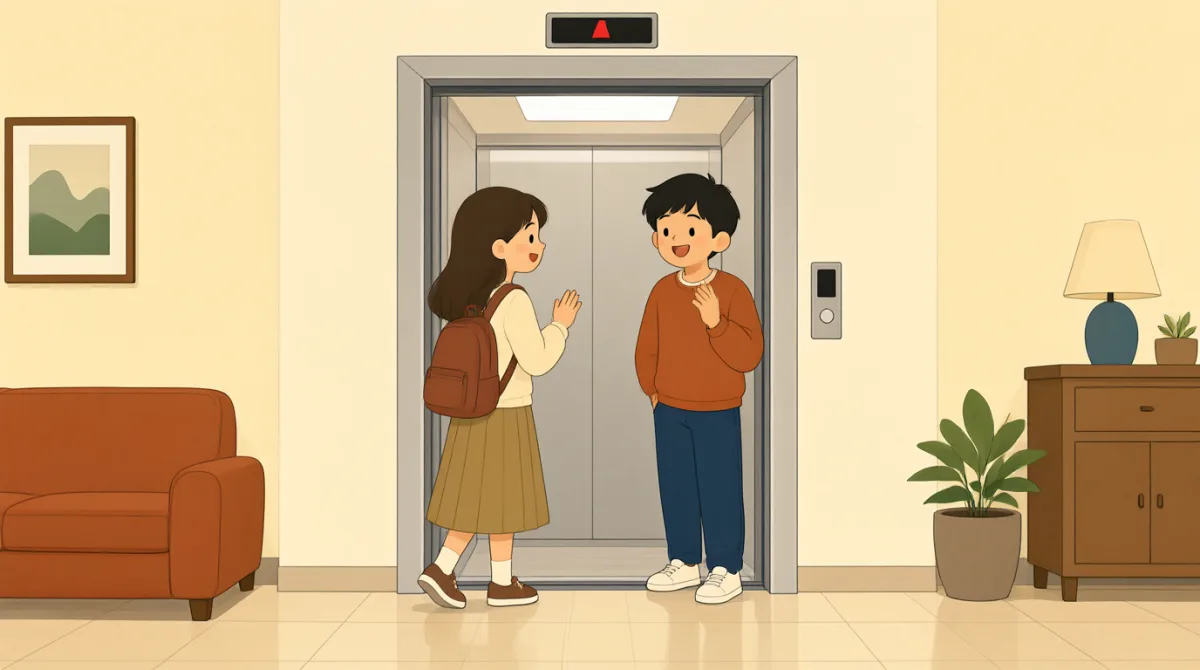

Going down, right?
下樓,對吧?

Yes, please. Thanks!
是的,謝謝!
No problem.
沒問題。
Oh, this is my floor. Have a good one!
哦,到我這層了。祝你有個愉快的一天!
You too! See you around!
你也是!回頭見!
詞彙7
- down下
In this context, 'down' means going to a lower floor in a building, like in an elevator. It's a common direction word used in everyday situations.
這裡的 'down' 指在建築物裡往較低的樓層走,比如乘電梯時。這是日常生活中常用的方向詞。
- right?對吧?
This is a tag question added to the end of a sentence to check if something is correct. It makes the speaker sound polite and seeking confirmation, like '对吧?' in Chinese.
這是加在句子末尾的附加疑問句,用來確認事情是否正確。它讓說話的人聽起來禮貌,也是在尋求確認,就像中文裡的“對吧?”
- please請
Used to make a request more polite. For example, 'Yes, please' means agreeing to something kindly. It's a basic politeness word in English conversations.
用來讓請求聽起來更禮貌。例如,'Yes, please' 表示禮貌地接受某個提議。這是英語對話中基本的禮貌用語。
- no problem沒問題
A casual way to say 'you're welcome' or 'it's okay' after someone thanks you. It's very common in informal English to respond to thanks.
別人道謝後,用來表示“不客氣”或“沒關係”的隨意說法。在非正式英語對話中,這樣回應感謝很常見。
- floor樓層
Refers to a level in a building, like the first floor or fifth floor. In elevators, people say 'my floor' to mean the level they need to get off at.
指建築物中的一層,比如一樓或五樓。乘電梯時,人們會說 'my floor',意思是自己要下的那一層。
- have a good one祝你愉快
A friendly, informal farewell meaning 'have a good day' or 'enjoy the rest of your time.' It's short and used in quick goodbyes with strangers.
一種友好、隨意的告別語,意思是“祝你今天愉快”或“接下來的時間過得開心”。它簡短,常用於和陌生人匆匆道別時。
- see you around回頭見
An casual way to say goodbye, implying you might meet again by chance. It's common in informal settings like with neighbors, not for close friends.
一種隨意的告別說法,暗示以後可能會偶然再見。它常用於鄰居之間這樣的非正式場合,不太用於親密朋友之間。
關鍵句5
- 1
Going down, right?
是下樓,對吧?
This is a polite question to confirm direction in an elevator. It uses a statement plus 'right?' as a tag question for confirmation. Useful for starting small talk with strangers in shared spaces.
這是在電梯裡禮貌地確認對方要去的方向。句子先陳述情況,再用 'right?' 作為附加疑問來尋求確認。和陌生人在共享空間裡開啟閒聊時很實用。
- 2
Yes, please. Thanks!
是的,謝謝!
A simple, polite response to a question or offer. 'Please' adds courtesy, and 'Thanks!' shows gratitude. It's a common pattern for agreeing and thanking quickly in daily interactions.
這是對問題或提議簡單又禮貌的回應。'Please' 增添了禮貌,'Thanks!' 則表達感謝。這是日常交流中快速接受提議並道謝的常見說法。
- 3
No problem.
沒問題。
This is a casual reply to 'thank you,' meaning it's not a bother. It's very useful in informal English to acknowledge thanks without formality. No complex grammar, just idiomatic usage.
這是對 'thank you' 的隨意回應,表示幫忙不麻煩。在非正式英語中,用它來回應感謝而不顯得過於正式,非常實用。它沒有複雜語法,屬於習慣表達。
- 4
Oh, this is my floor. Have a good one!
哦,到我這層了。祝你愉快!
Announces arriving at your stop and says goodbye. 'Oh' shows mild surprise, and 'Have a good one' is a friendly idiom for 'have a nice day.' Perfect for brief farewells when leaving a conversation.
這句話表示自己到站了,並向對方道別。'Oh' 表示些許驚訝,'Have a good one' 是友好的習慣說法,意思是“祝你今天愉快”。離開談話時用來簡短道別再合適不過。
- 5
You too! See you around!
你也是!回頭見!
Returns a wish like 'have a good one' with 'You too!' and adds a casual goodbye. It's reciprocal and informal, ideal for ending short talks with acquaintances. Shows how to mirror politeness.
用 'You too!' 回應 'have a good one' 這樣的祝福,再加上一句隨意的告別語。這種回應友好而自然,很適合和熟人結束簡短交談,也能體現禮尚往來。